
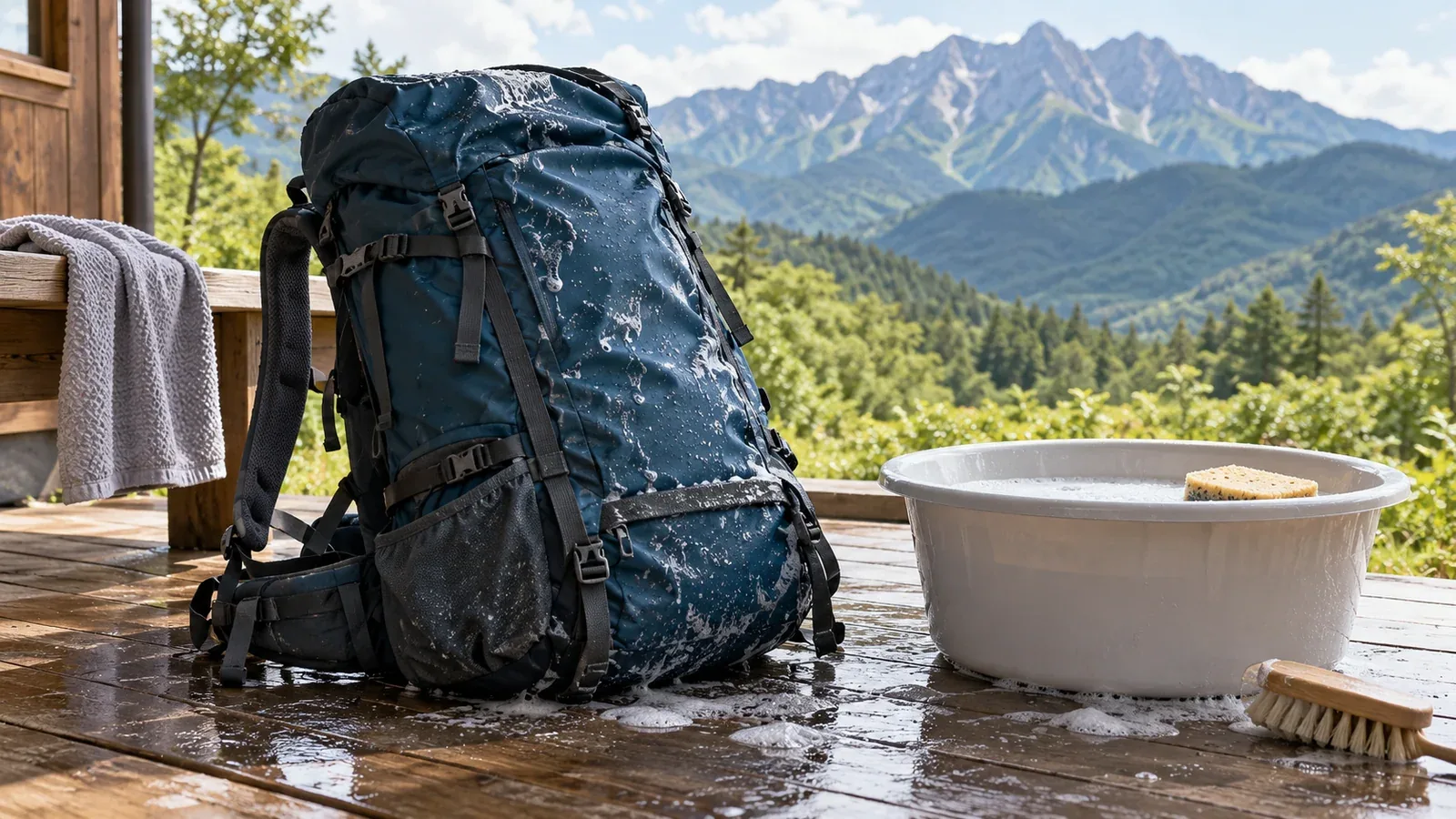
After a hike, brushing off the mud may leave the pack looking clean. Sweat tends to remain in the back padding and shoulder straps, and storing the pack dirty for a long time can lead to odors, mold, or deteriorating parts.
Wipe light dirt off with a damp cloth after a hike. If the pack is very sweaty or muddy, wash it according to its care instructions. If it got wet in the rain, open it up to dry when you get home, whether or not it looks dirty.
What to check before washing
The best cleaning method depends on the pack's materials and construction, so start with the care label or owner's manual. Remove the rain cover or frame only if the manufacturer says it can be removed. Never force out a fixed frame or back panel.
For a pack with a durable water repellent (DWR) treatment, check the detergent instructions first. If there is no specific product listed, choose a mild, pH-neutral detergent or outdoor gear cleaner that the manufacturer allows. Avoid fabric softener and bleach as directed on the care label.
How to wash your backpack by hand
These steps apply to packs that can be immersed and washed by hand. If the model cannot be submerged, stick to the manufacturer's spot-cleaning instructions.
- Empty every pocket and remove debris and grit. Open the pockets, turn the pack upside down, and shake out sand and leaves.
- Fill a basin or bathtub with water. Follow the care label for water temperature. Even if lukewarm water is allowed, avoid hot water.
- Dissolve the recommended detergent in the water and gently squeeze the pack to wash it. Press the back padding, shoulder straps, and hip belt by hand to work water through them and rinse out sweat. If brushing is permitted, use a soft brush on the surface.
- Rinse thoroughly with clean water. Change the water until it runs clear and free of suds. Turn the pack upside down to drain it and press water from the padding by hand. Avoid twisting or wringing the fabric.
- Open the pockets and air-dry in the shade. Choose a well-ventilated spot away from heaters. Wait until the back padding and the area around the frame are completely dry before storing the pack.
When to use a washing machine
Many hiking packs cannot be machine-washed. Use a machine only if the manufacturer expressly permits it for your model, and follow the specified procedure.
- Check the manufacturer's washing instructions. Follow any requirements about the type of machine and the washing method.
- Secure the buckles and straps. Follow the manual for how to secure them and whether to use a laundry bag.
- Follow the care label for water temperature and wash cycle.
- Check whether spinning is allowed. If not, drain the pack and let it air-dry.
- Use a tumble dryer only if expressly permitted. High heat can damage the coating and plastic parts.
How to deal with different kinds of dirt
Mud
Wipe away small mud splashes with a damp cloth. Gently brush off dry, caked-on mud with a soft brush. If the dirt covers a large area, hand wash according to the care label.
Grease and food stains
Remove any solids from food spilled in a pocket. If the recommended detergent can be used on the area, dilute it, dampen a cloth, and blot from the outside of the stain toward the center. Then wipe away the detergent with a cloth dampened with water.
Mold
Mold can grow if the pack is stored damp for a long time. If you see spots that look like mold, take the pack out to dry and ask the manufacturer whether it can be cleaned or repaired. Bleach or strong detergents can damage the fabric and coating.
Dirty or stiff zippers
Grit and dirt can make a zipper stiff. Avoid forcing it, and first clear the teeth or coil with a soft brush. If you plan to use a lubricant, check which products and methods the manufacturer approves.
Restoring water repellency after washing
Once the pack is dry, put a few drops of water on the fabric and see if they bead up. If water soaks in and the model can be treated, use the specified water repellent for the fabric and its existing finish. Use heat from a dryer or iron only if both the pack maker and the treatment instructions permit it. Restoring water repellency will still leave seams and zippers vulnerable to water ingress.
What to do next
After the season's last hike, remove sweat and dirt according to the care label and dry the pack thoroughly before storing it. Check for frayed shoulder straps and cracked buckles at the same time. If you need repair advice, contact the manufacturer or find an outdoor shop through Nordwand's partner directory.