
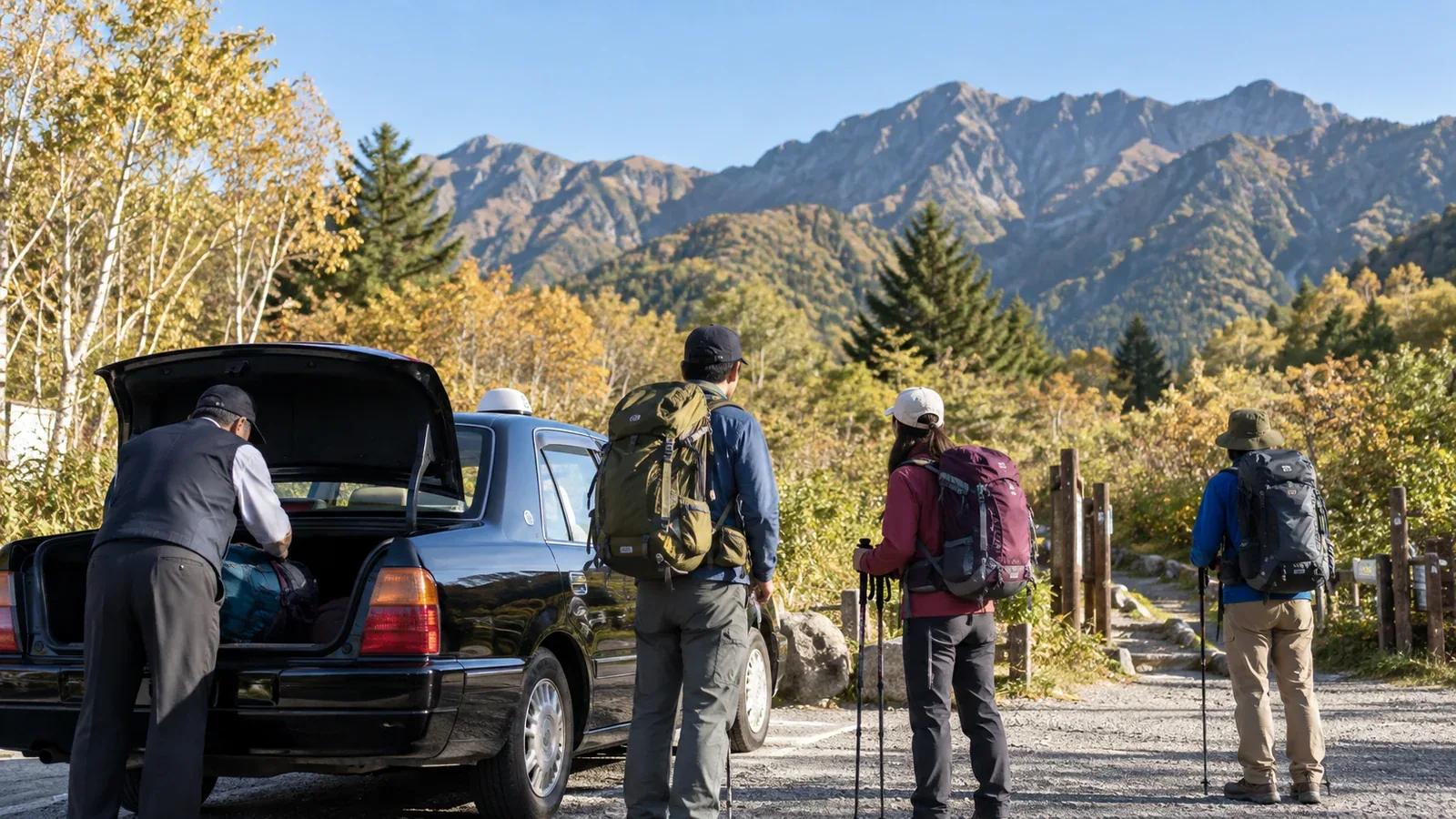
When there's only one bus a day and you can't catch it, or the trailhead is a two-hour walk along a road, a taxi is worth considering. In some mountain areas, it's a common way to reach the start of a hike.
This guide covers when to book, how to work out the fare, how to share the ride, and what can go wrong. It takes you from deciding whether a taxi makes sense to arranging the journey on the day.
When a taxi makes sense
A taxi can be especially useful in these situations.
The bus doesn't run early enough. You may want to start a day hike before the first bus arrives to give yourself more time. If the taxi company can send a car that early, you can choose a departure time that fits.
There is no bus, or the service has been discontinued. Some areas have no bus to the trailhead. Check whether you can drive, whether a taxi can get in, or whether there's a safe route on foot.
You finish at a different trailhead or the last bus leaves early. On a traverse, arranging a taxi pickup at the other trailhead gives you a way back. Check how to contact the company if you expect to be late.
Sharing a car may be cheaper than the bus. For a short ride with several people, the cost per person may be lower. Compare the actual prices for your group.
How fares work
Metered fares start with a base charge, then rise according to distance or time spent moving slowly. Depending on the area and operator, you may also pay a pickup fee, a fee for a scheduled time, a late-night or early-morning surcharge, or road tolls. Some routes, including certain stretches to Kamikochi, have fixed fares.
The total varies by area, operator, distance, and time. Ask for the estimated total and any extra charges before booking. For example: “How much would it cost to leave the station for this trailhead at 5 a.m.? Does that include pickup and tolls?”
If four people split a fare charged per vehicle, each pays a quarter. Check the car's capacity, whether your packs fit, and what a larger vehicle costs. Some shared services charge per passenger. Compare the total per person with the bus fare for the same stretch.
How to arrange the ride
1. Find a taxi company
Search for taxis using the name of the station or municipality closest to the trailhead. Local companies that often serve mountain areas are likely to know the trailhead names. You can also ask a tourist office or your accommodation for a local number.
2. Book early
Early-morning taxis can fill up on summer or autumn foliage weekends. Check availability as soon as your dates are set. Book by phone, online, or through the method the company specifies, and check deadlines and cancellation terms.
Give the operator the following details when booking.
- Pickup point, such as your lodging or station, and destination trailhead
- Departure date and time
- Number of passengers
- Number and size of bags, including large packs
- Contact details, such as your mobile number
- Whether you also need a pickup after the hike
3. Arrange a shared ride
Choose someone in your group to book once you know how many people are coming. Some areas offer a bookable shared taxi service. If you plan to split the fare yourselves, agree beforehand on how to handle changes to the cost if someone cancels or the group size changes.
4. On the day
The operator may contact you the day before to confirm. Arrive at the pickup point early and confirm where the driver will drop you. When booking, ask whether the taxi can reach the actual trailhead or can only go as far as the car park or the start of the forest road.
How to get back after the hike
A taxi can work for the return as well. If transport from the end of the trail is uncertain, you can either arrange a timed pickup or call once you get down.
If you arrange a pickup time, allow for a delay due to fatigue or weather. Ask when booking how to let the company know about a delay and what its waiting and change terms are. On the day, get in touch as soon as you know you'll be late and can reach them.
If you plan to call after the hike, check that the company can pick you up and that the trailhead has mobile coverage. If there's no signal, confirm a safe walking route to somewhere you can call or arrange the pickup before setting out.
Common mistakes
Assuming you can book on the day. There are only so many early-morning taxis in mountain areas. In busy periods a company may turn down a same-day call without a reservation.
Using a trailhead name the driver doesn't recognize. The name in a guidebook or on a map may differ from what locals use. Give the mountain name and the side you're approaching from, and confirm the location with a map pin if you can.
Missing a forest road restriction. Some areas restrict traffic for part of the year, and taxis may be unable to reach the trailhead. Check official information from the authority or road operator.
Starting without a way home. This is especially easy to do on a traverse that ends at a different trailhead. Arrange transport in both directions before you set out.
What to do next
Look up a local taxi company near the closest station or municipality and check early-morning availability and the estimated total. Set the date once you know how you'll get there and back and how to notify the driver if you're late. You can also ask nearby hikers in the Nordwand community if they'd like to share the ride.