
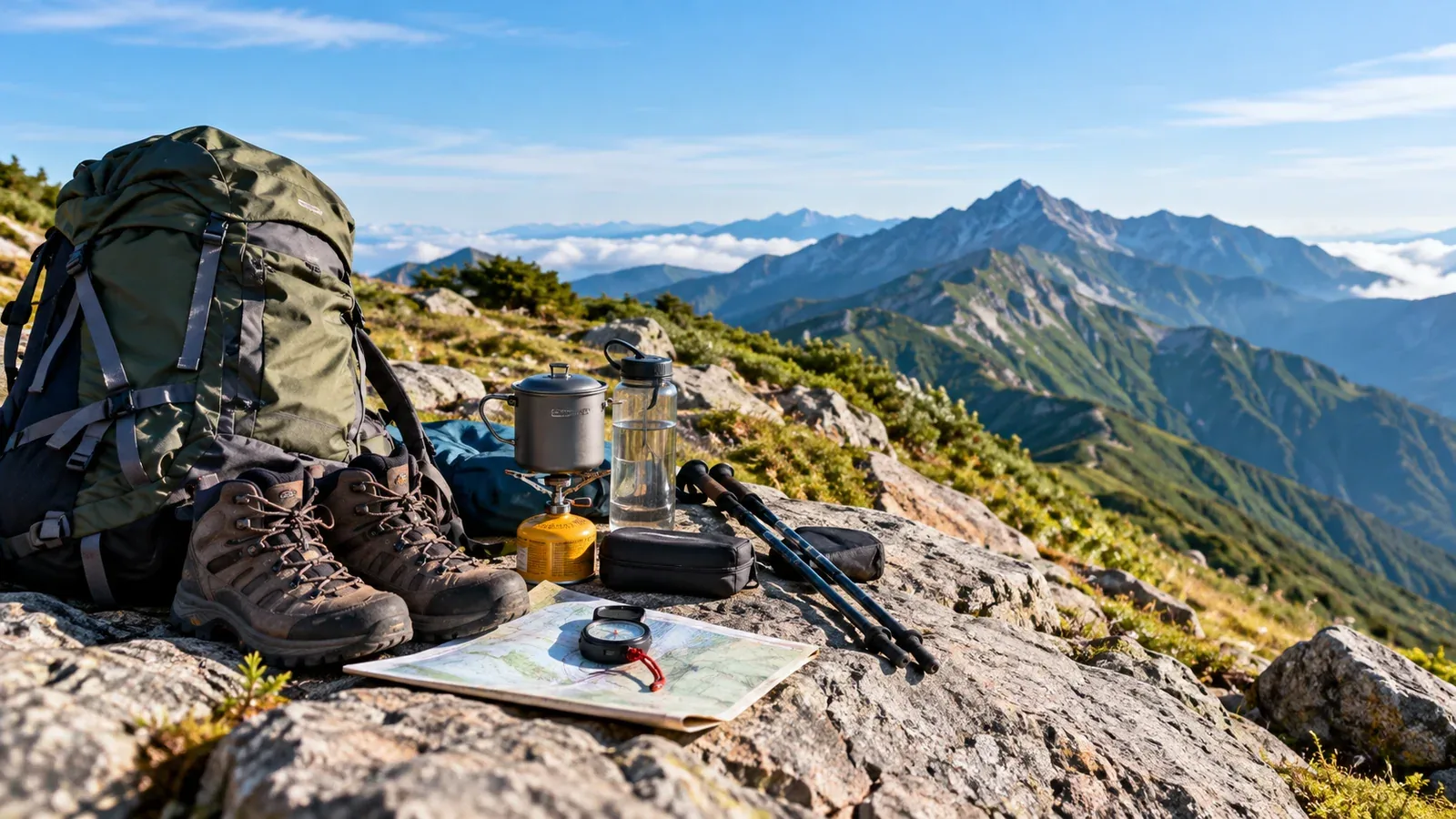
“How much will hiking cost me in a year?” is an early question for many people who want to start. What you spend depends on the way you hike, the gear you choose, where you go and how many nights you spend away. An average may tell you little about your own plans.
This article breaks the budget into three parts: initial purchases, consumables and upkeep, and trip expenses such as travel and lodging. Once you see where the money goes, you can decide what fits your plans.
The year you buy most of your gear looks different from later years. Keep the amount you actually pay in the purchase year separate from the yearly share of the cost of gear you’ll use for longer.
Three parts of the budget
It’s easier to work out annual hiking expenses in three categories.
- Initial purchases. Boots, a pack, rainwear, a headlamp and other basics.
- Consumables and upkeep. Socks, gloves, food, fuel, insurance, maps and other items you pay for periodically or on individual trips.
- Trip expenses. Transport, lodging, access fees and other charges you pay when you go hiking.
For cash spending in the year you buy something, count the whole purchase price. To compare years, divide the price of durable items by the number of years you expect to use them. This is a household estimate, separate from tax depreciation.
Initial purchases: what to budget for
The amounts below are hypothetical and show how to build a budget. They do not establish typical prices or useful lifetimes. Choose gear that suits your routes and seasons and check prices with retailers or manufacturers.
An example budget for basic gear
- Hiking boots for low to moderate mountains: ¥15,000.
- Hiking pack, 30–45 L: ¥12,000.
- Rain jacket and trousers: ¥25,000.
- Base and mid layers: ¥15,000.
- Headlamp: ¥5,000.
- One or two trekking poles: ¥3,000.
This example comes to ¥75,000. Before buying, check what the route and season require. Separate what you already own, what you can borrow and what you need to buy in the right fit. That gives you more control over the first outlay.
Spreading the cost over the years you use it
If you pay ¥40,000 for rainwear and assume seven years of use, that’s about ¥5,700 a year. Seven years is an assumption for this calculation. Decide when to replace gear based on its condition and the manufacturer’s guidance, and budget the full ¥40,000 in the purchase year.
Consumables and upkeep: costs that recur
Even after you have your gear, some expenses return each year or each trip. Include them in the budget.
Common expenses
- Socks, gloves, hats and other small items. Check for wear and estimate how many replacements you’ll need and what each will cost.
- Trail snacks and meals. Budget by day hike or overnight trip and the number of meals you’ll prepare.
- Mountain and search-and-rescue insurance. Check premiums, activities covered, payout limits and exclusions in the policy.
- Maps and apps. Check Japan’s Geospatial Information Authority for paper map prices and the app provider for subscription prices.
- Gas canisters and fuel. Check how many canisters you’ll need and the prices of products compatible with your equipment.
- Gear care. Budget for treatments, cleaning products and repairs such as resoling.
Add up consumables using your actual number of trips and the price of each item. Rescue costs depend on the region and who responds. A private team or helicopter can mean out-of-pocket costs. When comparing insurance, check whether it covers your activity and what search-and-rescue limits and exclusions apply.
Trip expenses: transport and lodging
Transport and lodging vary considerably by destination and where you stay. Include local costs such as trailhead shuttles and access fees.
Working out travel costs
- Nearby day hikes. Check round-trip rail and bus fares. If you drive, include fuel, tolls and parking.
- Destinations reached by bullet train or plane. Add travel from the station or airport to the trailhead. Check change and refund terms on discounted tickets.
- Shuttles and trail buses. Some run seasonally or require reservations. Check dates, fares and booking rules with the local authority or operator.
Hiking close to home more often and deciding in advance how many longer trips to take makes it easier to cap transport spending. Repeat visits also show you how local mountains and trails change through the seasons.
Working out lodging costs
Lodging costs depend on how you plan to spend the night.
- A hut bed without meals. Check the official rates for a bed or room, any lodging tax, and reservation and cancellation terms.
- A hut bed with dinner and breakfast. Compare the package with the cost and weight of carrying your own meals. Pack trail snacks and reserve food separately.
- Camping. Include the campsite fee, food and fuel. If you’ll camp repeatedly, you can also divide the purchase price of a tent, sleeping bag and mat by the number of trips.
- Staying near the trail before or after a hike. This can make it easier to start early or catch transport home. Compare the room and travel costs together.
Estimating a year of trip expenses
- Decide how many day hikes, one-night trips and longer trips you expect to take.
- Estimate transport for the routes you have in mind using official rail and long-distance bus sites.
- Check the cost per night for each lodging option and multiply by the number of nights.
- Add trip-specific costs such as entry fees, shuttles and trail food.
Add gear, consumables and upkeep to transport, lodging and access fees. If you already included snacks and fuel with individual trips, leave them out of the annual consumables total. Use the whole purchase price when budgeting cash outlay, or the annual share when comparing years.
Where you can cut costs
There are ways to spend less while accounting for safety and comfort.
Places where savings can make sense
- Shop sales, prior models and outlets. Alongside the price, check specifications, warranty and how boots fit.
- Hike close to home more often. You can save on travel and build skills by getting to know nearby mountains.
- Compare dates within the hut’s operating season. It can be easier to book outside busy periods. Ask the hut about opening dates, weather and rates.
- Travel as a group. You may be able to split driving costs. Some campsites charge per person and others by pitch, so check the local terms.
Places where cost comes second
- Mountain insurance. Start with the coverage you need for your activity, then compare premiums.
- Rainwear and boots that suit the trip. Prioritize protection suited to the weather and terrain and gear that fits.
- Spare headlamp batteries and a power bank. Carry compatible spares so you can light the way after dark and keep your means of communication working.
What to do next
List how many trips you want to take this year and where you want to go, then estimate transport and lodging. Prioritize equipment you still need and add insurance, maps and other expenses. Nordwand’s shop finder can help you find a retailer to check prices and try on gear.
References
- Mountain incident statistics (National Police Agency)
- Hiking safety and rescue costs (Nagano Prefecture)
- Types and prices of paper maps (Geospatial Information Authority of Japan)
- Example of official hut and campsite fees (Karasawa Hütte)
- Example of mountain access fees (Mount Fuji official climbing website)
- Checking and caring for hiking boots (Montbell)