
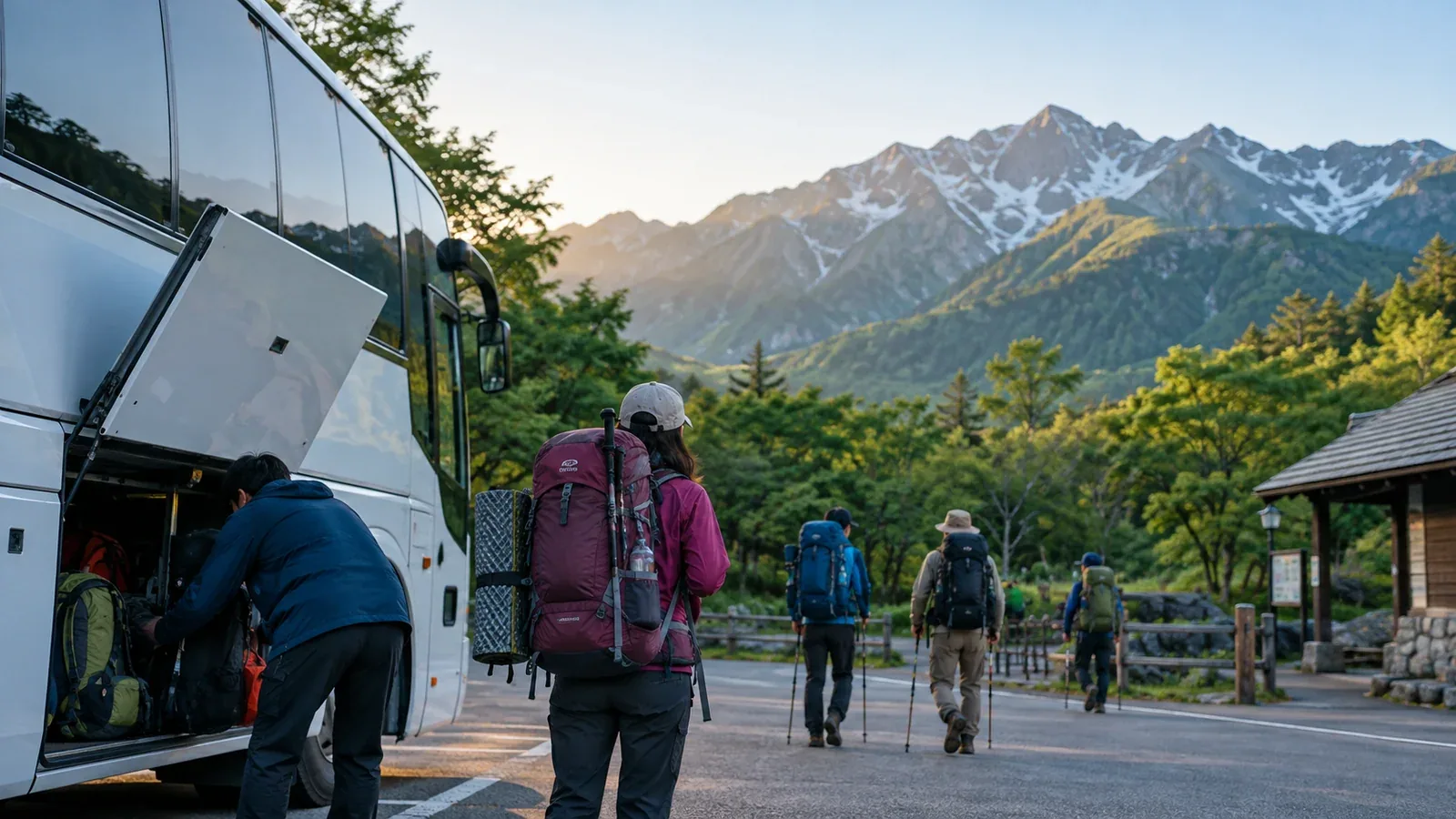
An overnight bus is worth considering when lodging near the trailhead is booked up, or when you want to leave on Friday evening and start walking on Saturday morning. If you take a Shinkansen or a limited express the evening before, you will also need somewhere to sleep. On an overnight coach, you can get some rest en route and sometimes get off near the trailhead at dawn.
Taking an overnight bus to go hiking brings a few extra considerations. You may be exerting yourself as soon as you get off, plans are harder to change if weather or access conditions deteriorate, and how you pack and how much rest you get can affect the safety of the hike.
This guide covers how to find a route, what to check before and after boarding, and the common pitfalls.
When an overnight bus makes sense
An overnight bus is most useful for a distant trailhead where setting out in the morning would put you on the trail too late. Mountain areas several hours from a major city, including the Japan Alps, may have overnight bus stops or stations where you can change to local transport.
Think carefully before taking one to a route with a demanding section where fatigue could have serious consequences. Sleep quality varies widely on a coach, and tiredness can impair judgment if you start a long day at high altitude straight after getting off. A night in local accommodation gives beginners more margin on a first trip to the Alps.
If bad weather forces you to cancel the hike, how much of your bus fare you can recover depends on the route and when you booked. Once you have boarded, the temptation to go ahead anyway can increase the risk of an incident. Decide in advance what would make you cancel and read the refund terms.
Finding routes and checking where you get off
Start by looking for a coach that stops at the station or bus terminal closest to your trailhead. The following are examples. Check current routes, stops and operating dates with the operator or on the booking page.
- Northern Japan Alps — Seasonal overnight hiking coaches serve places such as Kamikochi and Shin-Hotaka.
- Southern Japan Alps — Seasonal hiking buses serve Hirogawara from places such as Kofu and Ashiyasu. Check connections from the overnight coach and any access restrictions separately.
- Yatsugatake and Mt. Fuji — Some Yatsugatake services reach Minotoguchi in the middle of the night. On Mt. Fuji, each climbing route has a different fifth station. Check the destination and connections for your route.
- Tohoku — Overnight services run to cities such as Morioka and Aomori. Plan the onward trip from the city to the trailhead separately.
Remember that the overnight coach's last stop may be some distance from the trailhead. You may need a local bus or taxi from the station or terminal. Check official local information for the first departure, weekday and weekend timetables, and any off-season suspensions.
Highway bus booking services are a good starting point, but some seasonal mountain routes are easy to miss. The access page of the local authority or mountain hut often has the recommended route.
Four things to check before boarding
Work through these four checks before confirming your overnight bus reservation.
1. Check access restrictions and trail opening dates
Some trailheads and mountain areas have off-season restrictions, closures after typhoons or detours due to roadwork. Because an overnight bus booking can be hard to change at short notice, check the latest notices from the local authority, road manager or mountain hut again the day before departure.
2. Check the forecast and decide when to cancel
Start checking a few days out. Look at local forecasts and warnings from the Japan Meteorological Agency, along with mountain forecasts that cover your elevation. Before boarding, decide what would make you cancel or change the plan, such as strong ridge winds, thunderstorms or heavy rain. Base your decision on the route and your experience. Check again just before leaving and when you arrive.
3. Read the refund and change terms
Cancellation fees and change rules depend on the route and how you bought the ticket. Check the fees for canceling the day before or on the day of travel, and the deadline to request a refund. Mountain weather can force a last-minute cancellation, so compare a more flexible option, such as the Shinkansen plus a night near the trailhead, if the bus terms are too restrictive.
4. Check luggage size and stowage rules
Hiking packs can be bulky. Check the size and weight limits for the cabin and luggage compartment, and ask if long items such as trekking poles are accepted. Pack compactly, use a cover if needed, and keep the aisle clear.
Getting as much rest as you can on the bus
Regular overnight coach users often suggest a few simple preparations to help you sleep before a hike.
A neck pillow, an eye mask and earplugs are standard overnight travel kit. You will still feel the coach move and notice other passengers stirring, but blocking light and sound can help you sleep.
The seat layout is worth comparing. Three-across coaches with separate seats or semi-private booths tend to cost more, but the extra space can help you rest for the hike. Four-across seating is usually cheaper and gives you less room.
Hydration and meal timing also matter. The cabin can feel dry. Keep water and a light snack handy so you can drink as needed before boarding, on the bus and after arrival. You can check whether there are rest stops or an onboard toilet when booking.
Keep essentials within reach. You may get off before daylight. Put your headlamp and trail snacks near the top of your pack or in a small pouch so you can find them easily at a dark stop.
What to watch for after getting off
It is easy to overlook how cold you can get as soon as you step off the bus. The cabin is heated, but it may be below freezing at the trailhead on an autumn or winter morning. Waiting in a parking lot or at a bus stop can leave you cold before you have taken your first steps.
Put on a wind shell or fleece as soon as you get off. You can pull on a layer when you collect your pack from the luggage hold, or keep the warm clothing with you in the cabin so it is ready straight away.
If you have a long wait for a bus or taxi, put on a layer and use a waiting room if one is available. Check who receives hiking plans for the area, how to file and by when, and submit yours before entering the mountains. A filing box or mobile signal may be unavailable when you arrive.
Next steps
Use the local authority's or mountain hut's official site to check where overnight or early buses stop, how connections work and when the first bus leaves. Then check the seat options, refund terms and baggage rules on the booking page. Decide before booking what weather would make you cancel, and check regional forecasts, warnings and mountain forecasts both the day before and on the day. Share the plan and cancellation criteria with your group on Nordwand or another service so everyone can be reached if plans change.
References
- Japan Meteorological Agency — local forecasts and weather warnings
- Japan Weather Association — mountain weather forecasts
- Nagano Prefecture — filing a hiking plan
- Ministry of Land, Infrastructure, Transport and Tourism — road safety and closures
- Mainichi Travel — Mainichi Alpen hiking buses
- Yamanashi Prefecture — Southern Japan Alps vehicle access restrictions
- Official Mt. Fuji climbing site — route comparison
- JR Bus Tohoku — Dream Aomori/Morioka–Tokyo coach