
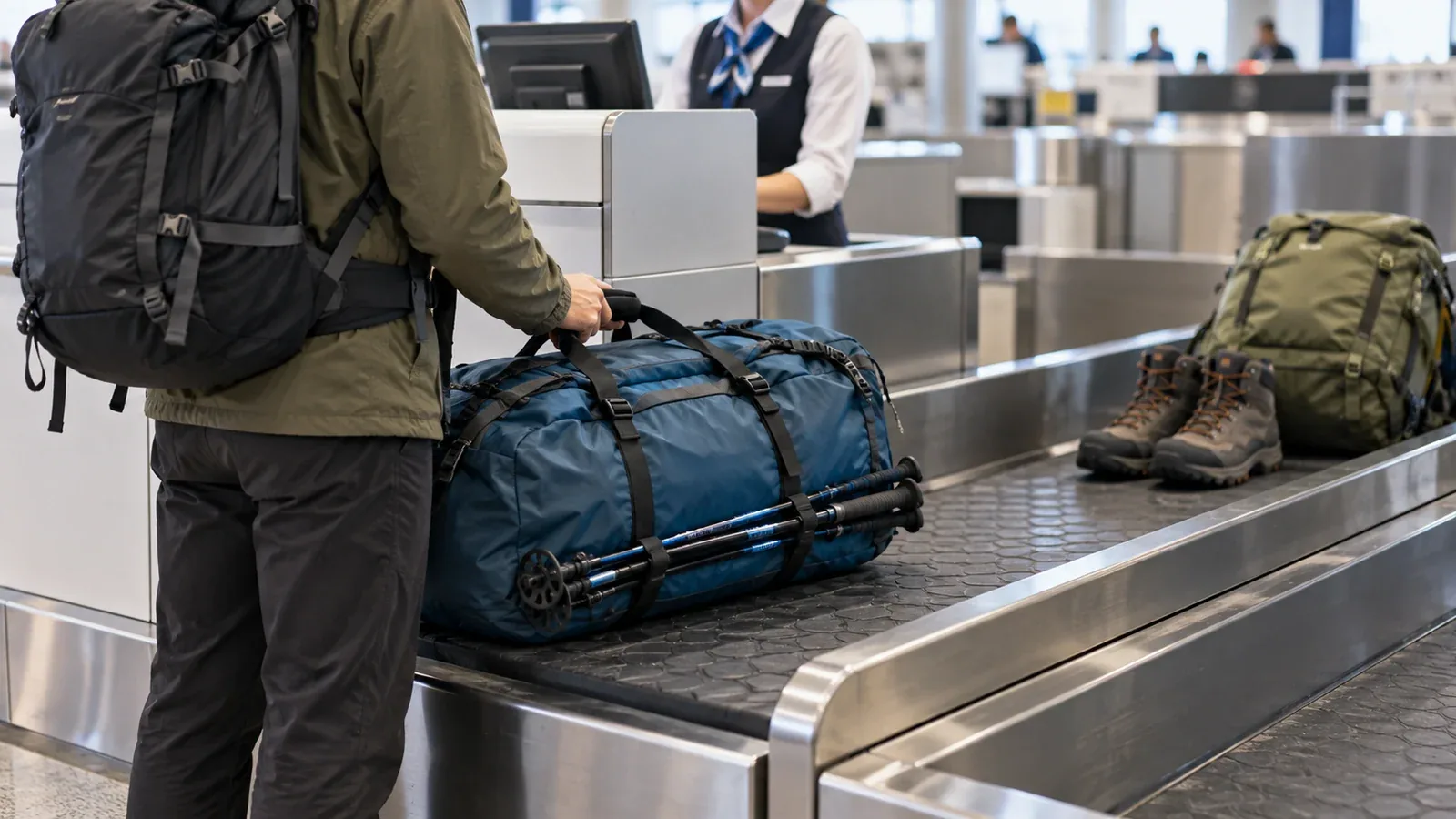
When flying to a hike, decide what goes in your carry-on and what you need to check. Hiking boots and tents can go in checked baggage within the size and weight limits, but poles and blades have their own rules. Camping fuel canisters are prohibited in both carry-on and checked luggage, even when unused.
This guide covers the basics of flying with hiking gear, how to get fuel at your destination, and what to check on domestic and international flights.
Why gas canisters aren't allowed
Camping stove canisters, whether threaded or cassette-style, contain pressurized flammable gas such as butane or propane. Because of the risk of leaks and fire, Japan's transport ministry lists stove fuel canisters as prohibited in both carry-on and checked passenger baggage.
Even if a gas canister seems empty, leave it out of your bags and check how to dispose of it locally. A gas burner with the fuel removed is treated separately from the canister. A stove or container used for liquid fuel can only be checked under conditions such as being completely empty, free of fuel residue or vapour, and accepted by the airline. Tell the airline what model you have and how it has been used before you travel.
If you realise you've accidentally brought fuel, tell airline or airport staff before security and follow their instructions. Never puncture or vent a canister at the airport.
What you can check and how to pack it
Much of your hiking gear can go in checked baggage when packed properly. Blades, sharp points, and liquids have additional rules.
Blades and tools
Keep crampons, ice axes, knives, and machetes out of your carry-on and check whether the airline will accept them in checked baggage. Use secure covers on blades and points and stop the items from moving in the bag. Check the dimensions and weight after packing long items such as ice axes.
Trekking poles
Cabin rules for trekking poles depend on the length, tip, airline, and route. Check the airline's instructions. If checking the poles, fold or collapse them, protect them, and measure the packed dimensions. For items over the limit, check acceptance, sports equipment rules, and fees in advance.
Liquids and fuel
Flammable fuels such as white gas, alcohol stove fuel, and kerosene are prohibited in both types of baggage. On international flights leaving Japan, allowed liquids and gels such as sunscreen generally need containers of 100 mL or less, in a clear resealable bag of no more than 1 litre. For larger containers in checked luggage, check whether the contents and quantity are allowed. Domestic rules differ.
Ropes, tents, and sleeping bags
These can usually be checked within the airline's size and weight limits. Clean and dry ropes, coil them, and put them in a bag. Cover sharp items such as tent stakes. For international trips, also check the destination's biosecurity rules on soil and dirt on boots and tents.
Domestic and international flights
Basic restrictions on dangerous goods apply to both. Details vary by airline and route.
Domestic flights: check the guidance from Japan's transport ministry and the airline operating your flight. Airlines such as JAL and ANA list items allowed in carry-on and checked baggage.
International flights: check the authorities at departure, transit, and arrival, plus the airline operating each leg. A codeshare may be operated by a different airline than the one you booked with, and you may go through security again in transit.
If your itinerary includes a domestic flight abroad, check the local civil aviation authority, airport, and carrier separately. Keep power banks out of checked baggage. Ask the operating airline about limits on the number and capacity of carry-on power banks and how they can be used and stored onboard.
Buying gas canisters at your destination
Plan to get gas after you land. If you're headed to the Northern Japanese Alps or Yatsugatake, ask an outdoor shop in a town along the way about the model that fits your stove, stock, and opening hours. If you plan to buy at a hut, ask the hut in advance whether it sells the canister you need.
Abroad, contact shops in towns you'll pass through, such as Queenstown or Banff. Check the connector and fuel type recommended by your stove's manufacturer, then confirm a compatible product is available locally.
If getting fuel is difficult, consider renting cooking gear locally or packing food that doesn't need heating. Some solid fuels are classified as dangerous goods because they're flammable, and alcohol stove fuel is also prohibited in carry-on baggage. If changing heat sources, check the safety data sheet and the operating airline's rules for the specific product.
A packing and declaration checklist
- Check dangerous goods as soon as the trip is booked: use the rules for each operating airline to check your gear item by item.
- Leave gas canisters and fuel out of your bags: keep them out of both carry-on and checked luggage. Plan where you'll buy them and how you'll dispose of them before flying back.
- Cover and secure blades and points: if the airline accepts them in checked baggage, use protective covers for blades and crampon points and secure them inside the bag.
- Measure and weigh the packed bags: limits and fees vary by airline, route, and fare. Weigh each bag and measure all three sides and the longest side, then check excess and sports equipment charges.
- Ask about unclear items before travel: give the airline the model number, materials, and whether the item has held fuel. If you spot an issue at the airport, ask a staff member before security.
What to do next
Open the dangerous goods and baggage information for the airline operating each flight, then check it against your packing list. Buy gas at your destination and confirm the compatible model and stock in advance. Nordwand's partner directory can help you look for shops along the way.
References
- Japan Ministry of Land, Infrastructure, Transport and Tourism: carry-on and checked baggage restrictions
- Japan Ministry of Land, Infrastructure, Transport and Tourism: list of restricted items
- IATA: dangerous goods guidance for passengers
- ANA: liquids and other restrictions on international flights
- JAL: common dangerous goods on domestic flights
- JAL: carry-on power bank rules
- New Zealand Ministry for Primary Industries: declaring outdoor equipment