
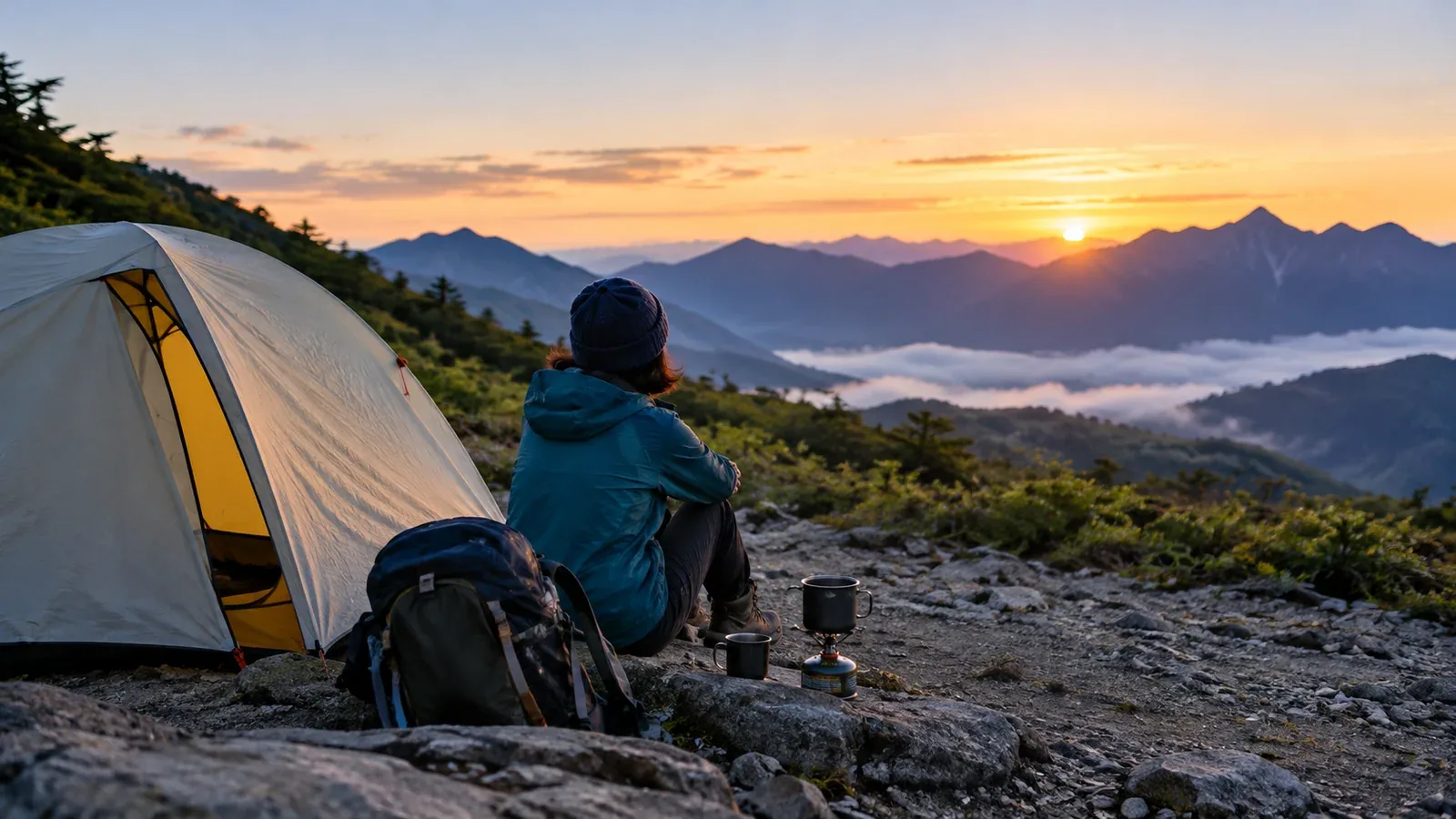
When you want to start hiking early, going to the area the day before and staying nearby is one way to get enough sleep. It can cut the morning travel time compared with taking the first train or an overnight bus.
There are three main choices: staffed lodging such as a mountain hut, ryokan or guesthouse, sleeping in a vehicle in a space that allows overnight stays, and camping at a campground or designated site. They differ in cost, comfort, preparation and availability. Choose with the area, transport, season and your stamina in mind.
When it makes sense to stay the night before
Consider staying nearby in three situations.
- The trailhead is far away and the first service will not get you there in time. If you need a bus or car from the nearest station, include the transfer when checking whether you can make an early start.
- The route is long or difficult and you want to manage fatigue. On a day hike with a big elevation gain, for example, leave enough time to sleep so you can still make good decisions later in the day.
- The weather may change at short notice and you want some flexibility. Check warnings and road conditions before traveling. If a typhoon or heavy rain makes the journey unsafe, postpone it. Even if you can travel safely, read the lodging cancellation terms and decide when to call off the hike the next morning.
If the trailhead is within an hour and the hike is short, an overnight stay may not be worth the cost and effort. First work out when you need to be at the trailhead with time to spare, then use that to decide whether to stay over.
Staffed lodging: huts, inns and guesthouses
A hut near the trailhead or an inn or guesthouse at the foot of the mountain gives you a place to rest with bedding. Ask if they can provide an early breakfast or a packed meal if you need one.
How to choose a place
Opening dates, overnight availability and booking methods vary between huts. Some huts are a walk from the trailhead, so check how long it takes to reach the hut and when you need to check in. Some inns at the foot of the mountain provide early breakfasts or packed lunches. Ask the property or check the local tourism association.
Tips for the night before
- Check the latest check-in time and call the property if you expect to be late.
- Pack for the next day's hike before going to bed so you can get going early.
- Alcohol can impair sleep, so consider skipping it when you have a long hike the next day.
Sleeping in a vehicle: use a site that permits overnight stays
If you are driving, an overnight vehicle space can help keep costs down. Check the price and how much morning travel the location saves you.
Choosing a site
Check the car park or facility operator's official rules. Japan's transport ministry says roadside stations known as Michi-no-Eki allow drivers to nap in ordinary parking areas to recover from fatigue on the road, but ask people to avoid using those public spaces for overnight stays. For an overnight stop, use a designated space or a campground that explicitly allows sleeping in your vehicle.
Preparing for a comfortable and safe night
The main considerations are how well you can sleep and how you will cope with changing temperatures.
- Bring a sleeping bag and insulated pad suited to the temperature. Sleeping with the engine running risks carbon monoxide poisoning from exhaust. Switch the engine off before sleeping. If you cannot stay warm without it, choose another place to sleep.
- Plan for privacy and ventilation. Ventilate according to the site's rules and the weather. Opening the windows does not make it safe to sleep with the engine running.
- Find the toilets before you park. At some trailheads, toilets are locked overnight.
- Some mountain areas have private vehicle access restrictions. Check the restricted dates and the latest shuttle schedules with the local authority or operator.
Camping: campgrounds and designated sites
An official campground or designated tent site near the trailhead can be an economical way to spend the night outdoors. Allow time to pitch and pack the tent and confirm that you can camp there.
Check the site first
Japan's environment ministry asks national park visitors to camp only in designated places. Elsewhere, check whether the land or facility manager permits overnight camping. See the official park, local authority or facility information for access rules, reservations and reception hours.
What to consider when camping before a hike
- Allow time to pitch and pack the tent. Plan your travel and check-in so you can set up in daylight.
- Morning packing time. Factor in how long it takes you to pack up, eat breakfast and reach the trailhead with your particular equipment and experience.
- Temperature at your elevation and time of year. High campsites can drop below freezing from autumn onward. Check a mountain forecast for the elevation and choose a sleeping bag and pad with room for colder conditions.
- What you will carry on the hike. If you camp with a tent, mat and cooking gear, will you need to carry them on the trail the next day? Check whether you can leave them in your car or with the facility.
Choosing among the three options
Use these examples as a starting point.
- Public transport only, comfort matters — Look for staffed lodging, such as a mountain hut or inn.
- Driving, keeping costs down and overnight vehicle stays are permitted — Consider sleeping in your car.
- Driving, have camping gear and can secure a designated site — Consider camping.
- Want to decide whether to hike the next morning — If the journey is safe, consider accommodation with cancellation and change terms that suit your plans.
This is a starting point. Lodging availability, parking rules and designated tent sites vary by place and season. Check the options in parallel early in planning.
Next steps
First decide when you need to start walking to give yourself enough time. If you need to stay nearby, check official guidance from the local authority, facility or car park operator. Before booking, confirm how you will reach the trailhead in the morning, what you can change if weather deteriorates and what your backup is.
References
- Ministry of the Environment — national park rules and etiquette
- Japan Meteorological Agency — typhoons and heavy rain alerts
- Japan Weather Association — mountain weather
- Ministry of Land, Infrastructure, Transport and Tourism — rules for Michi-no-Eki roadside stations
- Japan Automobile Federation — carbon monoxide risks in a snowbound vehicle