
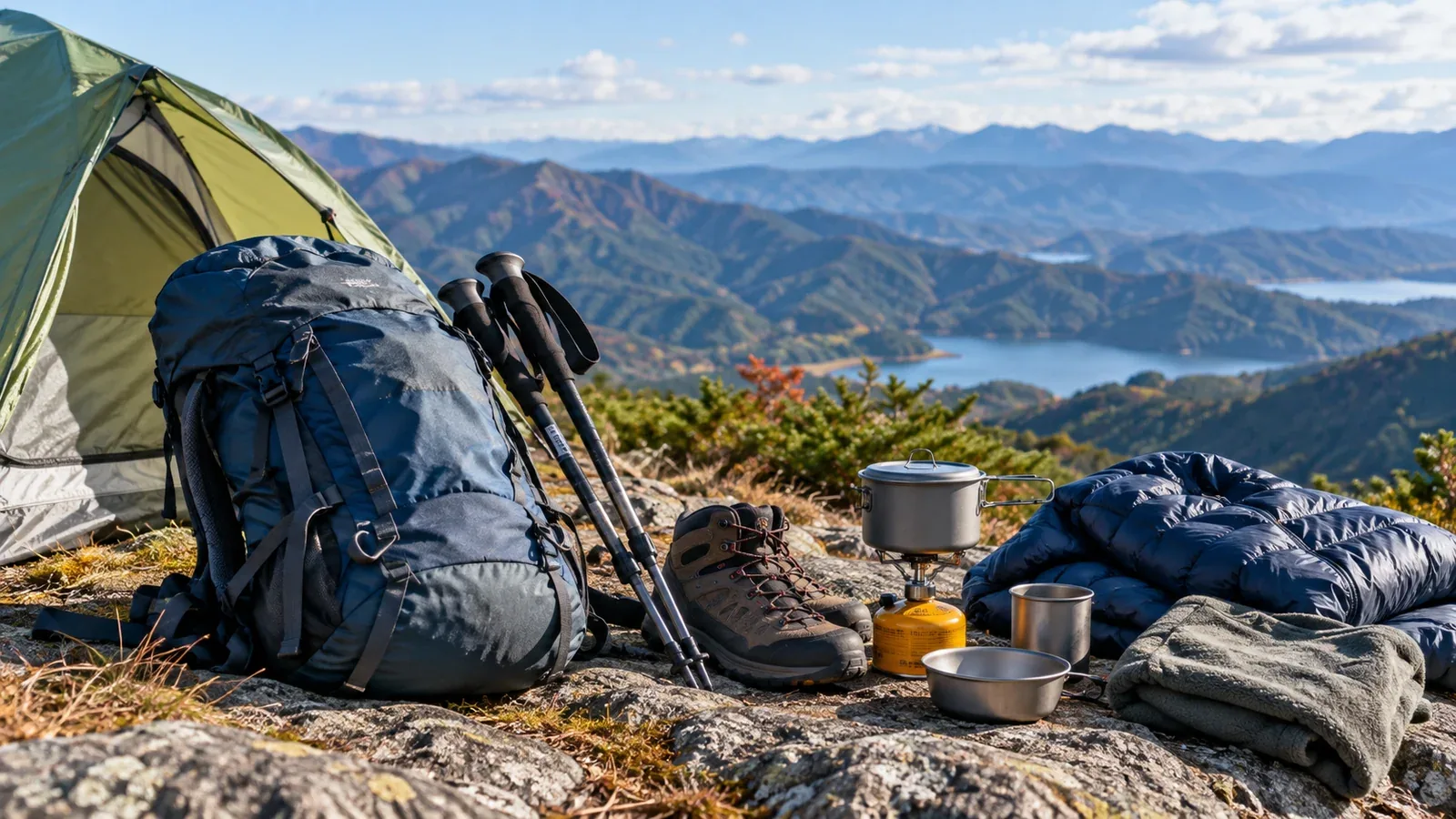
A full set of new hiking equipment can be expensive. Buying used can lower the cost, but relying on safety equipment of unknown condition or history can lead to a serious incident in the mountains.
This guide covers items that are easier to assess secondhand, items to avoid when their history is unknown, and checks to make after buying.
Two questions to ask about used gear
Start with two questions when weighing the risk of buying used.
First, can you establish the history of impacts and loading? You may be able to see a bend in a tent pole or trekking pole, but appearance alone cannot always tell you its condition. Harness fibers and helmet liners can conceal damage.
Second, can you establish how the item has aged and been stored? UV exposure, heat and moisture affect materials differently. If waterproof fabric layers are separating, they may be beyond repair. Clean-looking fabric does not necessarily perform as expected. Take particular care when the storage or use history is unclear.
Gear that is easier to assess secondhand
Cookware and utensils
Wear on aluminum and titanium cookware is often visible. Check for dents, a warped base and loose handles. Avoid items with badly peeling nonstick coatings.
Trekking poles
Check whether the shafts are straight, whether joints and locks stay secure, and whether the tips and baskets are worn. Skip poles of any material, including carbon, that have cracks, dents or signs of a heavy impact.
Backpacks
Look for damage to the frame, compressed hip-belt padding, sticky zippers and frayed seams. Flattened back padding can make a long carry less comfortable. A warped frame can distribute weight poorly. Look closely at the shoulder-strap attachments and corners at the base.
Tents
Check the poles for breaks, bends and cracks at the joints. Pitch the fly and inner tent and look for peeling seam tape or a coating that feels sticky or flakes off. A seam repair is different from deterioration across the waterproof layer. If damage is widespread, ask the manufacturer about repair and compare the total with the price of a new tent.
Clothing: fleece, soft shells and down jackets
Check fleece for thinning, down garments for uneven fill and tears, and soft shells for the state of the durable water repellent finish (DWR). Manufacturer-approved care can sometimes restore surface repellency. It cannot repair a damaged membrane or separated layers. Check that the zippers work and look for wear.
Hiking footwear: low and mid cut
Check tread depth, cracks or crumbling in the midsole, gaps where the sole meets the upper, and tears inside the shoe. Pressing on the sole cannot establish internal condition or waterproofness. Ask the maker whether that model and pair can be resoled and include the repair in your price comparison.
Equipment to avoid when its history is unknown
Climbing harnesses, slings, carabiners and similar gear
Fall-arrest equipment such as harnesses, slings, ropes and carabiners can show no visible evidence of a major load or poor storage. The UIAA advises against secondhand climbing gear because its integrity cannot be assured. Avoid items with unknown history and use the manufacturer's product-specific lifespan and retirement criteria. A blanket ten-year rule does not establish that an item is safe.
Helmets
A major impact can damage the internal impact-absorbing material without an obvious mark outside. Avoid used helmets with unknown history and choose a new one designed for the activity. Along with its standards markings, check the maker's lifespan and replacement instructions.
High-cut, alpine and crampon-compatible boots
For crampon boots, make sure the sole stiffness and attachment points suit the binding. If the design clips onto heel or toe welts, wear or chips can prevent a secure fit. Material degradation can also cause a sole to separate. Avoid boots whose condition or history you cannot establish, and ask the manufacturer about inspection or repair if necessary.
Crampons and ice axes
Check crampon points, bindings and straps and use the manufacturer's instructions to test the fit on the boots you will wear. Look for deformation, looseness or corrosion in the ice axe shaft and head. Do not use equipment whose condition remains in doubt or whose history is unknown.
Checks after buying used gear
Even when the gear appears to be in good shape, work through these checks.
- Clean and dry it — Follow the manufacturer's instructions. Damage may become visible after you remove dirt.
- Check every moving part — Test all zippers, buckles and adjustment straps.
- Pitch the tent at home — Check the seam tape and how the poles fit together.
- Test footwear somewhere you can turn back easily — Inspect the soles first and stop using them if you see a problem. If they pass, test the fit and comfort on a short outing before committing to a long hike.
- Ask a specialist if you have doubts — Ask the manufacturer or a specialist before buying if you cannot assess the gear. A visual check cannot establish the safety of protective equipment with an unknown history.
Next steps
Ask whether the item protects you from a fall or impact and whether you can establish how it was used and stored. Prioritize buying protective gear such as harnesses and helmets new. Look for savings on items easier to assess, such as cookware and backpacks.