
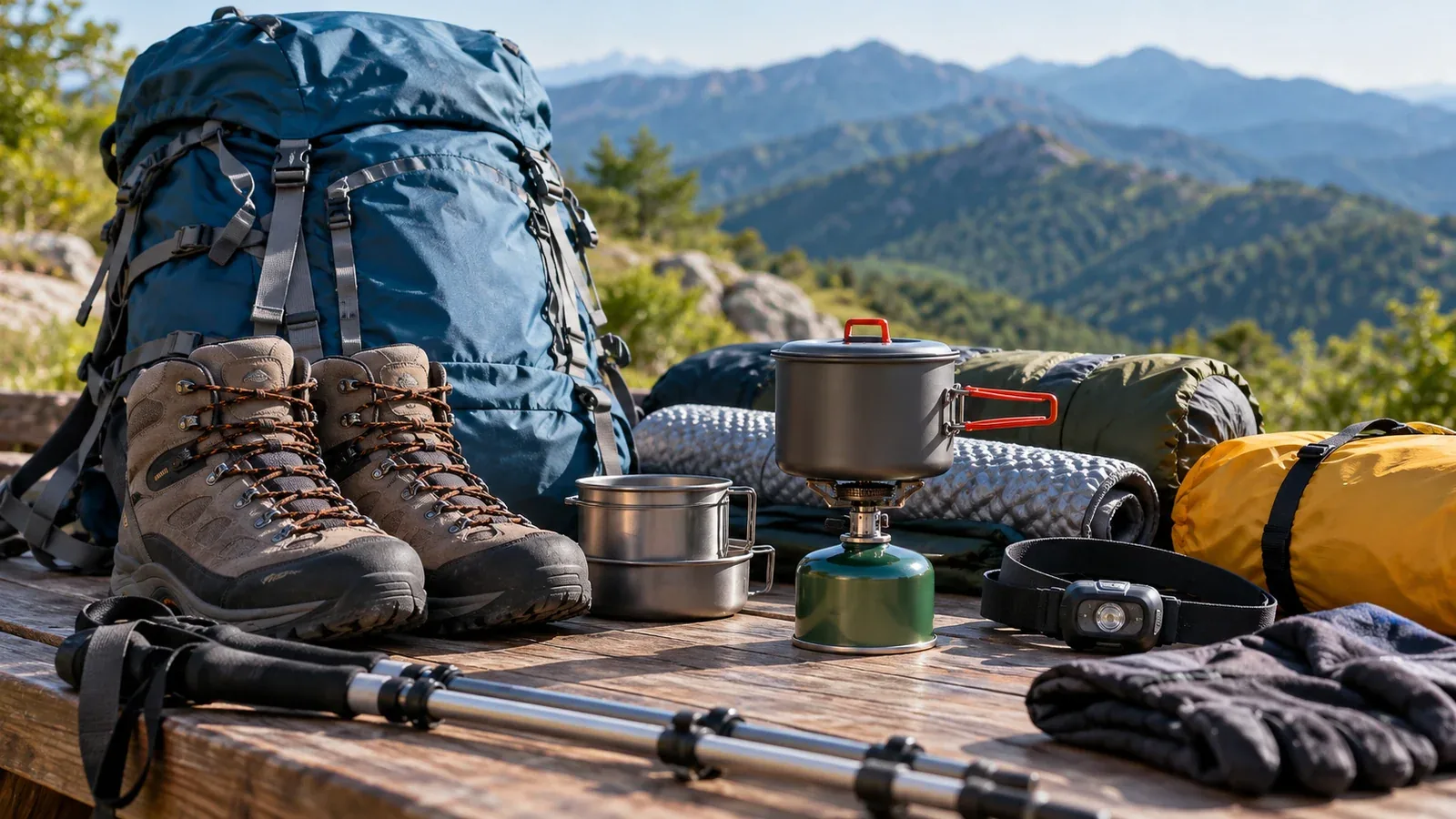
Maybe you want to start hiking without buying a full kit, or you would rather borrow equipment you only use a few times a year. Look for rentals at shops and mountain huts near the trailhead, specialist stores in cities and mail-order services.
This guide covers what you can rent, what to check before hiring and how to decide whether to buy. Availability and costs vary by provider, date and region. Check the rental service's official information before booking.
What equipment can you rent?
Rental is most useful when the gear is costly to buy, you will rarely use it, or you want to try a size or specification before buying.
Tents, sleeping bags and sleeping pads are common rentals. Tents vary in weight and weather protection, so practice setting one up before the trip. Choose a bag and pad for your campsite's elevation and expected low. Using summer equipment will not tell you whether it is suitable for winter.
Backpacks are widely available. Depending on the shop, options can run from 30–40 L daypacks to packs over 60 L for multiday hikes. Try one on with weight to see whether it fits and whether it has enough space for your kit.
Crampons, ice axes and snowshoes are available from some providers. Renting can make sense for infrequent use, but check that the gear is suitable for the route and that crampons fit your boots. Before taking unfamiliar equipment into the mountains, learn to use it with an experienced person or on a course.
Hiking boots are available from some services. Foot shape and sock thickness affect fit. Try boots with the socks you plan to wear, and walk and flex your feet to check the fit. If you plan to hike regularly, consider getting a pair that fits and breaking it in yourself.
Rainwear should fit and suit your intended use. Check the outer fabric, zips and seams. Availability and maintenance vary by provider.
Gear that may be easier to bring yourself
It is easier to budget if you know which pieces you would rather own.
For gear worn next to the skin, such as underwear, socks and glove liners, bringing your own makes fit and hygiene easier to manage. If you rent a helmet, check the fit and condition and ask how the provider inspects it.
Headlamps, maps and compasses are available from some shops. Whether you rent or buy, know how to use them, check your batteries and spares, and make sure you have a map of your area. Pack your own trail food for the outing.
Trekking poles are available from some services. Grip and adjustment are personal. If you expect to use poles regularly, try the grip and adjustment on a rental before deciding whether to buy.
Types of rental service and how to choose
Pickup near the trailhead
Some shops and huts near trailheads offer rentals. Collecting equipment locally means carrying less on the way there. Pickup and return times, collection points and booking rules vary. Check the official site for the area, hut or tourist association to see what is offered.
Specialist stores in cities
A city shop may let you try on boots or load a pack before you leave. Check whether you can try the gear, ask staff about using it, and confirm when to collect and return it.
Delivery rentals
Order online, receive the equipment at home and send it back. It can work well if you live far from a shop or want delivery during the week for a weekend hike. Because you cannot try it first, compare the size chart carefully with your measurements. Read the return deadline and the terms for cleaning and damage before you book.
What to check before renting
Common problems include finding the gear sold out, getting the wrong size or facing an unexpected charge. Check these points before ordering.
- Stock and size availability — Popular tents and boot sizes can be booked out.
- Pickup and return times — Your plans depend on whether you can pick up the day before, return the same day or rent for several days.
- Damage and loss charges — The terms vary by provider.
- Condition and cleanliness — Ask how boot interiors and sleeping bags are cleaned.
- Accessories and compatibility — Check that tent pegs and poles are included and that crampons fit your boots.
Rental periods and extension fees vary. Compare the total with outbound and return shipping, the return deadline, extension fees and any amount you would owe for damage or loss.
How to decide between renting and buying
Start by estimating how often you will use each item.
Expensive gear you only use a few times a year can be a good candidate for rental. You can also hire it a few times to learn which features or model suit you before buying.
For gear you use often, compare purchase and maintenance with rental and shipping for your expected outings. Frequency alone does not decide it. Owning equipment also makes it easier to practice using it.
Hiking boots, a backpack and rainwear may be worth buying early if you plan to hike regularly. Fit, function and condition matter. In particular, leave time to try on and break in footwear before a long hike.
Next steps
Compare stock, costs and return terms from providers serving your hiking area, and reserve in advance. When unfamiliar equipment arrives, inspect it and check the accessories, then try it before the trip. Buy the pieces you know suit you as you go to avoid accumulating gear you never use.