
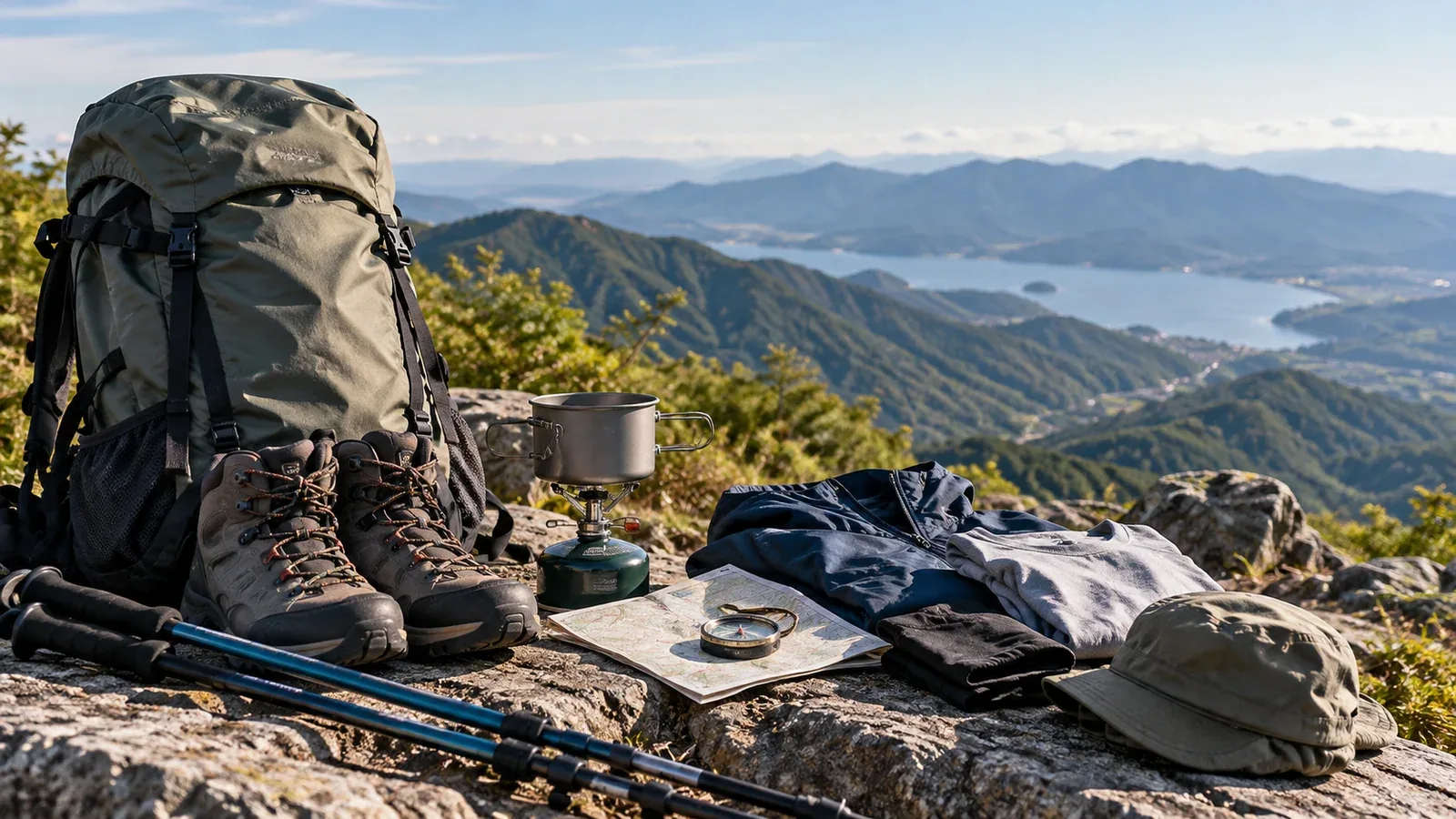
How much does it cost to start hiking? A visit to a gear shop can make the total add up quickly, particularly once you include clothing, boots and a pack. You can spread purchases over time.
Here is one way to allocate up to ¥100,000 to your initial gear. Get what the route requires first and save purchases you will not use on your first outing until you have more experience. Budget separately for transport and other expenses.
This example assumes a manageable day hike on a maintained trail without snow. Elevation alone does not determine difficulty. Camping and winter hiking require different equipment and skills. Start by choosing the route and conditions, then choose your equipment.
Get footwear, rainwear, a pack and safety gear first
Choose boots, rainwear and a pack that suit the outing and fit you. From your first hike, also bring the equipment your route calls for, such as a headlamp, map and compass, phone and power supply, first-aid kit, water and trail food. Try borrowed equipment before setting out.
Hiking footwear should suit the surface and your feet. Look at grip and sole condition, heel hold and room for your toes. Try it on with the socks you will wear.
A waterproof jacket and trousers help keep rain and wind from chilling you. Even for a day hike, take both pieces in a fit that lets you move freely.
A backpack (25–30 L as an example) should hold water, food, rainwear and warm layers. Choose capacity according to the kit you need, and try it on loaded to check the fit.
Whether you buy or rent, start with what you need for the first outing. The example below sets aside ¥65,000 to buy footwear, rainwear and a pack.
Use suitable clothes you already own
Layers help you regulate warmth. Think of a base layer next to the skin, a middle layer for insulation and an outer layer for wind and rain.
You may already own outdoor or sports clothing you can use. A moisture-wicking, quick-drying long-sleeve top can work as a base layer. Cotton dries slowly when wet and can chill you, so hikers usually avoid it.
An existing fleece or light down jacket can often serve as a middle layer. Rainwear can also serve as the outer layer.
If your clothes suit the outing, you may be able to spend less on spare clothes or insulation. First check whether they suit the temperature, wind and rain you expect.
Purchases that can sometimes wait
For your first few outings, you may be able to put off buying these items.
- Trekking poles — Use them if the terrain or your needs call for them. Learn the length adjustment and how to use them beforehand.
- A high-spec headlamp — Carry a headlamp and backup power from your first day hike. If basic functions are enough for the route, the upgrade can wait.
- Gaiters — Generally optional on a snow-free summer day hike on an easy trail.
- Hiking gloves and hat — You may already have suitable ones.
- Dedicated GPS or satellite communicator — Buying a dedicated device may be able to wait on a maintained route. Know how to use offline maps and a paper map and compass. Make a separate communication plan for areas without cell coverage.
Three ways to spend less
1. Look at sales and outlets. Previous models may be discounted. Check size, condition and return terms as well as price.
2. Rent before buying. Rental services operate around Japan and near some trailheads. Renting for the first outing or two can help you learn which features you actually need. Check each provider for its items and rates.
3. Assess used equipment carefully. Check soles, waterproof fabrics, seams and zippers. Avoid protective equipment with an unknown history. Consider buying new or renting from a trusted provider when you cannot judge the condition.
Example allocation for a ¥100,000 budget
These figures are sample spending caps, not current retail prices or market ranges. Check actual prices before buying. Include shipping when comparing rental options.
- Hiking footwear — ¥25,000
- Waterproof jacket and trousers — ¥25,000
- Backpack — ¥15,000
- Headlamp and backup power — ¥4,000
- Extra clothing — ¥10,000
- Map, compass, first-aid supplies and similar items — ¥10,000
- Reserve — ¥11,000
The example totals ¥100,000. If you already have what you need in some categories, keep the money in reserve or move it to another item your route requires.
If the total runs over, look at usable gear you already own and rentals. Reassess whether the first route suits you before cutting essential safety equipment.
Next steps
Choose your first hike and list its gear requirements. Try footwear on in a hiking shop. Separate the things you own, will borrow and will buy in your estimate, then try your kit on a short, easy route.