
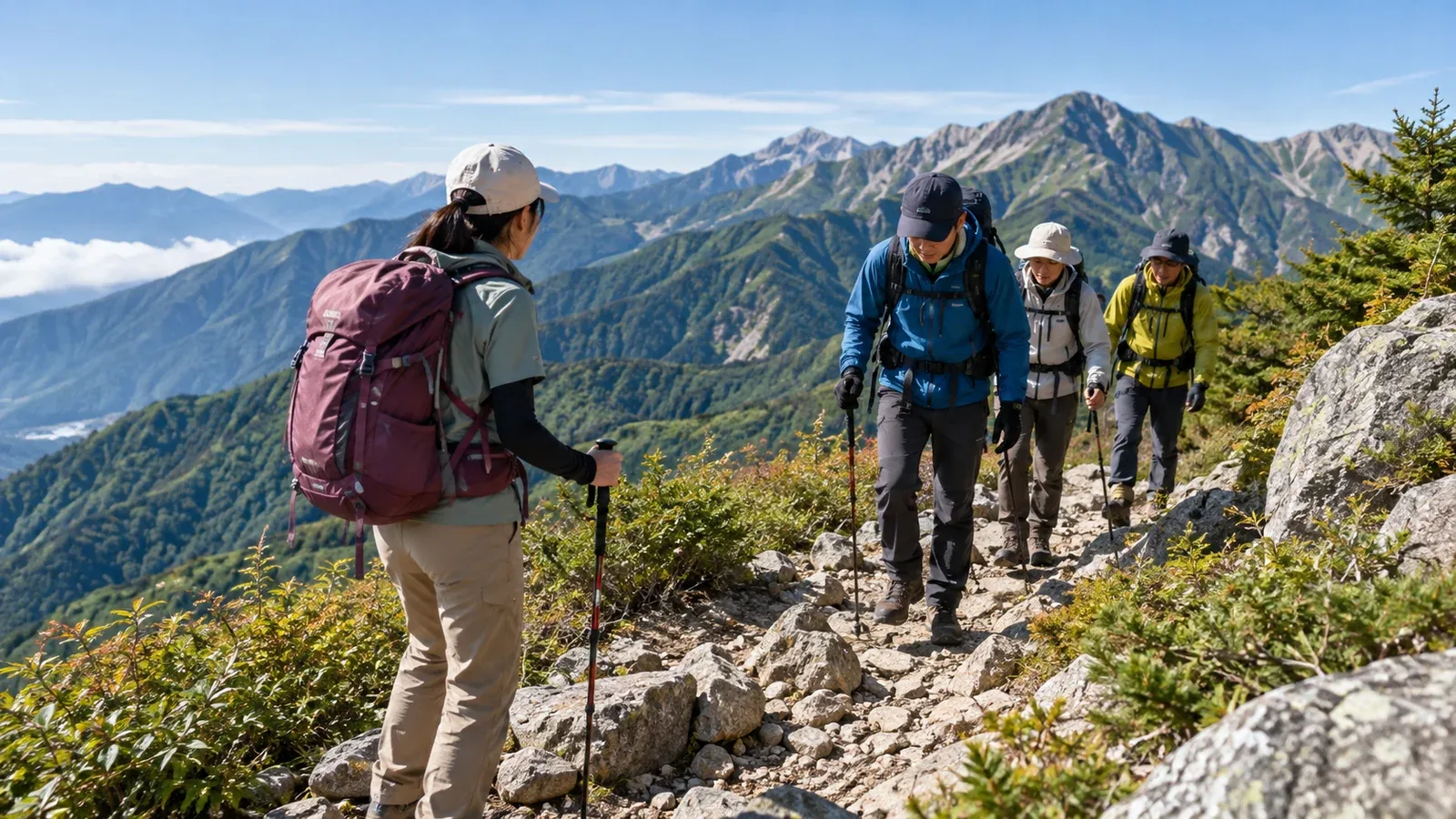
Passing, overtaking and stopping on the trail are everyday situations that can catch new hikers off guard. The mountains have customs of their own. A little preparation helps you avoid blocking the path or making noise where others are resting.
This guide looks at what commonly goes wrong, why it matters and what you can do in each situation. The aim is to help you make the call when you’re actually out on the trail.
On the trail: passing, overtaking and stopping
Getting confused about who should yield
On hiking trails, uphill hikers generally have priority. Getting moving again on a steep slope takes effort. If you’re going downhill, wait on a wide section with firm footing and let those climbing pass.
Use your judgment. A large group may be descending, an uphill hiker may want a breather, or the trail may be wide enough for everyone. Someone climbing may wave you through. Watch what others are doing and agree who goes first.
Overtaking without saying a word
Coming up behind someone and squeezing past without warning can startle them. Ask, “Could I pass when the trail widens?” Wait until there’s room for them to let you by safely.
If they don’t hear you, keep a little distance and wait, or ask again once there’s room. Pressing close behind someone can be dangerous, especially on rocks or beside a drop.
Stopping in the middle of the trail
Stopping in the middle to rest, check a map or take a picture can leave people behind you with nowhere to go. Find a wide spot with firm footing and leave room for others to pass while staying on the trail yourself. On busy weekends, look behind you before stopping.
Mountain huts and rest areas
Using a hut’s seating without checking who it’s for
Some huts have benches or seating for shop customers, overnight guests or anyone passing through. Read the signs and ask staff if you’re unsure. Keep your gear clear of the shop and entrance, and share seating when it’s busy.
Each hut has its own rules and facilities. Check its official information or ask the operator before visiting.
Keeping other guests awake
Many hut guests set out before dawn, so bedtime often comes earlier than it does back home. Late-night conversations, walking around with a headlamp on and rustling dry bags or snack wrappers can all keep others awake.
Before bed, put anything you’ll need overnight next to your headlamp. Pack snacks in a container you can open quietly.
Rubbish, plants and wildlife
Leaving behind something small
Even a scrap tucked out of sight becomes part of a bigger problem on trails used by many people. Take all your rubbish with you, including wrappers, tape, rubber bands and tissues.
The smell of leftover food and crumbs can attract wildlife. Bag your food waste, including peels and seeds, and dispose of it properly when you’re back down.
Leaving the trail and trampling plants
Cutting a corner or stepping off for a photo can damage grassland and alpine plants. The growing season is short at altitude, so damaged vegetation can take a long time to recover. When others follow the same footprints, erosion spreads the damage.
Before stepping off, think about why the trail is there. Its route helps protect both hikers and the landscape.
Handling or collecting plants and animals
Picking flowers or berries or catching insects in Japan’s national and quasi-national parks can be restricted by law, depending on the zone and species. Check the environment ministry, local authorities or the site manager for current rules. Enjoy plants and wildlife where you find them and leave them there.
Noise and light on the mountain
Talking loudly or playing music on a speaker
Many people come to hear the sounds of nature or enjoy the quiet. Keep your voice down and leave speakers switched off. If you use earphones, keep the volume low enough to hear your surroundings and people speaking.
Voices carry farther in the mountains than you might expect. Pay particular attention to your volume at busy summits and rest areas.
Using a headlamp at night or early in the morning
Keep your headlamp out of people’s faces and away from tents and hut sleeping areas. Point it down and use enough light to see where you’re stepping. A low or red setting can help with close-up tasks in a tent or hut.
When you’re hiking as a group
Small habits that barely matter when you walk alone can cause problems when several people do them together.
- Walking abreast. On narrow trails this blocks people coming the other way. Walk in single file.
- Setting a pace the slowest hiker can’t keep. When the front pulls away, the last person can go out of sight, delaying the discovery that someone is lost or hurt. Match the pace of the slowest person and wait for everyone at junctions.
- Taking up the whole trail on breaks. Find a wide spot with firm footing, gather your gear and leave room to pass.
Try it on your next hike
If one of these habits sounds familiar, pick one thing to change on your next outing. Look back at your Nordwand hiking log to see how it went. If you’re unsure what’s customary in a particular situation, ask experienced hikers in the Nordwand community.
References and sources
- Yakushima World Heritage Conservation Center — Hiking precautions and etiquette
- Karasawa Hütte — Accommodation and visitor facilities
- Japan Ministry of the Environment — National park rules and etiquette
- Japan Ministry of the Environment — Trail maintenance guidelines for Daisetsuzan National Park
- Japan Ministry of the Environment — Designated plants in national and quasi-national parks
- Japan Ministry of the Environment — Wildlife protection in national and quasi-national parks
- Nagano Prefectural Mountaineering Center — Group hiking handbook