
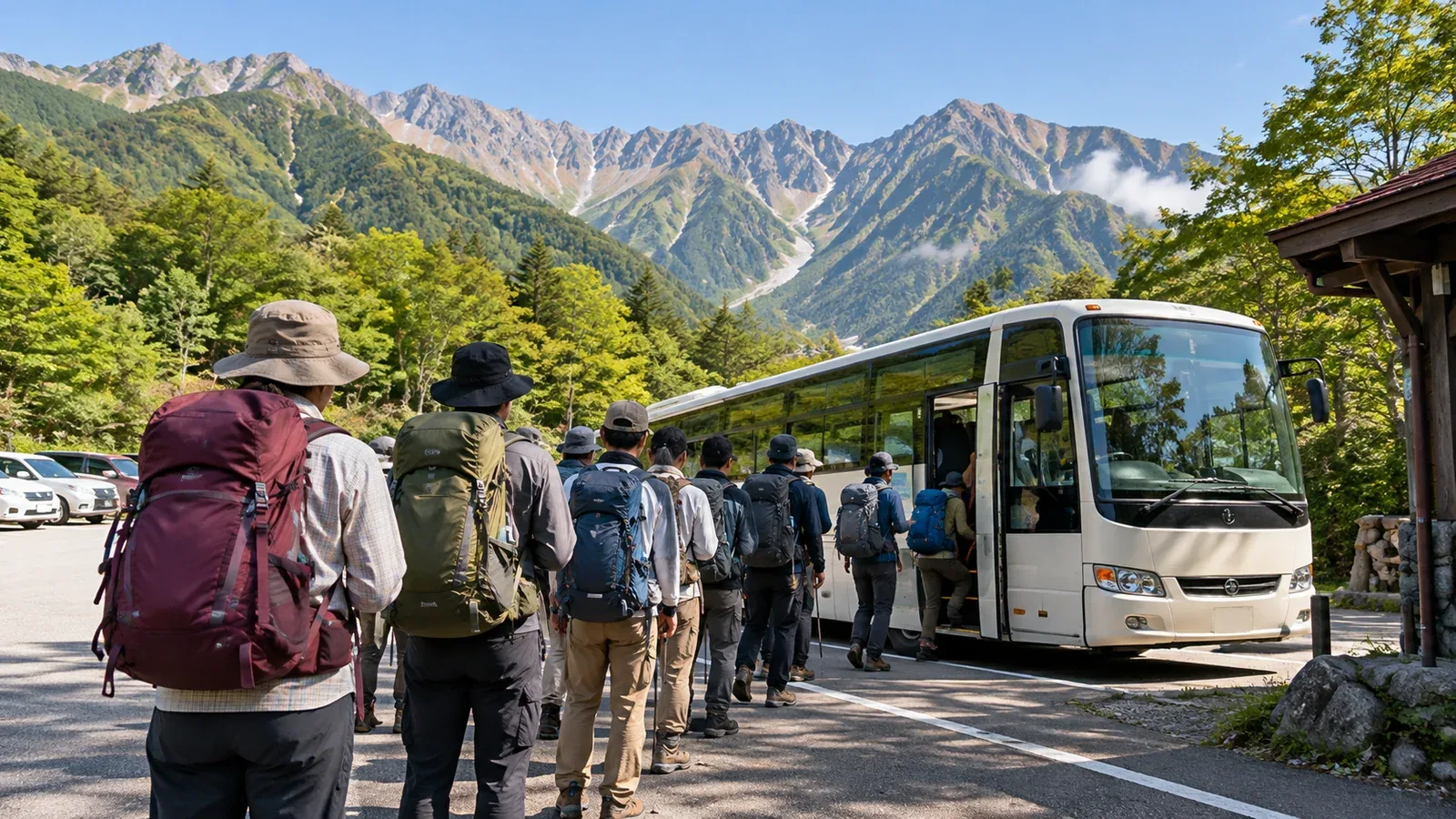
Some popular hiking areas restrict private vehicles seasonally or year-round. Switching to a shuttle or other transport before the restricted stretch changes the travel time, cost, and time you can start hiking.
This guide explains how to adjust your plan, budget for fares and wait times, and weigh alternatives. Schedules change, so check official information from local authorities and operators for your specific route.
What private-car restrictions are and why they exist
These rules limit access for private cars and other vehicles near trailheads or on mountain roads. They help ease congestion, improve safety, and protect the environment. Shuttle buses or taxis may operate on some stretches.
Rules vary by area. Some roads to Mount Fuji trailheads have summer restrictions, while private cars cannot enter Kamikochi year-round. Check separately whether a full car park means access is closed. Each season, consult official information for dates, hours, affected vehicles, and road sections.
Estimating fares and travel time
Where restrictions apply, park at a designated lot before the restricted stretch and transfer to an available shuttle, taxi, or other service. This affects your plan in three main ways.
Extra cost: add the parking charge and round-trip bus fare. If parking is charged by the day, it adds up on a multi-day traverse. Fares vary by route, so check official one-way and return fares and any reservation fee.
Extra travel time: allow for walking to the stop, waiting, and riding. Shuttles often run infrequently, and during busy periods you may need to reach the car park well ahead of the first departure. A fixed timetable gives you less control over your start than driving to the trailhead at dawn.
Waiting after the hike: if you miss the last bus, you may have no way back to your car that day. Road operators discourage walking on certain stretches, including the Fuji Subaru Line. Check alternatives in advance rather than assuming you can walk back. Set a turnaround time while you still have a margin, and avoid rushing the descent to catch the bus.
How to revise your plan
Check these points in order when planning a hike in an area with private-car restrictions.
- Check when and where restrictions apply. Consult local authorities, road operators, or the Ministry of the Environment. Check for changes to restrictions and closures a week before you go and again just before leaving.
- Check shuttle times, fares, and stops. Use official operator or tourism information to find the first and last departures, frequency, reservation requirements, and boarding point.
- Build the bus schedule into the hiking plan. Start with the expected bus arrival and allow for walking, breaks, and delays. Work back from the last bus to set a time to reach the exit trailhead and a turnaround time on the route.
- Decide what to do if you come down late. Check where and when a taxi can pick you up and whether you can find accommodation that day. If there is no fallback, choose a shorter route with enough time to get back or a different date.
- Set a target time for reaching the car park. In busy periods the lot may fill before the first bus. Ask the operator about capacity, opening hours, and alternative parking.
Outside the restriction period, on weekdays, and early in the morning
If the restriction is seasonal, it may be possible to drive in outside that period. Check separately for year-round restrictions and winter closures. The dates just before and after the restriction may still be busy, so find alternative places to park.
Weekdays can be much quieter in some areas. Weekend restrictions may be tighter, and there may be fewer buses on weekdays. Check the timetable for the specific day.
Even when you can drive to the trailhead, leaving and arriving early can help you find parking. The closest lots tend to fill first. Consider whether you have the time and energy to park farther away and walk to the trailhead.
How restrictions affect the total cost
If you share a car, you can split costs such as fuel, tolls, and parking. Each person still pays a shuttle fare. To compare per-person costs, divide the car costs by the number of riders and add one round-trip bus fare. If you go alone, you pay the full cost of the car.
Where trains and buses already reach the area, restrictions may have little effect on a public transport trip. A well-served shuttle route may even make connections easier.
Depending on whether cost or time matters more, you can travel outside the restriction period, use public transport, or share a car. Discuss the choice with your group before booking.
What to do next
Check the rules for your destination on official sites run by the local authority, road operator, or Ministry of the Environment. Find the first and last shuttles for your route and adjust your hiking plan. You can also ask people in the Nordwand community who know the area about local transport.
References
- Ministry of the Environment: private-car restrictions in Chubusangaku National Park
- Official Kamikochi website: traffic restrictions
- Official Mount Fuji climbing website: access by route
- Alpico Kotsu: shuttle from Sawando to Kamikochi
- Yamanashi Prefecture Road Corporation: Fuji Subaru Line information
- National Police Agency: mountain incident statistics