
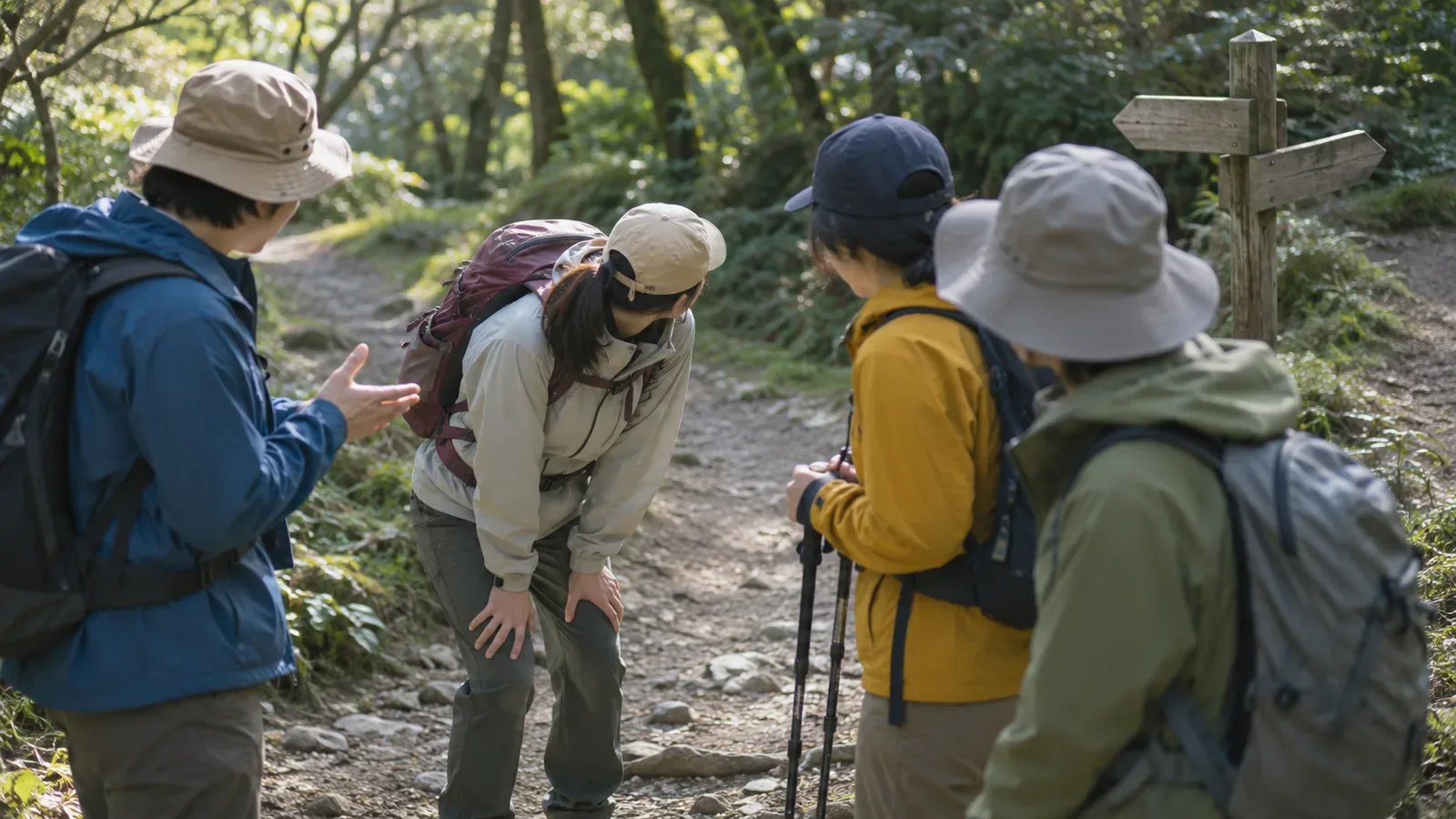
Follow “Are you OK?” with a question about pace or breaks. Try “How does this pace feel?” or “Would you rather rest now or walk a little slower?” Change what you do based on the answers and check on everyone, including beginners. These questions help start a conversation. People may still hesitate to speak.
Follow “Are you OK?” with a specific question
The U.S. National Park Service’s Hike Smart guide recommends letting the slowest hiker set the pace and staying together. It suggests putting the slowest person near the front. Even if you arrive a little later, you’re less likely to get separated and can help an injured person right away. The Appalachian Trail Conservancy’s group hiking guidance also recommends going at the slowest person’s pace. Plan around that pace from the start.
A reply of “I’m OK” may leave questions open. Beginners can also mean exactly what they say. Ask something specific, such as “Do you need to adjust your shoes or pack?” or “Would you like to change the pace?” Listen to what the person says. If they ask for something, work out together what to change before walking on.
Before setting out, turn the self-check into questions for everyone
The U.S. National Park Service suggests asking yourself about experience, pack weight, fitness, familiarity with the conditions and whether you’re hiking alone or with others. Choose a route everyone has the ability to finish safely. Great Smoky Mountains National Park also asks hikers to check whether the route fits the group and warns that a short mountain trail can still be hard or take a long time. Japan’s National Police Agency recommends choosing a mountain suited to fitness, experience and health, and scheduling ample time for breaks in its 2023 report.
The editorial team suggests turning those self-checks into the same questions for everyone. For example: “About how many hours was your longest recent hike?” “Is this pack heavier than you usually carry? Can you try it on the day before?” “When the trail keeps climbing, how long do you usually walk before you want to stop?” “Are there enough breaks in this schedule? Where would you add one?” Answers about experience and specific locations can help you plan an extra break or redistribute the load.
Leaders and experienced hikers can talk about their own fatigue or concerns, too. “My pack is heavy, so I’d like to take the next section a little slower” shows people it’s okay to ask for a change. Give everyone the same chance to check in, without requiring them to answer in front of others. Offer to talk privately. Let people say “I don’t know” if the terrain or route is new to them.
On the trail, check pace and agree where to rest
Both U.S. National Park Service guides recommend talking comfortably as a clue about pace, taking regular breaks and paying attention to how you feel. See whether people can answer comfortably when the terrain allows them to talk. Ask separately about discomfort, pain and difficulty walking before deciding whether to adjust the pace or continue.
Ask something that leads to a decision, such as “Do you want to rest here?” or “Would you like to slow down?” Let people know they can rest before the scheduled stop. At junctions or viewpoints, find a safe spot where you won’t block a narrow passage. If someone is having difficulty moving, make their current location as safe as possible and get the help they need. Avoid asking them to keep going until the next break.
At junctions and turnaround points, make it a group decision
The Appalachian Trail Conservancy recommends waiting until everyone has arrived at junctions and assigning someone to bring up the rear. The National Park Service recommends planning for the round trip and setting and keeping a turnaround time. The Smokies’ guide also recommends turning back when you’re uncertain or the hike is harder than expected. Use the answers to decide when to stop, slow down or turn back.
Start with the slower hikers near the front and a sweep who can account for everyone. Adapt the arrangement to the terrain and group size. At junctions, check that the people who arrived later have had a chance to rest before setting off. Share the turnaround time and decision points before the hike so a change is part of the plan and doesn’t fall on one person. If someone feels worse or the weather deteriorates, decide what to do before the agreed time or place.
If someone says “Go on without me,” keep them with the group. Japan’s National Police Agency recommends hiking with a trusted leader because problems are often harder to handle alone. Have the people in front slow down and discuss taking a break together or shortening the route. Focus on what to change so everyone can get back safely.
Share three questions by the day before and check your answers on the map
Before setting out, ask about recent routes and pack weight, preferences for breaks, and any questions about the turnaround time and decision points. Add questions based on the terrain and how people are feeling. Share what you’ll change in response and make room for people to say they’re unsure or would like to sit this one out.
During planning, use the map and schedule to mark sections that concern people and discuss pace and possible breaks. Use it to find places where you need to look into difficulty, without asking people to promise they can safely walk an unfamiliar trail. Share the revised plan with hiking companions and family, as Japan’s National Police Agency recommends. Check the latest local information and revisit the plan on the day as you ask how everyone is doing.