
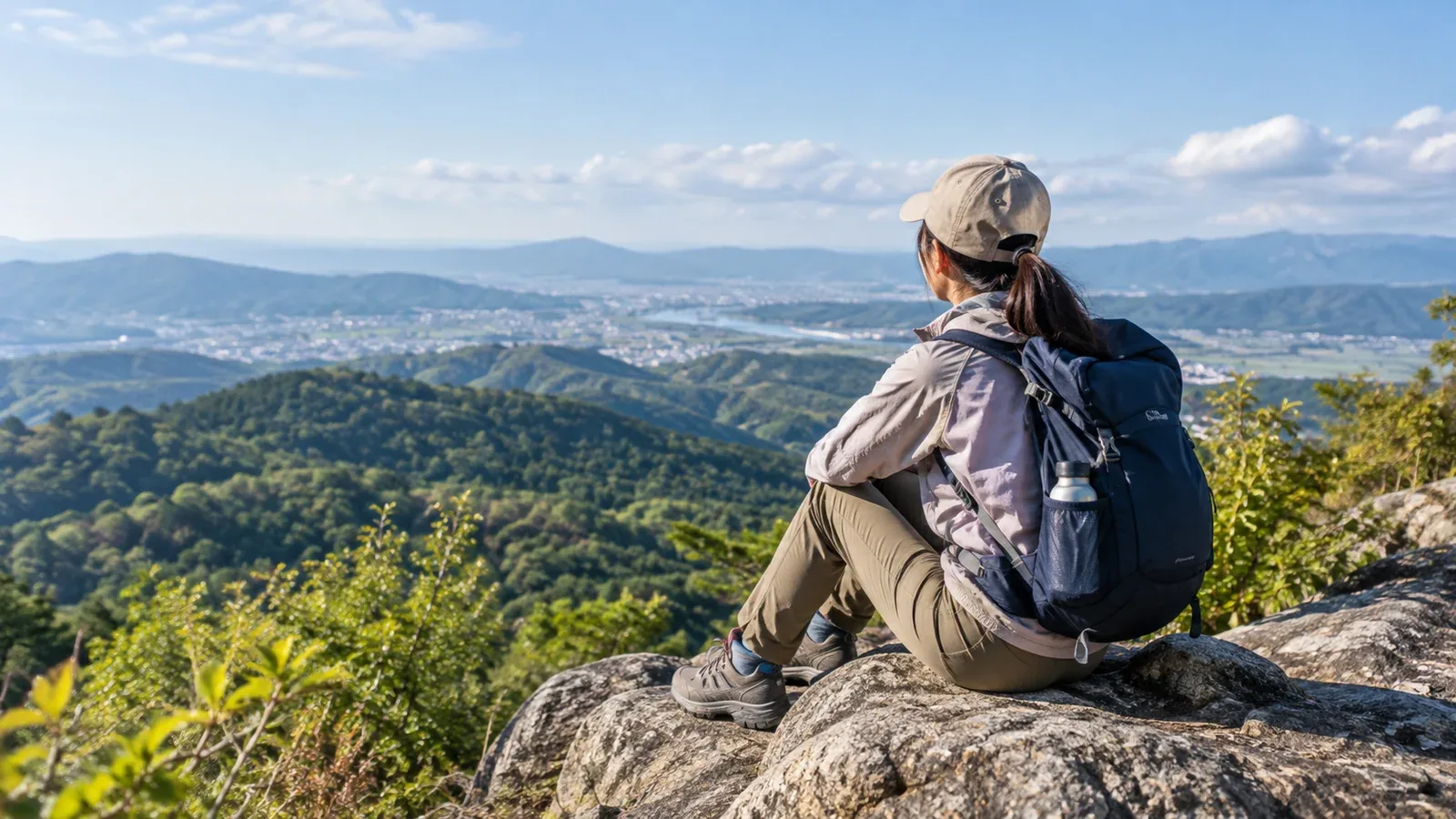
Summit height alone does not tell you what to wear. Think about walking time, footing, wind, rain and how cold you may get if you have to stop. Even with clothes you already own, check shoe grip, how quickly the clothes dry and what will keep rain out.
Here is what you might wear on a short, easy trail and what to add when the season or weather changes.
When clothes you already own are easier to use
For a short day hike, check these conditions.
- Temperature and wind: You can check the conditions at the start, on the ridge and around the time you will descend.
- Time on the trail: You can be down in daylight even with breaks or delays, and you can turn around partway.
- Weather: You have checked the forecast, warnings and advisories and decided how to shorten or cancel the hike if conditions change.
- Trail conditions: The trail is marked. You know whether it has mud, rock or steep slopes and what the current access notices say.
Even on the same low mountain, wind may hit an exposed ridge and rain can leave a valley muddy. Decide before leaving whether your equipment is enough or whether to change routes.
Check three things: Shoes, layers and rain gear
If you are using gear you already own, check your footwear and how you will deal with sweat, cold and rain.
1. Footwear: Choose shoes for the surface and your feet
Even low mountain trails have stones, roots, mud and steps. Check whether the soles are worn, whether they grip wet ground and whether your feet slide forward inside the shoes on descents.
For dirt or rock, choose shoes with tread and laces or another closure that keeps your feet stable. Try new shoes close to home and check that your toes do not hit the front on a longer descent. Snow or ice calls for equipment and skills suited to the surface.
2. Layers: Wear a quick-drying layer next to the skin
Clothing soaked by sweat or rain can chill you. Cotton dries slowly once wet. Choose a layer that dries easily next to your skin, especially when you expect cold, wind or rain.
Use a quick-drying synthetic or wool-blend shirt and carry an insulating layer for breaks or windy places. If you get warm, adjust your layers before they soak through with sweat.
3. Rain: Bring rain gear
Nagano’s hiking safety guidelines advise carrying rain gear even on a day hike. Bring gear suited to the wind and rain you expect, including a jacket and trousers when needed. Keep it where you can reach it quickly.
Look for an adjustable hood and cuffs and gear that leaves your hands and feet free to move. If heavy rain, thunder or strong winds are forecast, consider what your rain gear can handle and change or cancel the hike if necessary.
What to check in each season
Conditions vary by area and weather even in the same month. Choose layers for both walking and stopping.
- Spring and autumn: Bring removable outer and insulating layers to adjust to changes in temperature and wind.
- Summer: Bring a hat, drinking water and sun protection. Check the heat index and advisories, and cancel or postpone if severe heat is forecast.
- Winter: Bring insulation, gloves and a warm hat. Check for ice on shaded paths and descents. If you are not equipped or trained for snow or ice, change the route or postpone.
Check the Japan Meteorological Agency’s regional forecast, warnings and advisories, and look to local authorities or the site manager for trail conditions. A fixed temperature difference from the lowlands will not tell you what to expect.
From autumn into winter the days get shorter. Decide when you expect to finish and carry an insulating layer and headlamp in case you are delayed or have to stop.
What to consider before cutting equipment
On a short, gentle trail, your existing clothing and equipment may be suitable for the route and weather.
- Waterproof outer layer: Choose one that suits the expected rain and wind. If using lightweight rain gear, check that you can move easily and adjust the hood.
- Trekking poles: Choose based on the surface and whether you are used to them. Stow them in a safe place before a rocky section where you need your hands.
- Headlamp: Carry one even on a day hike in case you fall behind schedule. Check that it works and has enough battery before leaving.
Before prioritising weight, consider what you would need if it rains, your pace drops or you have to wait in the wind.
Common clothing mistakes
Check these four points before leaving to catch gaps in your clothing.
- Trousers that dry slowly: Jeans and similar trousers can take a long time to dry and restrict movement when wet. Choose trousers you can move in.
- No rain gear: Pack for a change in the forecast or a later-than-planned descent.
- Stopping in sweaty clothes: Add a layer before you cool down, and change into a dry base layer if needed.
- Too little protection for your head or hands: Use a brimmed hat in the sun and an insulating hat and gloves in cold or windy weather.
Your next step
Before your next low mountain hike, check the soles, your base-layer fabric, rain gear, insulation and headlamp. Use the forecast and trail conditions to decide what to add or how to change the route.