
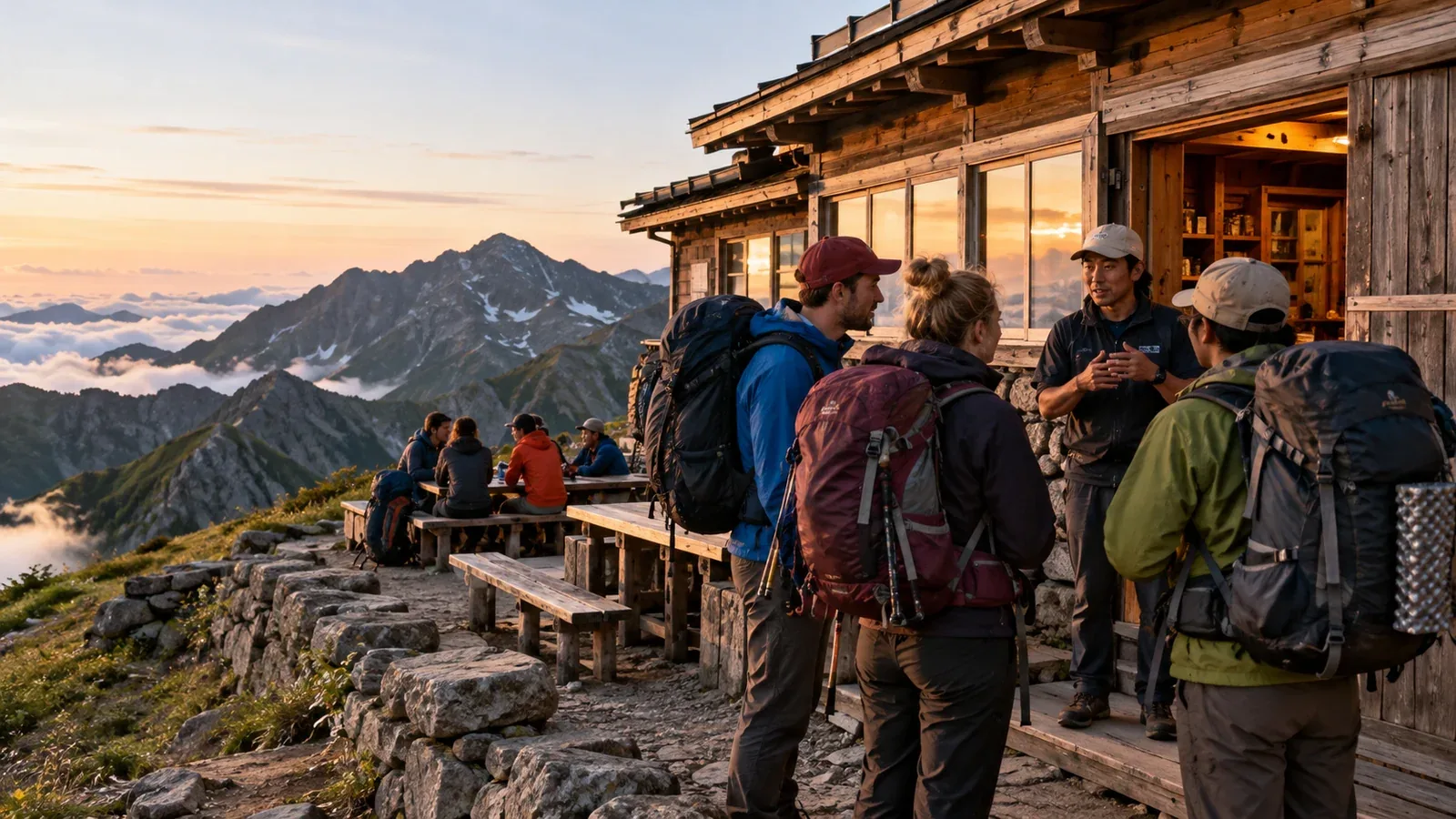
More hikers from abroad are visiting Mount Fuji, the Northern Japanese Alps, and other mountain areas. For hut staff and hikers sharing the same routes, misunderstandings can arise over how reservations work and what guests are expected to do during a stay. Language is one part of that.
This guide is for hikers planning a trip with friends from abroad and for visitors who want to know how Japanese mountain huts work. It explains what to check when booking, how to share a hut, and where misunderstandings tend to arise.
How Japanese mountain huts handle overnight stays
Mountain huts and refuges serve different roles across Europe, North America, and Japan. In some alpine areas a refuge can offer emergency shelter even when its beds are booked. In Japan, many staffed huts plan overnight stays around advance reservations, and a full hut may turn away walk-in guests. Treat emergency shelter as a separate matter and confirm a bed before planning a trip around an overnight stay.
It is easy to assume you will find room if you show up. During the peak summer season from late July through August, popular huts can book up weeks in advance. Make a reservation once the dates are set, and check that everyone in your group knows where they will sleep.
Some huts can take bookings in English, and others work in Japanese. Phone calls, online forms, and booking services vary by hut. Check the hut's own website or the relevant local authority or mountaineering association.
What to confirm when booking
A bed only or a bed with two meals
Japanese huts often offer a bed without meals, called sudomari, or one night's stay with dinner and breakfast, called ippaku nishoku. English booking pages may leave the distinction unclear. Check before you arrive so you know whether dinner is included and can plan your food accordingly.
Use the confirmation email or a phone call to check the meal arrangements. If you are helping someone else book, look through the confirmation together.
Cancellation policies
Many huts charge a cancellation fee. Cancelling the day before or on the day of the stay can incur a substantial charge or the full cost. Check whether the hut accepts a card issued abroad and how to cancel if you are calling from another country.
Check-in and lights-out
Japanese mountain huts usually turn the lights out early, and dinner at many huts starts sometime between 5 p.m. and 7 p.m. A late arrival can mean missing dinner or check-in. Give the hut your expected arrival time before leaving, and check for a check-in deadline.
Sharing the hut with other guests
Where to take off your boots
At Japanese mountain huts, guests generally take off hiking boots at the entrance and wear slippers or socks inside. Follow the signs or staff instructions about where to leave your boots. Let visiting companions know in advance so everyone knows what to do at the door.
Keeping shared areas clear
Dining rooms and corridors are for all guests. Keep packs and equipment out of walkways. Some overseas huts may have space where guests can spread out gear. In Japanese huts, put your things away after using them so people can move through the common areas.
Quiet hours and lights-out
Most guests plan an early start, so huts go quiet early. Keep conversations and other noise down after lights-out. A group talking late can keep people awake in shared sleeping areas. Ask for the hut's quiet hours at check-in.
Water and toilets
Water supplies in the mountains are limited. Use only what you need for brushing your teeth and washing, and take short showers where they are available. Toilets may use special treatment systems, and the rules about what you can put in them vary. Read the instructions at the entrance. Diagrams often show which items can go in the toilet and which belong in a designated bin.
Communicating with hut staff
English-language support varies. Some huts on Mount Fuji or in the Northern Japanese Alps provide help in English. Check what the specific hut can offer.
A few preparations can make check-in and the stay easier.
- Bring a printout or screenshot of your booking. The reservation name, dates, and meals are easier to check when you can show the confirmation.
- Set up your translation app to work offline. Download the Japanese and English language data before leaving because there may be no mobile service.
- Write down a few useful phrases. Prepare a card with Japanese for “I'd like to check in,” “What time is dinner?” and “When can we leave in the morning?”
- Ask a Japanese speaker in your group to help. They can speak with staff at check-in and before dinner so everyone understands the arrangements.
How huts and guests are adapting
Some huts and trail areas have added English signs, multilingual websites, or staff who can assist in other languages. In busy areas, huts also report that no-shows and unplanned arrivals can make operations harder.
Huts also help keep people safe in the mountains. Following booking and house rules helps huts honor reservations and leave room to respond to emergencies. Share the details with your companions before the hike so everyone arrives with the same expectations.
What to do next
Share a short checklist with your hiking partners before making a reservation. Confirm booking, cancellation, and check-in rules on the hut's website or with the local authority or organization managing the area. Nordwand's Base Camp feature can help you connect with people who know the route and ask what to expect at the hut.
Further reading
- Japan Tourism Agency initiatives on mountain tourism and international visitors
- Ministry of the Environment guidance on national park etiquette
- National Police Agency annual mountain incident reports
- Prefectural police mountain incident statistics