
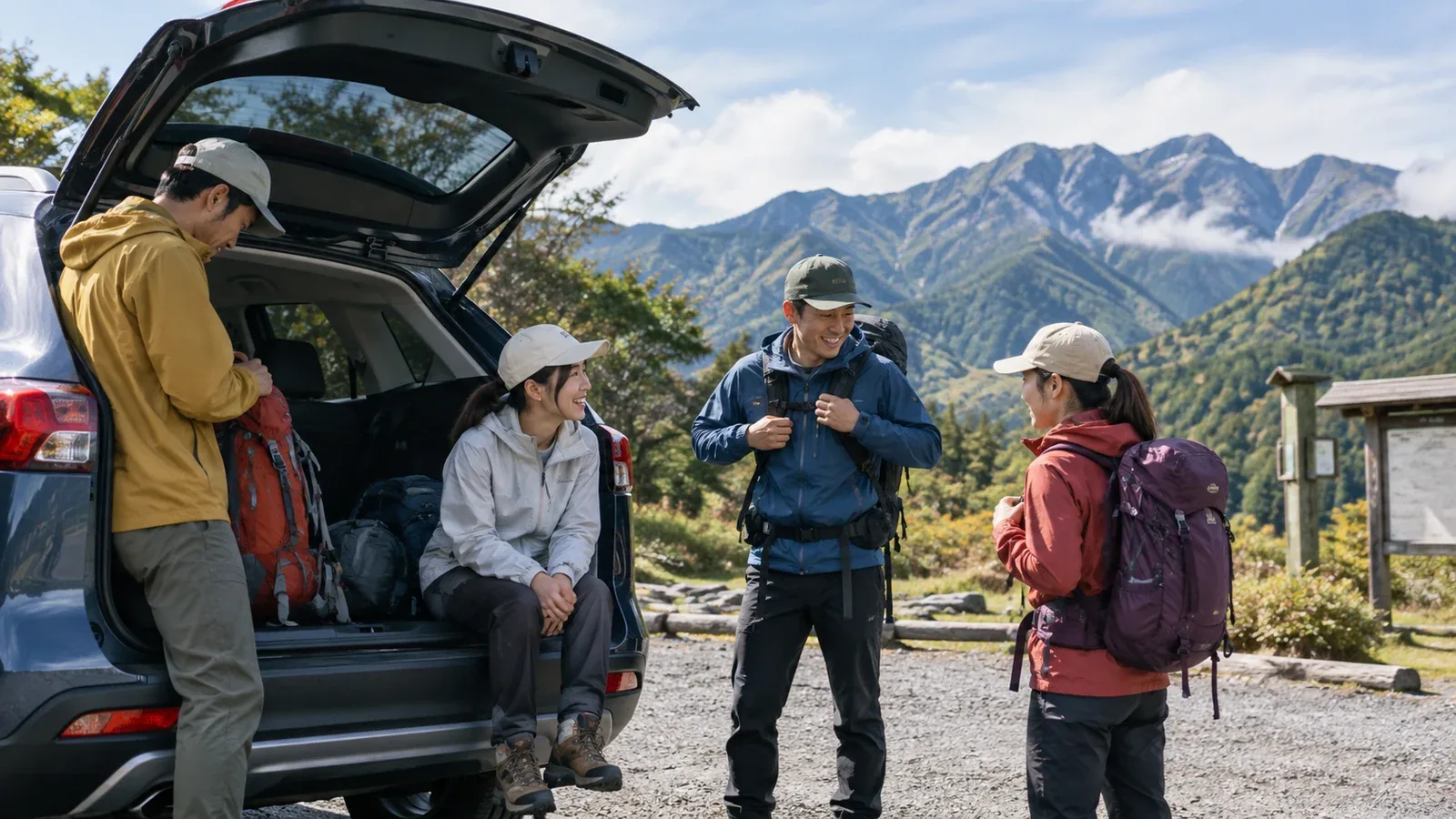
If you rent a car to reach the trailhead, agree on the split and check the coverage before leaving. Decide how much everyone will pay and how the group will handle costs the rental coverage excludes. That makes it easier to settle up afterward.
This guide covers how to divide the cost of a shared rental car and assess the optional coverage. Prices and conditions vary by company and plan, so check the rental company's current information before signing.
What to add up before splitting the bill
There is more to the trip cost than the rental rate. List each expense before dividing the total so your estimates and final numbers line up.
Common expenses include the following.
- Rental rate — Usually priced by time or number of days. An after-hours return or a drop-off at another location may cost extra.
- Fuel — You normally pick the car up with a full tank and refill it before returning. Ask how the company charges if you cannot fill up.
- Expressway and toll road charges — If you plan to use an ETC electronic toll card, decide whose card to use beforehand.
- Parking — A paid lot at the trailhead can add up over several days.
- Extras — Check whether options such as upgraded navigation, winter tires or a child seat cost extra.
- Optional rental coverage (covered below)
The simplest split is to add the expenses and divide by the number of travelers. Whether drivers pay a different share from passengers is for the group to decide. Talk about the time and effort of driving and how that should factor into the split before departure.
How to organize payment and settle up
Choose someone to handle the booking and contract, and pay using the rental company's accepted method. If you will split the bill later, agree on who fronts the money.
Settle the following details up front.
1. Choose the lead renter. Check the documents and payment method required at pickup. Every driver needs a valid license to drive that vehicle in Japan.
2. List any additional drivers. If you will take turns driving, declare every driver by the time you pick up the car and check how each needs to show their license. An undeclared driver may be excluded from the insurance and coverage.
3. Agree on when to settle and keep records. Save receipts and note ETC tolls and parking charges as they occur. It is easy to keep a running list in a notes app or a shared spreadsheet, then settle up on the way home.
Understanding the coverage options
Consider the roads you will use to reach the trailhead when choosing coverage. Mountain access roads can include gravel, narrow sections, rockfall and sharp bends. Think about the conditions you are likely to meet.
Basic coverage and optional add-ons
The rental price may include basic third-party injury and property damage, vehicle damage and occupant coverage. Check the limits and deductibles in your agreement. There can be separate deductibles for damage to other property and to the vehicle.
Common optional protections include the following.
- Collision damage waiver (CDW) — Waives or reduces the property or vehicle damage deductible for covered incidents. Exclusions apply.
- Non-operation charge (NOC) waiver — May waive the charge the company levies when a vehicle cannot be rented out after an incident, subject to the terms.
The NOC is separate from repair costs. Also check the terms for roadside assistance and towing in case of a breakdown, a wheel going off the road or the car getting stuck.
How to decide whether to add protection
In these situations, first ask whether the rental company allows driving on the roads in question. Then compare the CDW and NOC waiver, their exclusions and any roadside assistance.
- Driving on unpaved roads or gravel
- Using mountain roads early in the morning or at night
- Driving an unfamiliar road or in an unfamiliar area
- Sharing the bill among several people, where an incident could complicate the split
Before adding coverage, check any rental car benefits provided by your credit card. Eligible countries, vehicles, drivers, payment methods and treatment of deductibles or NOC vary by card. Ask both the issuer and the rental company how overlapping coverage would apply.
Coverage decisions affect the whole group
Groups that split the rental often split the cost of optional coverage as well. One person may want extra protection while another may expect their card to cover the risk.
Ask the lead renter to check the contract, and agree as a group on which optional protections to take and how to split uncovered costs. That reduces the chance of a disagreement later. This agreement governs how the group settles up. Contractual and legal liability are separate. If you rely on card benefits, confirm any booking and payment requirements in advance.
What to do if there is an accident or breakdown
After a road accident, stop immediately, help injured people and take steps to prevent a secondary collision. In Japan call 119 if anyone is injured, report the accident to police on 110, and then contact the rental company. Mobile service can be unreliable in the mountains, so prepare the following before leaving.
- Write down the rental company's emergency number — Keep a paper copy in the car in case you cannot use a phone to look it up.
- Share the rental company, vehicle registration and coverage details — Someone other than the lead renter may be the first to respond.
- Find the vehicle's emergency instructions — Check where they are kept. If you cannot find them, ask at the pickup counter before leaving.
Next steps
List all costs before departure. When arranging the rental, confirm the declared drivers, permitted roads, coverage and roadside assistance. Agree on how to split ETC tolls, parking and any uncovered costs before the group leaves.