
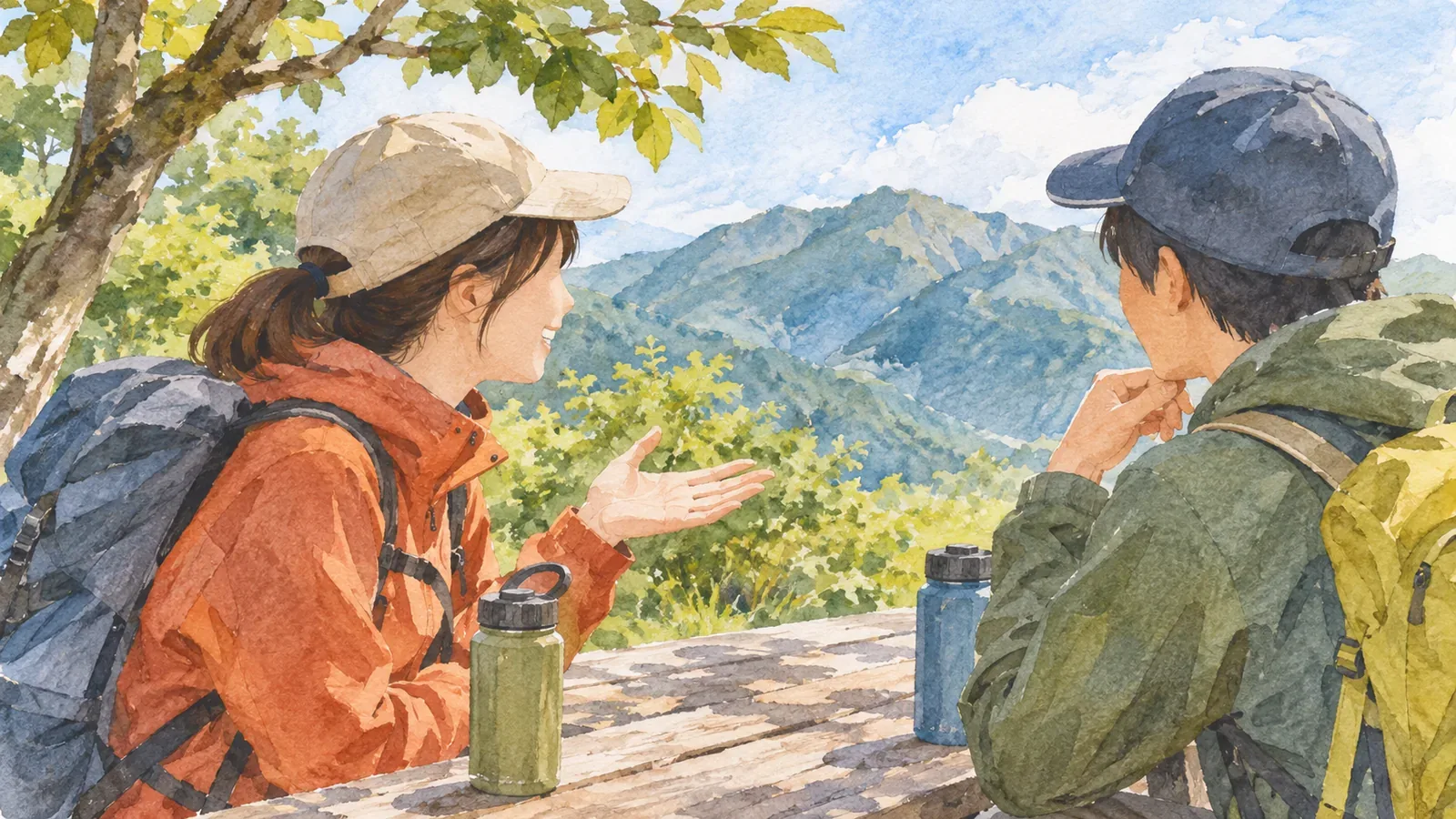
When inviting someone you have just met, distinguish what you need for the hike from private details you are curious about. Start with the route and experience it calls for, and discuss relevant experience and any accommodations the person wants. Ask for addresses and emergency contacts when you prepare the plan, explaining their purpose and who will receive them. Gather the information you need to make the hike safe.
The hiking plan is for a later stage of the invitation
Iwate Prefectural Police says the hiking plan has no fixed format but should contain names, addresses, mobile numbers, emergency contacts, dates and times, mountain name, type of hike and planned route. It lists family or friends, trailhead submission boxes and prefectural police as recipients. Japan's National Police Agency's 2024 report also recommends sharing the plan with the people on the hike, family and people at work.
Nagano Prefecture explains how to file a plan for designated trails. Check the current instructions from the relevant authority. If one person compiles the plan, tell participants what will be collected and who will receive it. Whether you file it yourself or give it to the organizer, make sure the group has the information needed for the day's route and emergency contact arrangements.
These details let you submit a plan and help family and police respond in an emergency.The sources describe the plan and its use. The advice below on what to ask someone you have just met is the editors' interpretation of that purpose.
Ask for different information at each stage
The editors suggest asking for the minimum information needed at each of three stages.
First, at the invitation stage, share the mountain, date, walking time, terrain, required gear and experience, and meeting place. Ask whether the person wants to join or has questions. Ask about relevant recent routes or other specific experience for this plan. Let people decline without explaining private circumstances and give anyone considering the trip a way to discuss a safe route.
Second, once someone confirms, check how to contact them about meeting or delays, and ask for the information the plan needs. Agree who holds what so emergency details remain accessible if the person who named the contact cannot speak. If you keep a family member's number, ask the participant to explain that person's role to them. Check the receiving authority's form and decide how to give the necessary information to the right person.
Third, on the day of the hike, the Nagano Prefecture Mountain Center's group hiking manual describes attaching a list of addresses and emergency contacts to the plan and filing it with the relevant police station. That procedure is written for leaders of school and organized outings. Informal groups can decide in advance who holds each item and arrange to delete it after the hike. Since the plan is shared with companions, family or people at work, explain the recipients to each participant before collecting the details.
What you can leave out and why
Ask what you will use the information for in deciding whether to join, preparing the plan or keeping the group safe. Details about someone's workplace, income, marital status, children or private social accounts generally do not serve those purposes. A plan form may not list everything you need. For events with age requirements or when health accommodations are needed, explain why and ask only for what is relevant.
Age can be hard to judge. The manual notes that organized hikes can bring together people with different fitness, skills, experience and ages. Differences matter when the route or pace is hard to manage. The editors suggest sharing the planned walking time and breaks and asking the person to decide whether that is manageable, because that is more directly relevant than their age.
If the filing procedure calls for an address, ask the person for it and give it only to those who need it for the relevant document.Keep addresses out of casual conversation.
Discuss relevant experience and health needs
If someone has health concerns, suggest discussing the route with their doctor or another healthcare provider. The US National Park Service also suggests speaking with a provider about plans if you have a medical condition. Discuss any accommodations and what the responsible person should know in an emergency privately. Make decisions with the person instead of relying on a diagnosis or asking them to disclose their full medical history to the group. Make sure essential safety questions still get answered.
Give the person the information they need to decide, such as walking time, elevation gain, breaks and where and how they could turn back. The manual and the National Police Agency recommend checking turnaround points and escape routes in advance. You could write, “Tell us any time if you feel worried or unwell. You don't have to explain all the details.” Check what the person can safely do and what help they need, and avoid sending them back alone.
On the day, pay attention and ask how people are doing. The manual recommends matching the pace to the person with the least stamina and checking in with someone who rests without opening their pack. Ask about difficulty walking or support needs. Before setting out, agree who will check on the group, make decisions and contact others, and who can take over if that person cannot act.
Summary: ask for what you need, when you need it, and share it only with those who need it
Use personal information for a clear purpose and leave out private details that do not serve it. Keep essential checks on experience, health and emergency contacts. Give people who prefer privacy the option to discuss an accommodation one-on-one or sit the hike out.
Before inviting someone, ask yourself three questions about the information: What will I use it for, who will see it and when will I delete it?Leave a question out if you cannot answer those points. Ask the authority for your area whether you need to file a plan and what the organizer must collect. The three stages are the editors' suggestions based on the sources. Assess safety for each outing.