
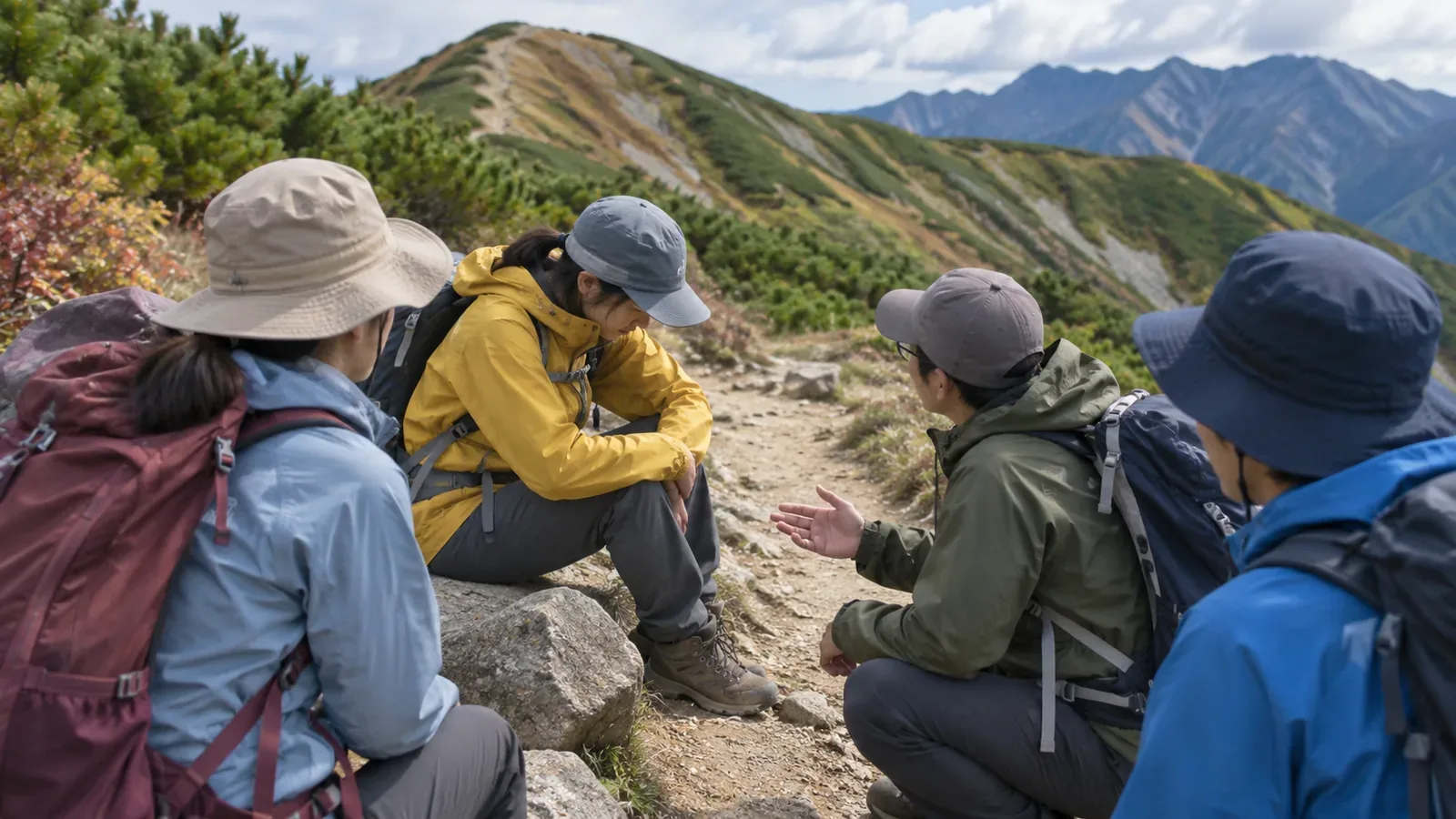
If someone asks to head back earlier than planned, having turnaround points and a procedure for an early descent makes it easier to treat the request as a change of itinerary. We draw on police and prefectural guidance and a group hiking manual to explain what to decide before setting out, what to check when someone speaks up and whether to split the group. The manual is for leaders of organized groups. The editorial team's suggestions for hiking among friends are identified as such.
Build an early finish into the plan
Iwate Prefectural Police advises allowing plenty of time for a hike that fits your fitness, skills and experience. It also recommends checking your health and the weather and calmly considering cancellation at the first sign of concern. The Nagano Mountain Center's manual calls for generous margins in the route and schedule, so you can walk slowly and finish early. The National Police Agency's 2024 report also recommends a schedule with time to spare. It advises ending the hike early when appropriate. If you suspect you're lost, avoid walking on blindly and consider retracing your steps to the official trail.
These sources treat an early finish as a decision the plan should allow. They do not address how someone may feel about requesting an early return or how to hear them out. The suggested questions and ways to check in below are based on the principles in those guides.
The editorial team expects it will be easier for someone to speak up if turning back is already part of the plan. If the schedule assumes everyone will hike to the end, someone may feel they're spoiling it for the group. To make it easier, let people know in advance that the plan includes the option of turning back.
Three things to decide before setting out
The manual advises using a reconnaissance hike to check emergency shelter locations, exit routes and the points where you would decide to turn back if a participant felt unwell. The National Police Agency also recommends knowing hazards and exit routes in advance. For a hike among friends, this suggests three steps.
First, mark decision points on the map. Iwate Prefectural Police advises including estimated arrival times for each waypoint in the plan. Use those times as a guide and choose two or three places for the whole group to discuss whether to continue or turn back. Whoever makes the plan should choose the actual places and times for the route and schedule.
Second, check how everyone feels before leaving. The manual recommends checking headcount, health, lack of sleep and whether people have eaten breakfast. Saying “We've planned for the possibility of turning back today” can make it easier for someone to raise a concern later.
Third, work out what happens if someone descends early. If you arrived in one car, decide where anyone who returns early will wait and what to do with bags and keys. This is an editorial suggestion. Check whether it works with the weather and facilities on the day.
A decision point is a place where everyone knows they can stop and talk through what to do. Setting it in advance also shares the burden of deciding with the group when someone speaks up.
Try a tabletop rehearsal before setting out. At each decision point, write down who decides whether to continue, which route to take if you turn back, and who will accompany anyone who descends early and where they'll meet the others. A blank shows something still needs planning. Also check that each person can act safely, has the right equipment and knows how to get back. Shorten the schedule or switch to an easier mountain before you arrive.
What to check when someone asks to head back
When someone asks to head back, acknowledge it with “I understand. Let's work it out together.” Check whether they can move safely and what help they need. If they can walk, stop somewhere with solid footing where you won't block the trail. If they can't walk or movement would be unsafe, keep them from having to go to the planned discussion point. Make the current location as safe as possible and get help or contact the appropriate people as needed. Act before they can give a detailed explanation if necessary.
Let the person speak as much as they feel comfortable, and check the essentials for safety, including how they feel and whether they can move. Depending on their condition, consider stopping, descending as a group or getting help. Even if they can move safely and want to continue, decide when to reassess based on their condition. Tell everyone the updated plan and who is doing what. If you need to consider splitting the group, check the conditions below.
The manual says to match the pace to the person with the least endurance, checking how they're doing instead of letting the schedule dictate the pace. It says this can get the group there sooner in practice. It also suggests checking on people who sit and rest without opening their packs. That can help you notice when someone might need support before they ask.
At each planned decision point, check in with everyone so it's easy to speak up. If someone suddenly feels unwell, respond right away. Let people share sensitive concerns in private. Ask what you need to know to keep them safe and leave space for them to keep their reasons private. After the hike, keep the debrief from becoming a place to blame the person who spoke up.
Should the group split if someone wants to descend early?
The manual calls for keeping the group together unless there are enough leaders. It suggests assigning someone in advance to lead a separate party, in the context of organized trips such as school hikes. The manual stresses leaders' skills, sharing information about participants and leaving time to spare as well as having enough leaders. On a hike among friends, check more than whether there's one person available to accompany someone.
Avoid sending anyone down alone. Before splitting, make sure both groups can make safe decisions and act safely in those conditions. Each needs the right equipment, a reliable way back and a way to communicate. Even with someone to accompany the person and a meeting point, check the full arrangements. If they're inadequate, stay together and consider descending as a group or getting help. If someone can't move safely, don't ask them to walk because the plan calls for the group to turn back.
Check how the groups could communicate. The National Police Agency notes that GPS-enabled phones can help when requesting rescue, but reception and battery life are limited on many mountains. Agree on a meeting point and what to do before separating. Use your phone screen in a place where you can stop safely.
Let the contact who holds the trip plan know about changes. Iwate Prefectural Police recommends leaving a copy with family or friends so they can notice something is wrong and rescuers can respond sooner if they know the route. Since July 1, 2016, Nagano's ordinance has required filing a plan for designated trails. It also recommends leaving the plan with family or work. If heading back early changes your expected finish time, our suggestion is to update the contact once you reach a place with a signal.
Plan for an early finish and treat the request as a change of itinerary
Plan for an early finish. When someone asks to go back, check whether they can move safely and what help they need. Respond as soon as needed, even before a scheduled stop or check-in. Consider splitting only if both groups can act safely and have the right equipment, a reliable route back and a way to communicate. If any of those are missing, revise the plan to stay together. Tell your companions and the person who holds your trip plan what you decide.
The suggested wording is from the editorial team and cannot guarantee safety on an individual hike. Make decisions based on people's condition, the weather and the route that day. Leave the option of sitting it out or turning back while you can still do so safely.