
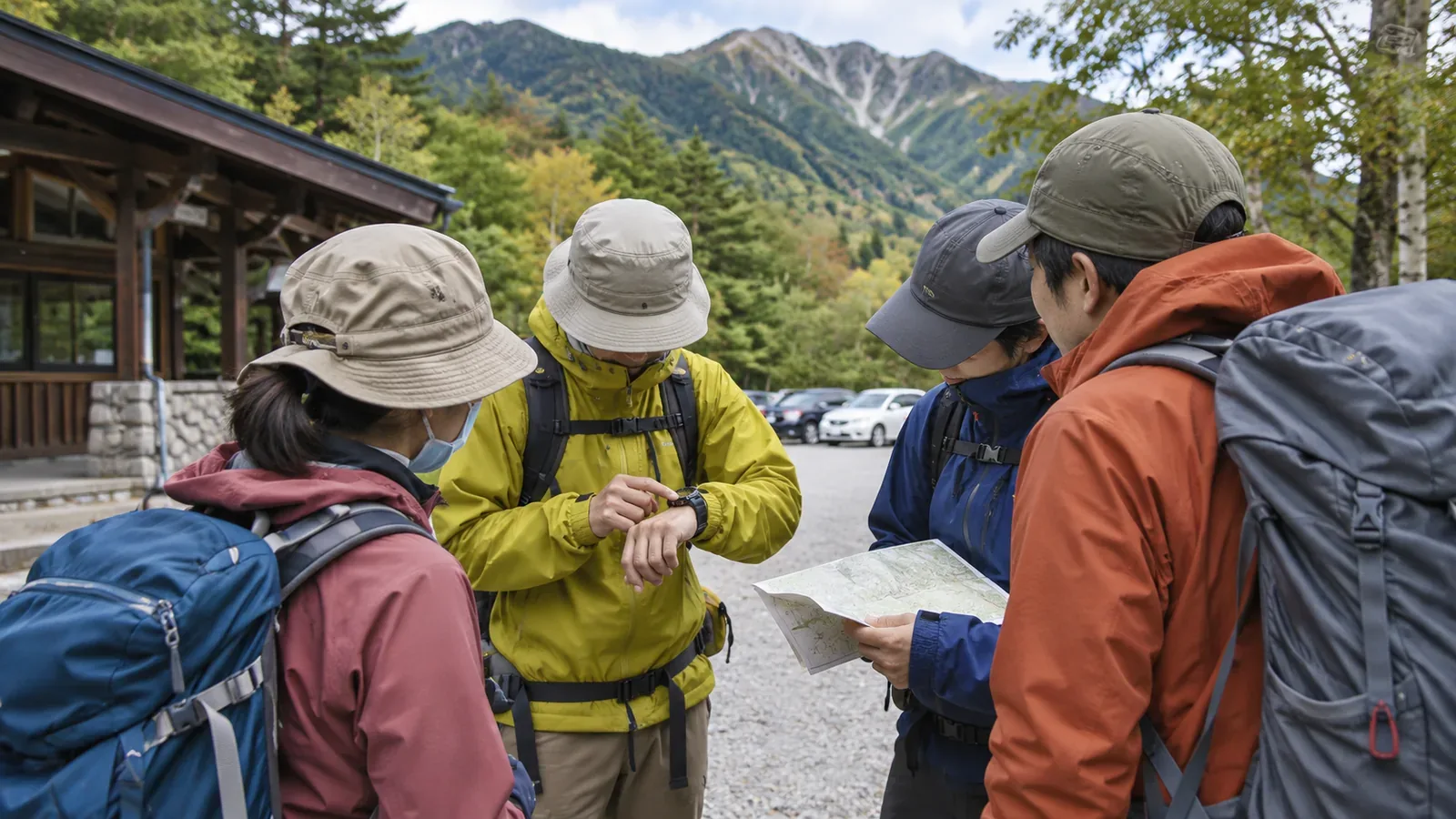
Set a time to stop waiting before you leave by working back from the time your plan can spare. Nagano's guidance calls for a schedule suited to the group's fitness and skills, with time to start and finish early. Check whether the hike will still be safe after waiting. Choose a cutoff based on the route and conditions that day, and leave time to decide whether to shorten or cancel the hike.
Waiting uses up some of the plan's buffer
Nagano Prefecture's hiking plan guidance calls for a schedule with time to spare that suits everyone's fitness and skills. The Nagano Prefecture Mountain Center recommends allowing for poor weather, escape routes and spare days, and starting and arriving early. The US National Park Service Trip Planning Guide advises changing plans or turning back if weather or participants' condition makes it unsafe to continue. Base a decision to wait on the time and conditions you have left.
A late start uses part of the time you set aside. If you wait without a cutoff, you may run out of time to choose a shorter route or cancel. Agree that you will reassess if there is no longer time for the planned route, without relying on walking faster. Even if everyone arrives before the cutoff, the weather or someone's condition may still call for cancelling the hike.
Set three times and put the cutoff before the latest start
Write down three times to set a specific cutoff on the clock.Put the cutoff before the latest time you can start the original hike.If you stop waiting at the latest possible start, you will have no time left to decide whether to switch to the shorter route.
First, write the meeting time you gave the group. Second, set the latest start for the original route. Work back from a descent well before sunset, possible weather changes, hut or transport times, and allow for walking, breaks and delays such as taking a wrong turn. Previous walking times can inform the estimate, but the group may move differently that day. Third, choose a cutoff that leaves time to decide on changes and tell everyone before the latest start. If there is no room for that, rethink the meeting time or route.
After the cutoff, you can leave with the people who made it, take a shorter alternative, or cancel or postpone. If the roster changes, check whether those who remain can hike safely as a group. Check maps, walking times and the descent point for an alternative in advance. Avoid a last-minute switch to a route you do not know. Decide who makes the final call. In the schedule, put the meeting time, cutoff and latest start on separate lines, and list what you can do after the cutoff.
Tell the group the cutoff and how to contact someone who is late
Your meeting instructions could say, “If you are not here by [time], you won't join the original hike and we'll decide whether to shorten or cancel it. If you're running late, contact the coordinator. Please don't follow the group on your own.” Check that everyone replies beforehand. On the day, tell anyone who is late what the group decided. If you hear nothing, use the check-in process you agreed on. If there are signs of an accident, treat them accordingly.
A message about a delay does not automatically extend the cutoff. If you extend it, reassess the remaining time and tell everyone the new time and route. Stop somewhere safe where you will not block others before making contact, and do not ask someone who is driving to reply. Avoid asking someone to catch up alone, which can lead to rushing and solo hiking. The Nagano Prefecture Mountain Center also advises against hiking alone. Leave open the option of hiking together another day.
Changing the plan after the cutoff on designated trails in Nagano
A hiking plan must be filed under the prefectural ordinance for designated trails in Nagano. Check the prefecture's latest guidance to see whether the shorter route is covered too. Requirements and filing procedures may differ in other prefectures. Find out where to file and note the amendment process while planning. Keep copies of the plan accessible to each person so you do not have to look up the procedure for the first time at a trailhead with poor reception.
For the Nagano electronic application service, submit the plan again if it changes. The submission with the latest timestamp is treated as the updated plan. The service says you do not need a separate entry for cancellation or a descent report. For other submission methods, check their instructions. Nagano Prefectural Police also asks hikers to leave the plan with family or someone at work. Even if the filing service does not need a notice, tell your off-mountain contact if you change or cancel the hike.
If you leave on a shorter route or with a different group, update the filed plan and the copy held by your contact. Tell them when you expect to return and check in after descending. Check the Nagano electronic service's instructions for changes in route or participants. Give yourselves time to make the updates and contact people before leaving. Ask the person staying behind to confirm receipt and keep track of who has the latest version.
Summary: work back from your time buffer and set the cutoff before leaving
Set the cutoff between the meeting time and the latest start, with time for a decision and any calls or messages. Consider sunset, weather, transport and how everyone is doing when deciding to leave, shorten the hike or cancel. Tell the group the cutoff and the plan to avoid solo catch-ups before the day, and tell everyone if you extend it. Keep the updated plan and the information held by your contact in sync. Allow for the delay without trying to make up time by walking faster.