
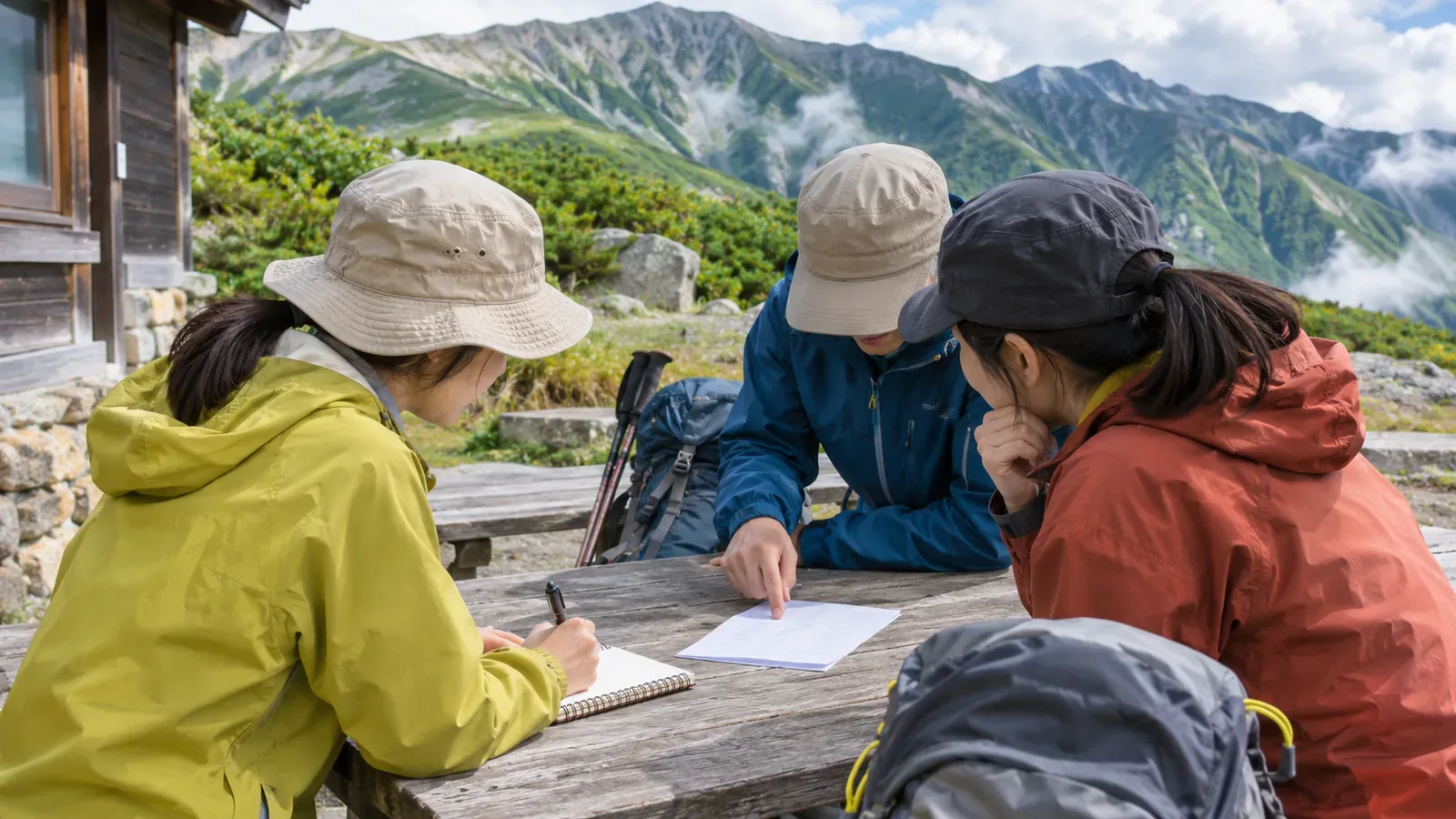
Before sharing emergency contact details, decide who will use them and why. The person who holds the plan off the mountain, the people on the hike and the person coordinating calls need different information. Make sure someone can take over if the coordinator is unable to act. Get permission, agree on what to share and who will stand in based on the group and its roles, and run through the contact procedure before leaving.
Choose who holds the plan and who coordinates on the trail
Nagano Prefectural Police advises preparing a trip plan and leaving it with family or someone at work. If they report an emergency, police can use the plan to help guide the search. Nagano Prefecture also requires submission for designated trails under its ordinance. Keep arrangements with your contact off the mountain in place after filing. Check where to submit the plan for the area you will hike, and leave the same version with your family or other contact.
Nagano Prefecture recommends submitting online and carrying the completed plan on the hike. Include who is going, the route and when you expect to be off the mountain. Make sure the group and the person staying behind have the same plan. Follow the recipient's form and submission instructions. Filing a plan does not guarantee a faster rescue or lower costs.
When you share the plan with your contact off the mountain, also agree on what they should do if you do not check in on time. The US National Park Service's Trip Planning Guide advises telling someone you trust who is staying behind where you are going and when you expect to return, and deciding whom they should call if you do not return. Confirm that the person can receive calls that day and knows what to check.
Decide what to share for each of three roles
First, choose someone off the mountain to hold the plan. Give a family member or colleague who is available that day a copy, your expected descent and return times, the participant list and the name of the person coordinating calls on the trail. If they will be unavailable for a long period, discuss who can take over. Put on one sheet who is going, when they expect to return and whom the person staying behind should call first.
Next, tell the group who coordinates calls, who can fill in and how to get in touch if someone gets separated or the coordinator is unable to act. The coordinator holds everyone's contact details and the emergency contacts they named and ensures the backup can access what they need. Decide how many people need access and which numbers to share based on group size, any planned separations and the ways you can communicate.
When giving someone else access, ask what they need it for and limit unnecessary copies. Test whether another person can retrieve the plan and contacts if the coordinator's phone stops working or the coordinator needs help. The Nagano Prefecture Mountain Center's group hiking manual calls for a clear chain of command, arrangements for contacting the team off the mountain and awareness of the limits of mobile phones. Small groups can also use this guidance to work out roles and alternatives.
Ask for permission before sharing
Before sharing contact details, tell the person whose details they are why you need them and who will see them. For example, “The coordinator and their backup will use this if we need to contact someone during the hike,” or “This will go in the trip plan we leave with family.” If a phone number is enough, collect that. Discuss the reason for any additional information you need.
Ask before putting a phone number in the group chat. Silence is not permission. If someone wants to limit access, discuss another way to get in touch. Agree on how to make essential information accessible in an emergency while respecting the person's wishes.
Before the hike, ask all at once who can receive the information, what you may share and how long they may keep it.For example, ask whether the contact off the mountain or the coordinator can see it, whether to share just a phone number or also a family emergency contact, and whether copies should be deleted after the hike. If you are keeping a family member's contact details, ask the participant to tell them they might receive a call about the hike.
Use a tabletop exercise to see whether each person has enough
Once you have agreed on access, run through it before leaving. Show the off-mountain contact only the sheet you plan to give them and ask whom they would call if the descent check-in were overdue, and whether they could explain the plan and name the participants. Add anything they cannot find. This tests the contact procedure without recreating actual reception or a rescue response.
Next, imagine one contact coordinator suddenly cannot come. Check that everyone can reach the other. Then imagine someone drops out or joins and decide who will replace the off-mountain copy and when. Also agree on who deletes shared notes or copies after the hike and when.
Discuss when to ask for advice or report a problem, taking your expected return and locations with phone access into account. Agree whom to check with if you cannot reach the group. If a message or other information points to an accident, tell police or the appropriate authority rather than automatically waiting for the agreed time. A single waiting period cannot determine when to request rescue. Keep the mountain area and contact numbers on paper so you can ask for help as the situation requires.
Summary: share what each role needs, with permission
Share emergency contacts according to the roles of the person off the mountain, the participants and the coordinator. Ask who may receive what and for how long, and make arrangements for contacting someone if the coordinator cannot act. Give the person staying behind the expected return time and instructions for a missed check-in. Update the plan if it changes and let them know when you are safely down. Agree what to do with copies you no longer need so you can use the procedure next time.