
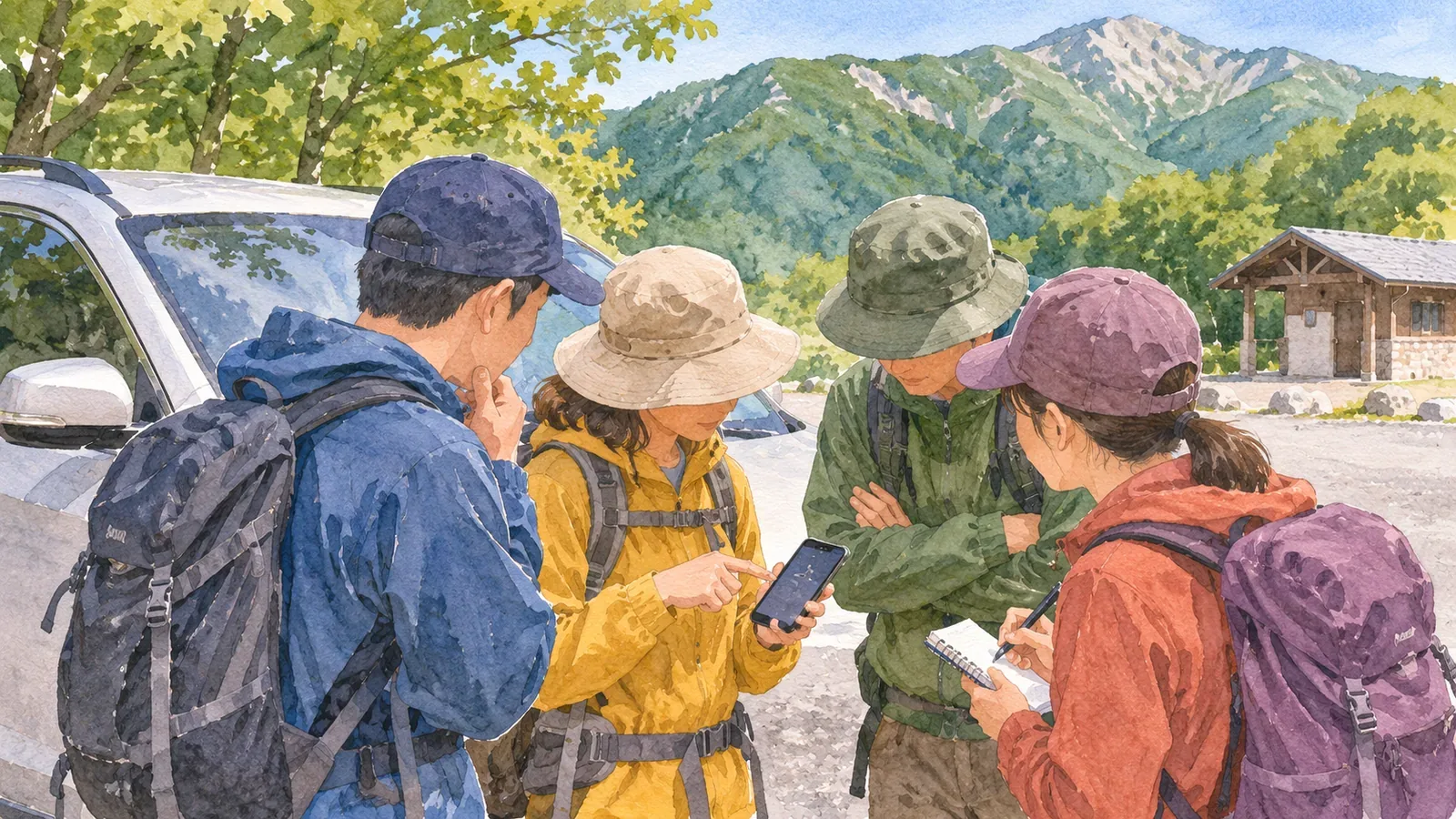
Write down what you will split, how you will calculate it, and when and to whom you will pay before the drive. Everyone riding should check the arrangement with the driver. This article uses the current guidance from Japan's Ministry of Land, Infrastructure, Transport and Tourism to explain how to agree on expenses and settle them for a carpool among friends where no fare is charged. Discuss pickup and drop-off points, who could take over driving and the return time before leaving.
Agree which costs to split and which to leave out
The ministry's guidelines, issued in March 2024 and partly revised on June 5, 2026, allow reimbursement of necessary out-of-pocket costs even when transportation is provided free of charge. They include fuel, tolls, parking, eligible insurance and the cost of a rental vehicle used for the trip. Eligible insurance includes policies for qualifying free transport and temporary cover taken out with a rental, such as collision damage waivers and loss-of-use cover. The vehicle's existing compulsory liability and voluntary insurance premiums are excluded.
The ministry's illustrated guide also explains that insurance and vehicle rental were added to the list of expenses. Your group can still agree to split only fuel, tolls and parking for this trip. If you rent a car, add the item and amount and check whether any insurance charge meets the guidelines. Avoid adding vehicle wear or a driving fee to the expenses without discussing it.
The guidelines treat payments under a fare schedule and strong pressure to pay a tip as examples of a fare in practice, even if called thanks. Paying after the hike does not settle the question. If you set a fixed payment beyond expenses or regularly invite people to use a transport service, explain the arrangement to the local transport office and check how it is treated.
Share the fuel formula and the figures you use
The current guidelines give this fuel formula: distance (km) ÷ fuel economy (km/L) × fuel price (yen/L). Sharing the formula and figures lets participants check the estimate. Distance and fuel economy before leaving may be estimates, so agree which figures to update if the route changes.
The editors suggest agreeing in advance on who supplies each of the three figures and how. Use a map app to find the round-trip distance to the trailhead and decide whether pickup detours count. The driver should report either the vehicle's rated fuel economy or the fuel economy they normally measure. If the driver and vehicle change, the cost can change even for the same mountain. Use the price per litre from the latest fuel receipt.
Decide before departure how many people will split the cost, whether the driver counts and how to handle rounding. Avoid rounding up individual shares in a way that puts the total above actual costs. If you collect an estimate first, settle the difference after the return costs are known. If someone will travel separately for part of the trip, write down which legs they will pay for.
Share records of actual toll and parking payments
Record and split the tolls and parking charges you actually paid. Say in the message that tolls apply only if you use a toll road, and parking fees only if you use paid parking. Check the operator's latest information before leaving, because availability, prices and opening periods vary by trailhead. Keep estimates separate from what you paid.
Allow for changes. If traffic sends you on a different route or a full car park means using another one, share a photo of the receipt or statement and use the amount you paid. Discuss in advance whether a last-minute cancellation increases each remaining person's share. Keep the total within actual costs.
Check the passenger contacts and hiking plan together
When discussing costs, check that the list of people riding matches the hiking roster where expected. Nagano Prefecture asks hikers to plan for the group's fitness and skills, carry the plan and file it for designated trails under its ordinance. Nagano Prefectural Police recommends leaving the plan with family or someone at work. Check whether only the ride changes or whether the hiking roster or itinerary changes too. Update the relevant plan and messages.
Before sharing a driver's or passenger's contact details, ask them who may see the information and what it will be used for. Make sure the participants and the contact staying behind know whose car it is and how far people are traveling together. If you send receipts or statements, show the amounts or journey sections needed for settlement and check that unrelated purchases and unnecessary personal details are out of view. Explain why a charge changed.
Here is a sample message: “We will split fuel, tolls and parking. We will calculate fuel as the round-trip distance divided by the fuel economy reported by the driver, times the price per litre on the latest receipt. We will share the actual toll and parking payments and split the costs four ways, including the driver. We will round down and settle after the return costs are known. If the group or route changes, we will recalculate and let you know.” Adjust the numbers, expenses and payment date for the hike and check that everyone replies.
Summary: put the cost agreement in one message before leaving
Before leaving, agree on the actual expenses to split, the formula and figures, who pays and when to settle. The current guidelines include eligible insurance and rental costs, so do not rely on the 2018 notice alone when deciding what to share. Check what you paid and recalculate if the route or group size changes. If the arrangement includes payment beyond expenses or recruiting riders and you are unsure how it is treated, check the specific details with the local transport office.
References and sources
- Japan Ministry of Land, Infrastructure, Transport and Tourism: Guidelines on Transportation Not Requiring Permission or Registration (revised June 5, 2026)
- Japan Ministry of Land, Infrastructure, Transport and Tourism: Illustrated Guide to Transportation Not Requiring Permission or Registration
- Nagano Prefecture: Submit a Hiking Plan
- Nagano Prefectural Police: Mountain Information