
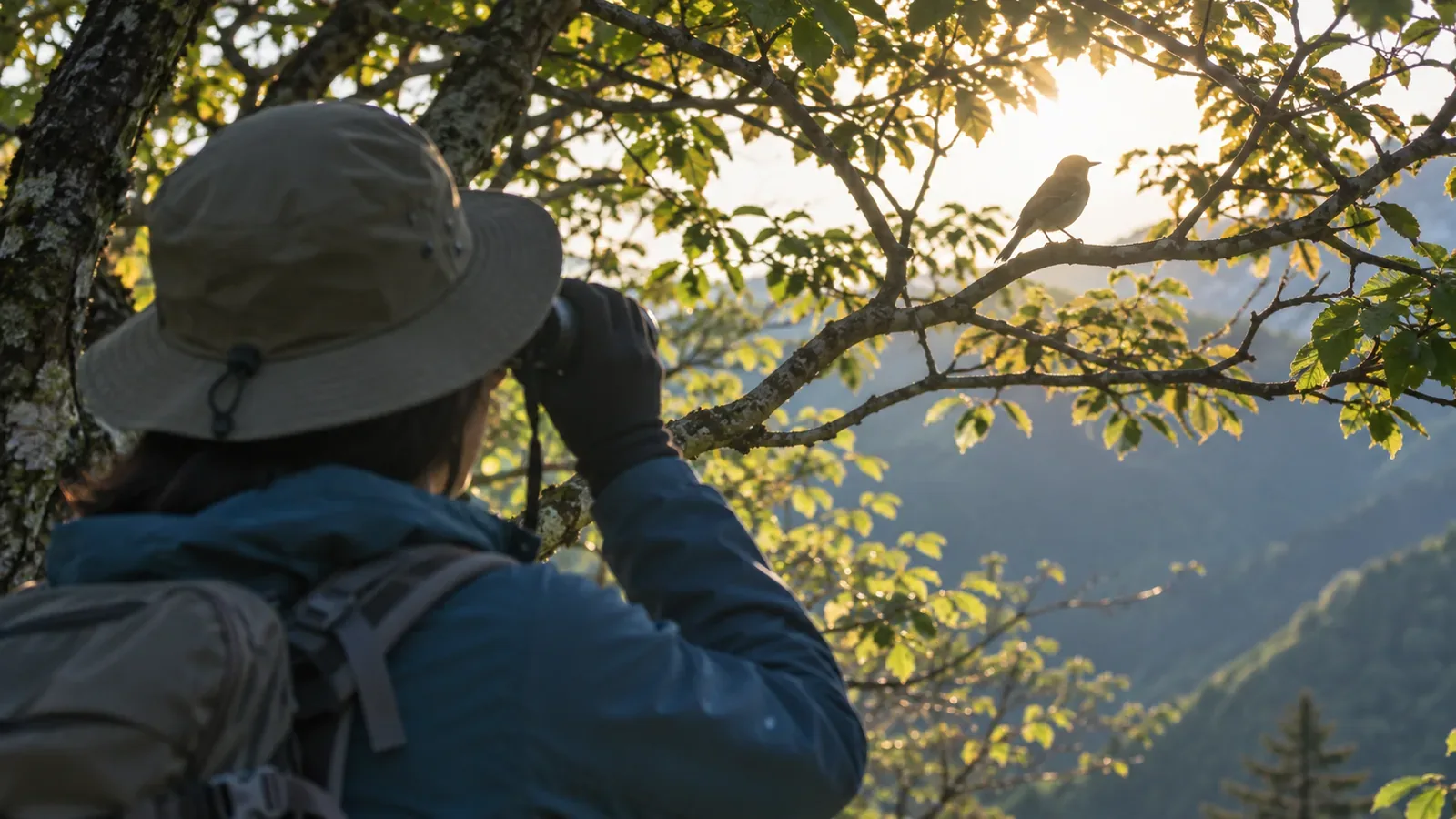
If backlighting keeps you from making out a bird’s colours, write “colour unknown” in your notes. Keeping what you actually saw, such as shape, movement and surroundings, gives you a firmer basis for working out the species at home. Drawing on bird identification guides, we suggest a way to keep observations and guesses separate.
It is easy to fill in a missing colour. You think you know which bird it is, and what you know about that species starts to blend with what you actually saw. Here is how to keep the two apart and decide how far you can move to get a better view.
Look at shape, behaviour and habitat alongside colour
The Cornell Lab of Ornithology identifies four visual clues: size and shape, colour pattern, behaviour and habitat. Use the bird’s overall features to narrow down the group before checking small plumage markings in a field guide. Cornell’s size and shape guide also points to the silhouette, body proportions and the shapes of the bill, wings and tail. Start with the features you could make out.
Cornell’s colour guide explains how strongly light affects the colours you see. At a distance or on a brief glimpse, the distribution of light and dark patches may be easier to judge than the hue. Colour is an important clue whenever you can see it reliably. If backlighting obscures it, leave it unknown in the notes instead of filling it in from the guide. Leave the outline unconfirmed too if you could not see it clearly.
Separate what you saw, what you couldn’t see and what you guessed
We suggest three fields. Under “What I saw”, note shape and apparent size, how the bird perched or moved, its surroundings, and whether you heard it. Under “What I couldn’t see”, write “Colour unclear because of backlighting”. Under “My guess”, record any possible species or colour in a separate field.
If you only write “brownish bird”, a few days later you may wonder whether you actually saw brown or filled it in from a guide. A note such as “Perched near the tip of a branch, slender, made quick small movements, colour unknown in backlight” will preserve what you saw and what remains open.
This is consistent with eBird’s approach. Cornell and eBird’s Merlin Sound ID guidance, updated on 25 August 2026, asks users to leave out suggestions they have not checked independently or are unsure of. For longer recordings, it recommends noting when the bird made the sound and adding any behaviour you observed. If colour is unclear, make the record stronger by noting what you do know, such as the time and what the bird did.
Stop walking before writing or using your phone. Write where you can stand on firm ground and leave room for others to pass. If there is nowhere suitable, wait. If you write later, mark any details you could only recall from memory so you can tell them apart from notes made on the spot.
Wanting better light doesn’t change where you can go
It is tempting to move until the light is behind you. Before moving, check your distance from the bird, your footing and who else is on the trail. The Wild Bird Society of Japan’s guidelines of 26 April 2022 list fleeing, flying away, changing posture and giving an alarm call as signs a bird may be stressed by your proximity. Some birds freeze, so pay attention even if it stays in place. If you notice a change, withdraw quietly.
The same guidelines ask you to leave the path clear, avoid crossing in front of other observers, and stick to footpaths and observation trails. Japan’s environment ministry also asks national park visitors to stay on boardwalks and paths. The society’s photography guide advises against chasing birds and setting up a tripod in a walkway.
Here is where we suggest drawing the line. Give the bird the same space, stay on the trail and keep out of other observers’ way even if moving would give you better light. You can wait for the view to improve if the trail offers a safe place, others can pass and the bird’s behaviour stays the same. If the colour remains unclear, leave it that way in the notes. Add a detail if the bird moves on its own and you can see something new. On unstable footing or a narrow path, keep moving.
Keep the original notes when checking a guide later
If you find a possible colour in a field guide, keep your original observation as written and add the comparison separately. Cornell notes that a bird’s appearance can change with moulting, feather wear and age. It recommends looking at the overall colour pattern before trying to match details in a photo. That is particularly helpful when backlighting concealed the details.
Start with the other fields. Cornell’s Merlin Sound ID guidance recommends using each suggestion as a lead and comparing the known examples, range, behaviour, habitat and season, and seeing the bird if possible. Check the habitat and behaviour you wrote down and the time of year against a guide or range information. If colour cannot settle the question, narrow it down as far as the other evidence allows and stop there.
If you cannot narrow it down further, write “species unknown” or “possibly in the X group”. That follows eBird’s guidance on leaving uncertain species off your report. If sound gave you a possible name, check the sound on its own terms and keep any colours you could not see unknown.
Record what you could see and leave the rest unknown
Colour patterns help identify birds and vary in appearance with the light. If backlighting hides the colours, use the fields for what you saw, what you couldn’t see and what you guessed. Keep your distance and stay on the trail even if the light might be better elsewhere. Record from a safe stopping place or wait until later. Start your comparison with shape, behaviour, habitat and season, and leave the identification open if the clues do not settle it. Leaving a colour unknown in backlight is the editorial team’s suggestion, based on evidence that light affects the colours you see.
References and sources
- Cornell Lab of Ornithology: the four keys to bird identification
- Cornell Lab of Ornithology: size and shape
- Cornell Lab of Ornithology: colour pattern
- Cornell Lab and eBird: Merlin Sound ID best practices
- Wild Bird Society of Japan: etiquette guidelines for new birdwatchers and bird photographers
- Wild Bird Society of Japan: bird photography etiquette
- Japan Ministry of the Environment: national park etiquette