
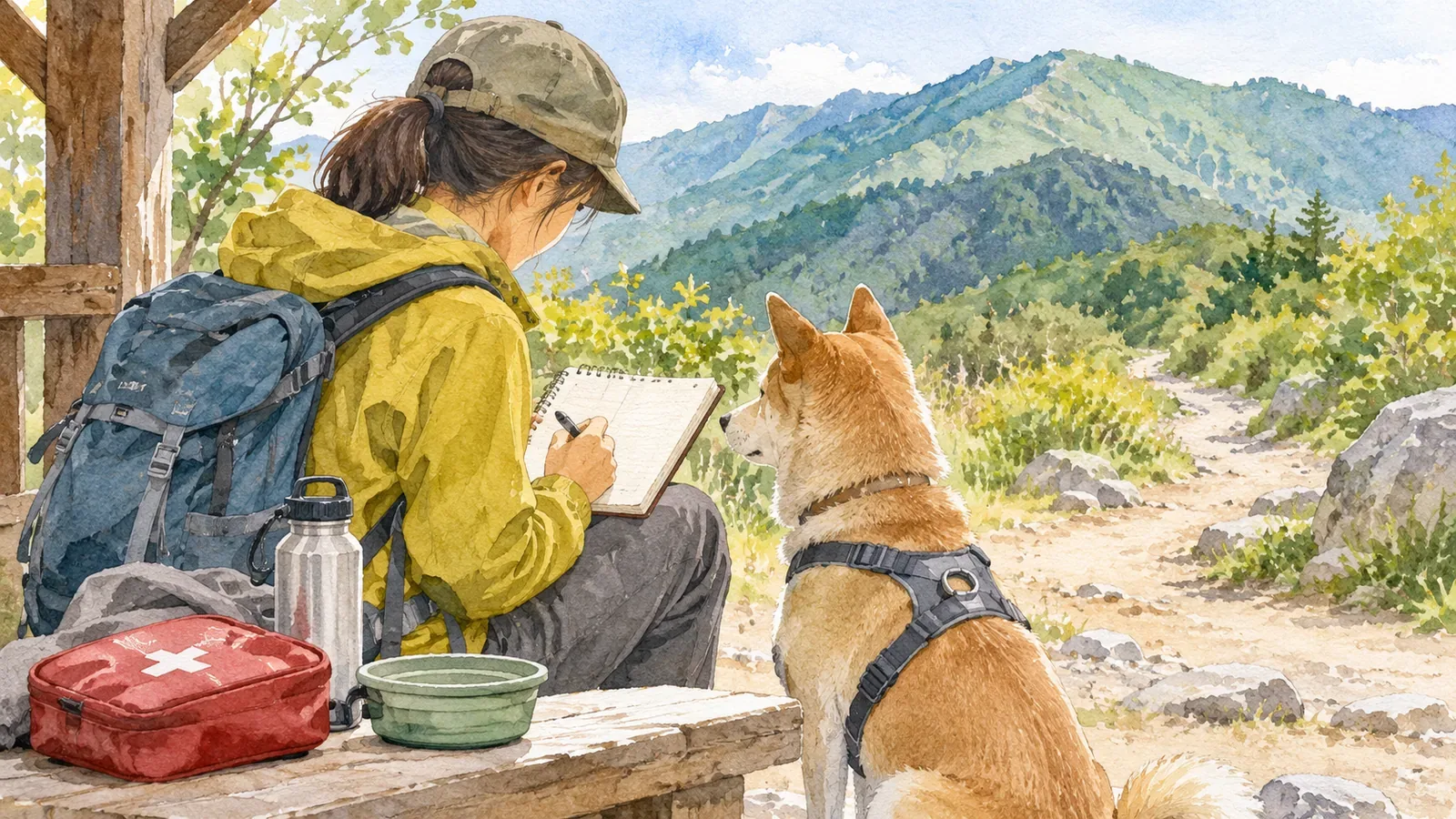
Before hiking with a dog, check whom to call and how to return if someone or the dog cannot walk. Plan for gaps in mobile coverage and for transport suspensions.
Check the route if someone cannot walk
Whether you can carry a dog depends on its size, your gear, the footing and the distance. If there are steep slopes or narrow bridges where carrying would be difficult, choose a shorter route or one you can leave early.
Yamanashi City asks visitors to refrain from taking pets into Nishizawa Gorge, citing risks from falls and contacts with other hikers. Check the pet policies and identify narrow or difficult places to pass on the route you plan to use.
Use maps and official guidance to identify stairs and narrow places on the return path. If you plan to leave by another trailhead, confirm that the trail is currently open and you can take a dog.
Keep contact details and know what to say
Tell your regular veterinarian about the hike and ask about any health concerns and what number to call in an emergency. The American Veterinary Medical Association recommends keeping the veterinarian’s and emergency animal hospital’s contacts and a record of medications, and calling the facility in an emergency. Check hours and admission arrangements at veterinary hospitals near your destination.
If a person is injured and cannot get down or faces another immediate danger, in Japan call 110 or 119 promptly and follow instructions. Give your location, the number of people, injuries and ability to walk, the fact that you are with a dog, and a callback number. Follow the responding service’s instructions on rescue and transporting the dog.
Share the trailheads, junctions and facilities with the group so everyone can describe where you are. Keep maps, contacts and the itinerary available offline for areas with weak signal, and carry a paper copy.
Check regular transport and emergency arrangements separately
The Gifu Kinkazan Ropeway normally requires dogs and other pets to fit completely inside a pet carrier and may suspend service in strong winds or thunderstorms. Check boarding conditions and service updates, and ask the operator separately whom to contact in an emergency.
On the Mt. Fuji Panorama Ropeway, small and medium dogs normally need a hard-sided carrier in the gondola. Assistance dogs can board without one. Service may pause for wind or thunderstorms. For other transport, check dog access, carriers, where to board and get off, and who to call. For a descent on foot, check that the trail is open, dogs are allowed and the people and dog can walk it safely.
If you drive, plan how to reach the car, who will drive afterward and how the dog will ride. The American Veterinary Medical Association advises avoiding hugging an injured dog or bringing your face near its mouth, as pain and fear can change its reactions. Make sure the area is safe and ask a veterinarian how to transport the dog if it needs to be moved.
Choose a route with workable contacts and ways back
If you cannot confirm contacts, dog access or a return route, choose a shorter or more accessible hike or go another day.
Agree on who holds the leash, who makes calls and who outside the group has the itinerary. Be ready to give the dog’s medications, condition and contact details, and keep familiar equipment easy to reach.
If the dog’s gait or breathing changes, stop and check how it is doing. Contact a veterinarian as needed. Agree before leaving that anyone can suggest turning back.
Share contacts and transport plans before leaving
Label each contact with its purpose, such as veterinary care, transport or a family member who has the itinerary. Check service hours and contact methods before leaving.
Talk through stopping the hike early. Decide who would check the location, whom to call and who would stay with the dog. Make the contact list and itinerary available to everyone.
Confirm the driver and contacts for the trip after the trail. If using public transport, check boarding conditions, service status on the day and the operator’s emergency contact.
If the weather or route differs from what you expected, put safety first. Stay out of dangerous areas and follow emergency services or professional advice when needed.
Save contact details, be ready to explain where you are, and check safe return routes and transport before leaving. Reconsider the destination or route if you cannot confirm any essential conditions.
References and sources
- Yamanashi City — Please refrain from bringing pets into Nishizawa Gorge
- Gifu Kinkazan Ropeway — Visitor information
- American Veterinary Medical Association — Pet First Aid (2025)
- Mt. Fuji Panorama Ropeway — Tickets and operating information
- Mt. Fuji Panorama Ropeway — Frequently asked questions
- Gifu Prefectural Police — What to do in a mountain emergency