
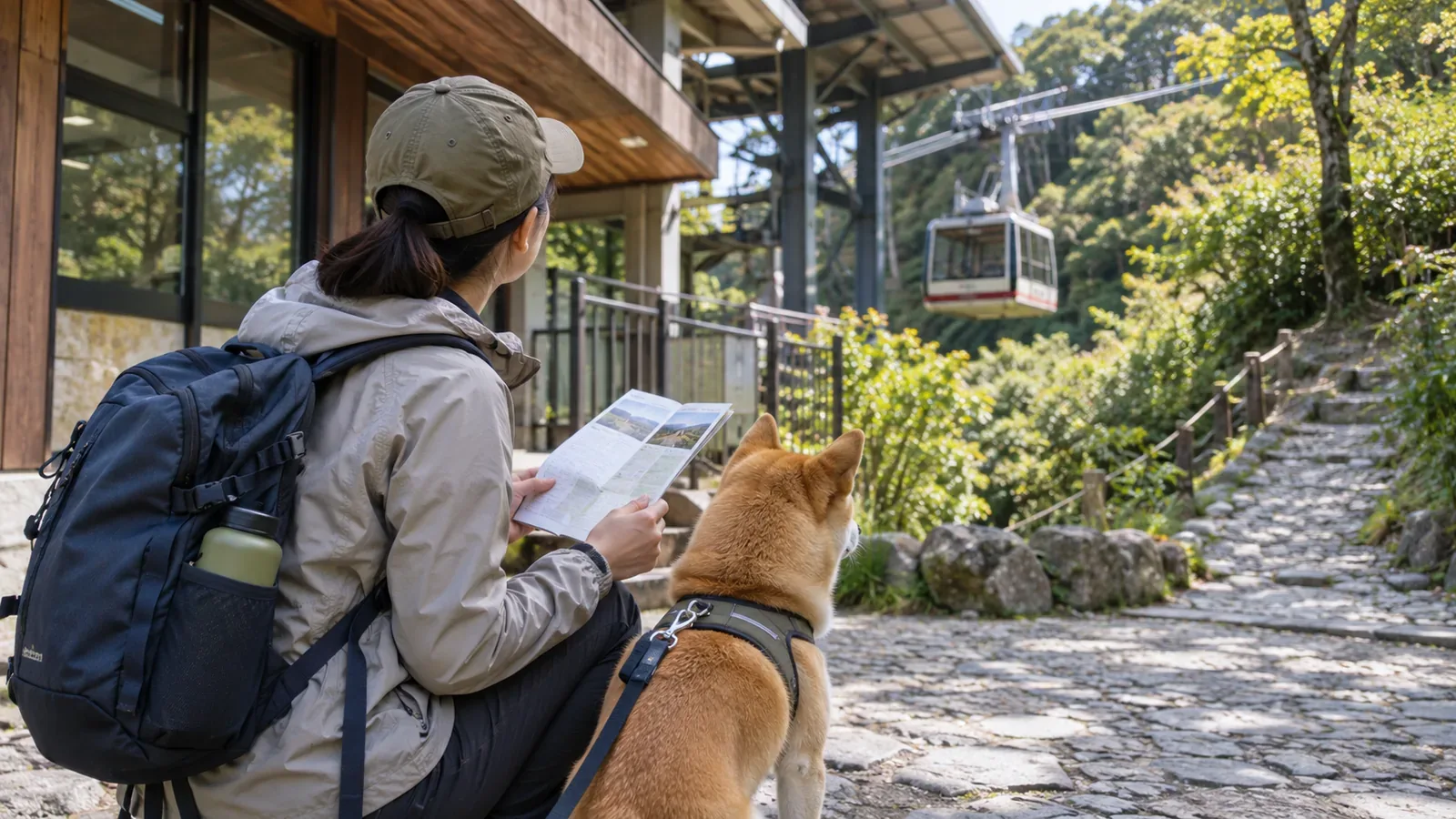
When you head into the mountains with a dog, check the trails, ropeway and facilities you will use after getting off. Ask the transport company about boarding and the relevant managers about trails and buildings. Guidance from Mount Kinka and Lake Kawaguchi shows how to check the whole trip, including the way back.
Connect the outbound and return legs
List transport to the trailhead, the trails, any ride, the facilities after you get off and the return leg in order. Ask the site manager about paths, the transport company about vehicles and stations, and the facility operator about buildings at the top. If you use different sections on the way out and back, check both.
Japan’s Ministry of the Environment distinguishes releasing an animal to move freely from walking with it under human control. Its natural parks FAQ asks visitors to respect local requests to refrain from bringing pets. If that applies to any planned section, reconsider your destination.
Ropeway size and carrier requirements
The Gifu Kinkazan Ropeway allows pets weighing up to 14 kg if they fit completely inside a pet carrier, and charges a pet fare. It has a limited number of free loan carriers. The Mt. Fuji Panorama Ropeway’s operating guide for Lake Kawaguchi allows small and medium dogs for a fee and requires a hard-sided carrier inside the gondola. Large dogs at least 50 cm tall, soft carriers and pet strollers are excluded. Assistance dogs can board without a carrier.
Check the operator’s fare and operating information for weight, height, carrier requirements and current fares. Size and carrier conditions vary between ropeways.
Check the facilities and trails after you get off
At Mount Kinka, pets cannot enter Squirrel Village opposite the top station. Stairs lead toward the observation deck and Gifu Castle. Check with the facility or trail manager to see whether dogs are allowed. At Lake Kawaguchi, ordinary vehicles are barred from Mount Tenjo year-round. To reach the summit, use the ropeway or hiking trail. At Tadewara Marsh, pets take the outside stairs or ramp because they cannot enter the Chojabaru Visitor Center. Assistance dogs for people with disabilities can go through the building. One itinerary may include paths dogs can use, buildings they cannot enter and transport that requires a carrier.
The Gifu Kinkazan Ropeway and the Mt. Fuji Panorama Ropeway may suspend service in strong winds or during thunderstorms. Ask the operator what to do if the return service stops and follow staff instructions on the day. If you plan to walk down, confirm in advance that the trail is open, dogs can use it, and both you and the dog can handle it with the equipment you have.
If your dog cannot board for the return journey, calculate the distance, time and elevation change for retracing your steps. Choose a shorter outing or another destination if needed. If the carrier does not meet the requirements, check before leaving whether you can get one that does.
Make a checklist for each leg before leaving
Give the trip to the base, the ride, the facilities at the top, the hiking trail and the descent separate rows. Note the manager and dog access conditions. If a section’s rules say nothing about dogs, ask its manager. Be specific about the trail, entrance, facility or transport you will use.
For transport, note weight or height limits, carriers, fares, loan carriers and what to do in a suspension. For trails, note leash conditions and any request to leave pets at home. If different instructions seem to conflict, name the leg and ask the relevant managers.
Check both legs of the trip
Check every leg of the round trip from transport to the trailhead through the descent. Verify operating status before leaving and on the day. Revise the route if a section is unavailable or you cannot confirm a way back.