
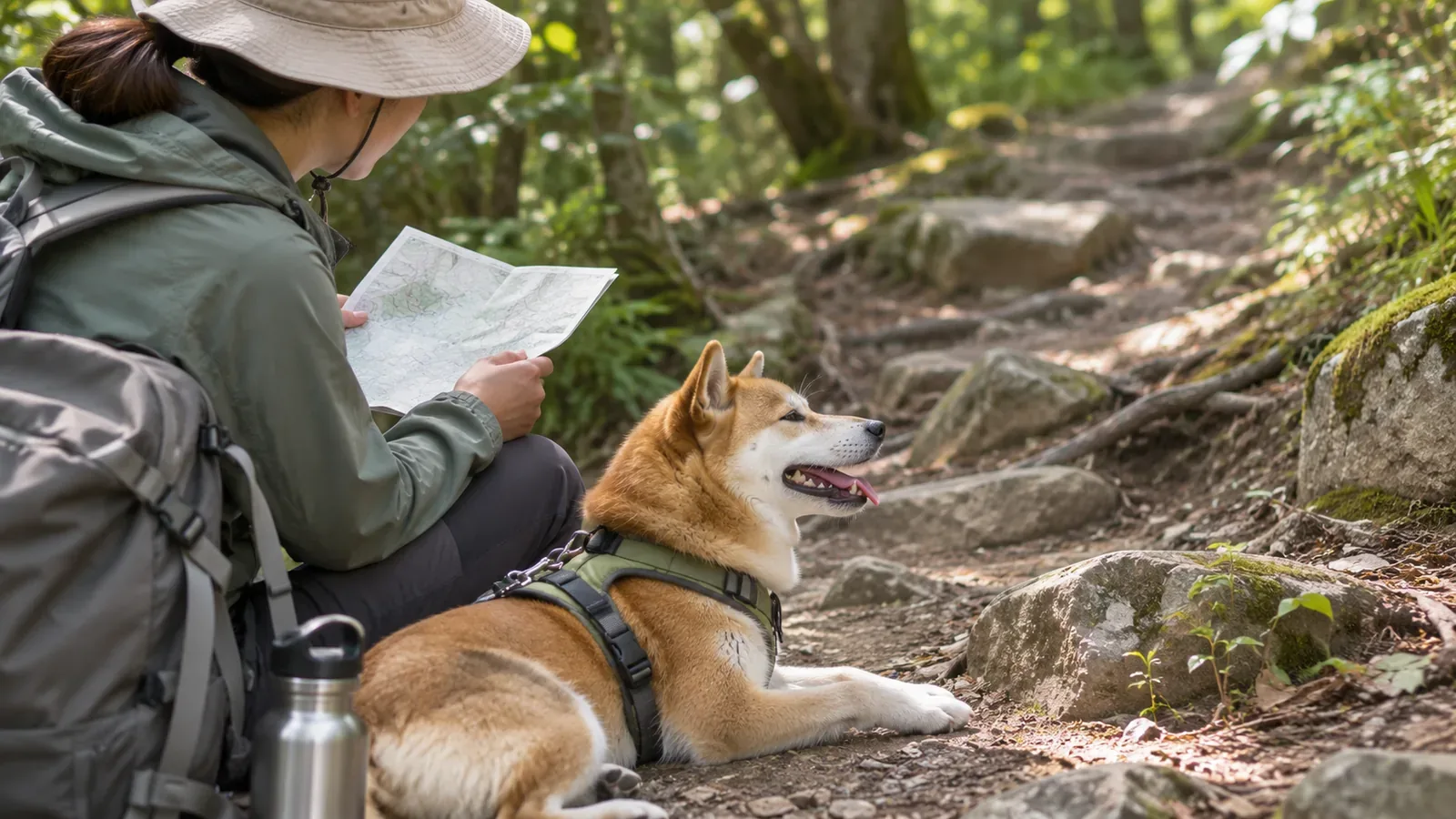
When choosing a hike with a dog, check the terrain, steps, crowds, weather and how your dog is doing, as well as distance and elevation. Pick a route your group can manage with the option of turning back.
What the numbers leave out
A flat trail and a steep, rocky trail can feel very different even if they are the same length. Look at high steps, narrow bridges, slippery surfaces and gaps in boardwalks. Along with distance and elevation, check the manager’s guidance and recent trail reports. Photos can help you picture the route, but the path may have changed since they were taken.
Yamanashi City asks people to refrain from bringing pets into Nishizawa Gorge because of falls and contact with other hikers. Check the destination’s access rules. On trails that allow dogs, look at the terrain and where you can pass others.
Plan a way to turn back before a section the dog cannot walk. Consider whether you can safely carry the dog and your gear on that footing while leaving room for others to pass.
Start with what you know about your dog
Dogs differ in age, fitness, health and the surfaces they know. A route another dog of the same breed or size completed may not suit yours. Pay attention on everyday walks to where your dog walks comfortably and when it stops. Speak with a veterinarian before leaving if you have health concerns.
On a first visit, a car ride and encounters with unfamiliar people or dogs can add to the day. Check for quiet places to pause and times when trails are less busy. If you are introducing the dog to new surroundings, start with a short walk that is easy to retrace and see how it responds.
If the dog is acting differently before leaving, reconsider your plans and ask a veterinarian about health concerns. The Tokyo Metropolitan Government’s Minami-Tama guide asks visitors to leave pets with contagious illnesses at home. If you notice changes on the trail, stop walking and consult a veterinarian.
Plan for weather, breaks and a way back
Look at the day’s weather, shade and places to stop. Cornell University’s College of Veterinary Medicine recommends avoiding strenuous exercise during the hottest hours or in high humidity, bringing water and a bowl, and offering frequent drinks. Even on a short trail, allow time and space to stop safely while keeping the path clear.
On an out-and-back hike, you cross the same bridges and steep sections on the way back. Allow for changes in weather and trail conditions. On a loop or traverse, check whether there are ways to leave early and whether your dog can use the trails and transport.
Pick a time to start back and identify possible turnaround points in advance. Tell your group and turn back if progress is slower than expected, your dog needs rest or the trail is harder than planned.
Check dog access first
If an area asks visitors to refrain from bringing pets, plan to go without your dog or choose another place. The Oze Preservation Foundation asks people to leave pets at home.
Check the conditions for parking, transport, rest facilities and trails separately. When you ask, give the dog’s size, the number of dogs and the sections or facilities you want to use.
If you cannot confirm the conditions, choose a place where you can. Add the date if you record your dog’s behavior and what the trail was like after coming home.
Make a plan that gets you and your dog back safely
On the map, mark places you want to check, including long stair sections, stretches along roads, rest stops and possible turnaround points. That helps the group picture the same route. Mark anything you could not confirm as unverified.
Check when photos or trip reports were made and in which direction. A step that looks easy uphill can be different downhill. Read photos alongside maps and official guidance, and ask the manager for current conditions when information is old.
Think about the group’s fitness and gear. Plan for carrying water, waste bags and other equipment while handling the leash. Discuss how to share the load or switch roles. Leave enough time to head back before fatigue makes decisions harder.
If conditions do not suit the hike, take a short walk somewhere familiar or check the conditions again for another day.
Even after a short outing, watch your dog’s gait and breathing through the return home. Ask a veterinarian about any changes that concern you.
Consider terrain, steps, crowds, weather, rest stops and your dog’s condition, and follow local access rules. Choose turnaround points so you can start back with time and energy to spare.