
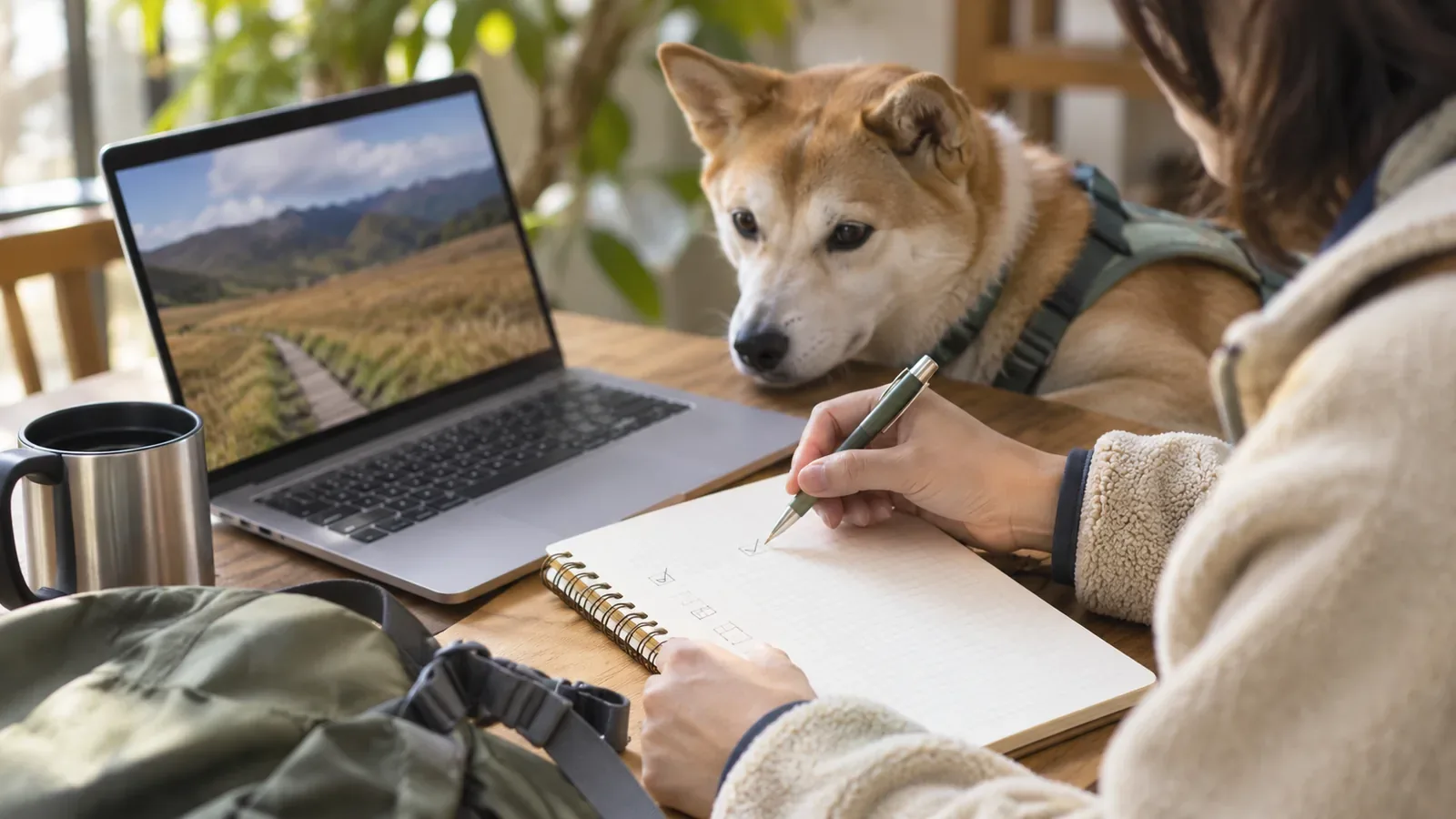
If a mountain asks visitors to leave their dogs at home, choose another destination with a clear policy on dogs. Trails, facilities and transport each have their own conditions. Check the latest guidance from the site manager or operator before you leave.
When asked to leave your dog at home, look for an alternative
In guidance updated on 11 May 2026, Yamanashi City asks visitors to leave pets at home when visiting Nishizawa Gorge because of risks such as falls and contact with other hikers. The Oze Preservation Foundation asks visitors to leave pets at home because of impacts on wildlife, concerns about disease and consideration for other users. The Nikko Yumoto Visitor Center also asks visitors to refrain from bringing dogs onto hiking paths and nature trails out of consideration for people who are uneasy around them.
The Ministry of the Environment’s natural park FAQ also asks visitors to respect local requests to leave pets at home. Circumstances differ by location. Read the guidance for where you plan to go and follow it on the day you hike with your dog.
Whether the notice says “please refrain,” “we ask you not to” or “no dogs,” choose another destination if it asks you to leave your dog at home. A dog small enough to carry or a quiet day on the trail is no reason to make your own exception.
Look beyond leash rules
The ministry’s FAQ distinguishes between restrictions on releasing animals in special protection zones and walking an animal on a leash under human control. Check the destination’s own guidance for its rules and requests.
The Nikko Yumoto Visitor Center describes the rules on releasing animals in the Senjogahara and Odashirogahara special protection zones separately from its request to leave dogs off hiking paths and nature trails. Read what the notice asks you to do and change plans if it asks you to leave dogs at home. A leash leaves that request in place.
The FAQ’s reference to an amendment points to the regulations on releasing animals and plants that took effect in January 2006, as explained on the ministry’s main page.
Choose somewhere with a clear policy on dogs
Look for guidance on dogs from the site manager or transport operator. These three examples apply to their own sites.
At Tadewara Marsh, the ministry’s Kyushu Regional Environment Office guidance dated 2 June 2026 says pets can generally pass through. Only assistance dogs can enter the Chojabaru Visitor Center. With a pet, use the outside stairs or ramp. A leash is required, and a second leash is recommended to prevent escapes. Take waste home and avoid bringing, carrying away or spreading parasites and pathogens. Check the latest local notices before leaving.
On the Gifu Kinkazan Ropeway, a pet may weigh up to 14 kg and must fit entirely inside a pet carrier. A pet fare applies. Loan carriers are limited, and the Squirrel Village excludes pets. The Mt. Fuji Panoramic Ropeway carries small and medium dogs for a fee in a rigid carrier inside the gondola. Bags and strollers are excluded, as are large dogs 50 cm or more in height. Assistance dogs can board without a carrier. Check summit trail conditions separately.
Even within one destination, some sections may welcome dogs while others are off limits. Ask the site manager about any stretch the guidance leaves unclear. Also check other local guidance, such as rules on feeding wildlife or stepping off trails and recent bear sightings.
Make a backup plan at home
Write one line about why you want to visit your first choice. Perhaps you want to walk through a marsh, enjoy summit views or ride a ropeway. Note the location’s dog policy, who issued it and when it was last updated. Record if the page is undated.
Pick two places that could offer a similar experience. For each, note the official URL, leash and carrier requirements, size or weight limits, areas off limits to dogs and any fees. If your aim is to walk through a marsh, your alternatives can be in another mountain area.
Mark sections of the itinerary you have yet to confirm. If it includes a ropeway, check your return plan for a service suspension. At Mount Kinka, strong winds or approaching lightning can halt service. The Mt. Fuji Panoramic Ropeway may also close for strong winds, lightning or gondola inspections. Skip the itinerary if you cannot confirm a return. If service stops after you board, follow directions from staff and stay off any trail you have yet to check.
Finally, decide when you will call off the trip. Examples include being unable to confirm details by the previous day, finding a sign that differs from your notes, or seeing a no-dogs sign at the entrance. You can walk your first choice another day without your dog. Choose an alternative and set your criteria for turning back in advance so you can decide at the entrance. To read a sign, first stop on stable ground where you are clear of other people’s path.
Change destinations when asked to leave your dog at home
If visitors are asked to leave dogs at home, switch to a place with clear conditions for welcoming them. Check leash rules, areas off limits to dogs and your return plan. Review the latest guidance before leaving and skip the itinerary if you cannot verify the conditions.
References and sources
- Japan Ministry of the Environment: Natural park FAQ
- Japan Ministry of the Environment: Regulations on releasing animals and plants
- Oze Preservation Foundation: Rules and etiquette in Oze
- Japan Ministry of the Environment: Pet etiquette at Tadewara Marsh, 2 June 2026
- Nikko Yumoto Visitor Center: Before you set out
- About the Gifu Kinkazan Ropeway
- Mt. Fuji Panoramic Ropeway: FAQ
- Yamanashi City: Please leave pets at home when visiting Nishizawa Gorge
- Mt. Fuji Panoramic Ropeway: Operations and fares