
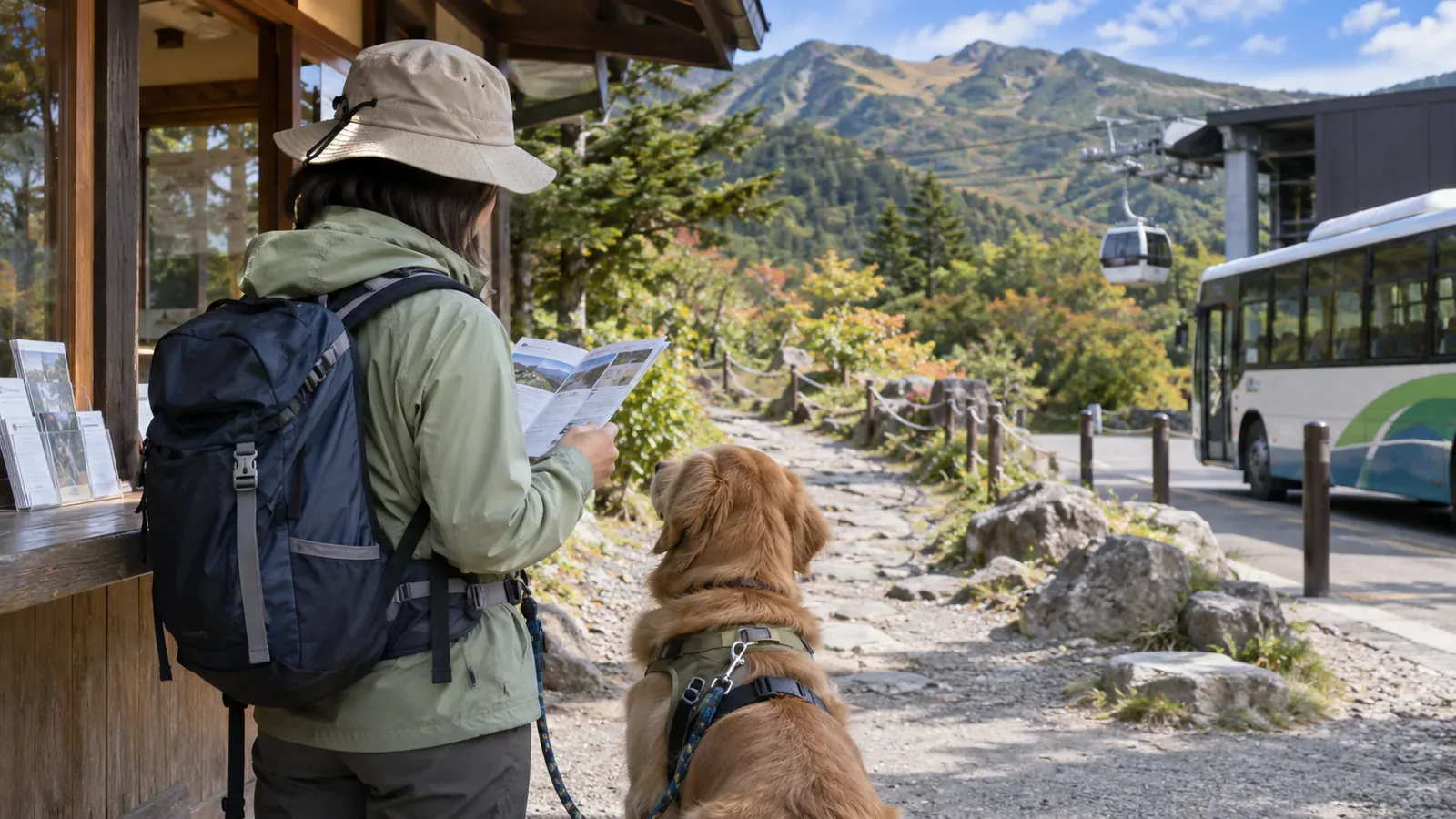
Check dog access for each trail, building and means of transport you plan to use. Read official guidance on what the law regulates, where local managers ask visitors to leave pets at home, and which conditions apply to facilities and transport.
Read legal restrictions and local guidance separately
Japan’s Ministry of the Environment explains in its natural parks FAQ that the restriction on releasing animals in special protection zones refers to letting an animal move freely outside direct human control. Walking a dog on a leash under direct human control falls outside that specific restriction.
The FAQ explains that some areas ask visitors to leave pets at home out of consideration for other visitors and wildlife. In guidance updated on May 11, 2026, Yamanashi City asks visitors to keep pets out of Nishizawa Gorge, citing risks such as pets falling or coming into contact with hikers.
Note which activities the law regulates, what local managers ask visitors to do and which conditions apply to each facility. Record who issued each instruction and which place it covers. Check local requests and facility policies as part of your route planning.
Examples from Tadewara Marsh, Nikko and Oze
Official guidance can say that pets are allowed, ask you to refrain from bringing them or ask you to keep them out. Each example applies to a specific place.
According to the Kyushu Regional Environment Office, pets can use the paths at Tadewara Marsh on a leash. Pets cannot enter the Chojabaru Visitor Center, so use the outside stairs or ramp. Assistance dogs for people with disabilities can pass through the building.
The Nikko-Yumoto Visitor Center asks visitors to refrain from bringing pets on hiking and nature trails. Releasing animals is regulated in the special protection zones of Senjogahara and Odashirogahara.
The Oze Preservation Foundation asks visitors to leave pets at home, citing possible threats to wildlife, disease transmission and impacts on other visitors.
When choosing a destination, read both the area guidance and the rules for the facilities on your route. A path that allows pets may lead past a building they cannot enter. If the site asks visitors to refrain from bringing pets, plan an alternative for that section.
Record the conditions and where they apply
Note the paths you can use and any leash or access conditions. For Tadewara Marsh, keep your pet on a leash and use the stairs or ramp outside the Chojabaru Visitor Center. Give the marsh and visitor center interior separate rows in your itinerary.
Check whether a request to leave pets at home applies to a building or also to hiking and nature trails. The request from the Nikko-Yumoto Visitor Center covers hiking and nature trails.
Check the conditions for pets and assistance dogs separately. Assistance dogs for people with disabilities can pass through the Chojabaru Visitor Center. Ask the facility or transport operator if its policy is unclear.
Make a checklist for each stop before leaving
List the parking area, visitor center, trails, transport, viewpoints and huts or campsites in order. For each row, note the manager and official page, the date checked, whether pets are allowed, allowed with conditions, discouraged, barred or unconfirmed, and any weight, carrier, leash or access limits. Add an alternative.
For example, give “pets cannot enter Chojabaru Visitor Center” and “pets on leashes can use the paths at Tadewara Marsh” separate entries. For an overnight stay, check the area guidance and the policies of the hut or campsite.
If instructions seem to conflict, check the locations covered, the distinction between pets and assistance dogs, and the dates, then ask the manager. Name the entrance, path and facility you will use. Keep the stop out of a dog-friendly itinerary until it is confirmed.
Check access at every stop
Record whether dogs can accompany you and under what conditions at each stop. Check the latest guidance before you leave. If you cannot meet the conditions, leave your dog at home or choose another destination.