
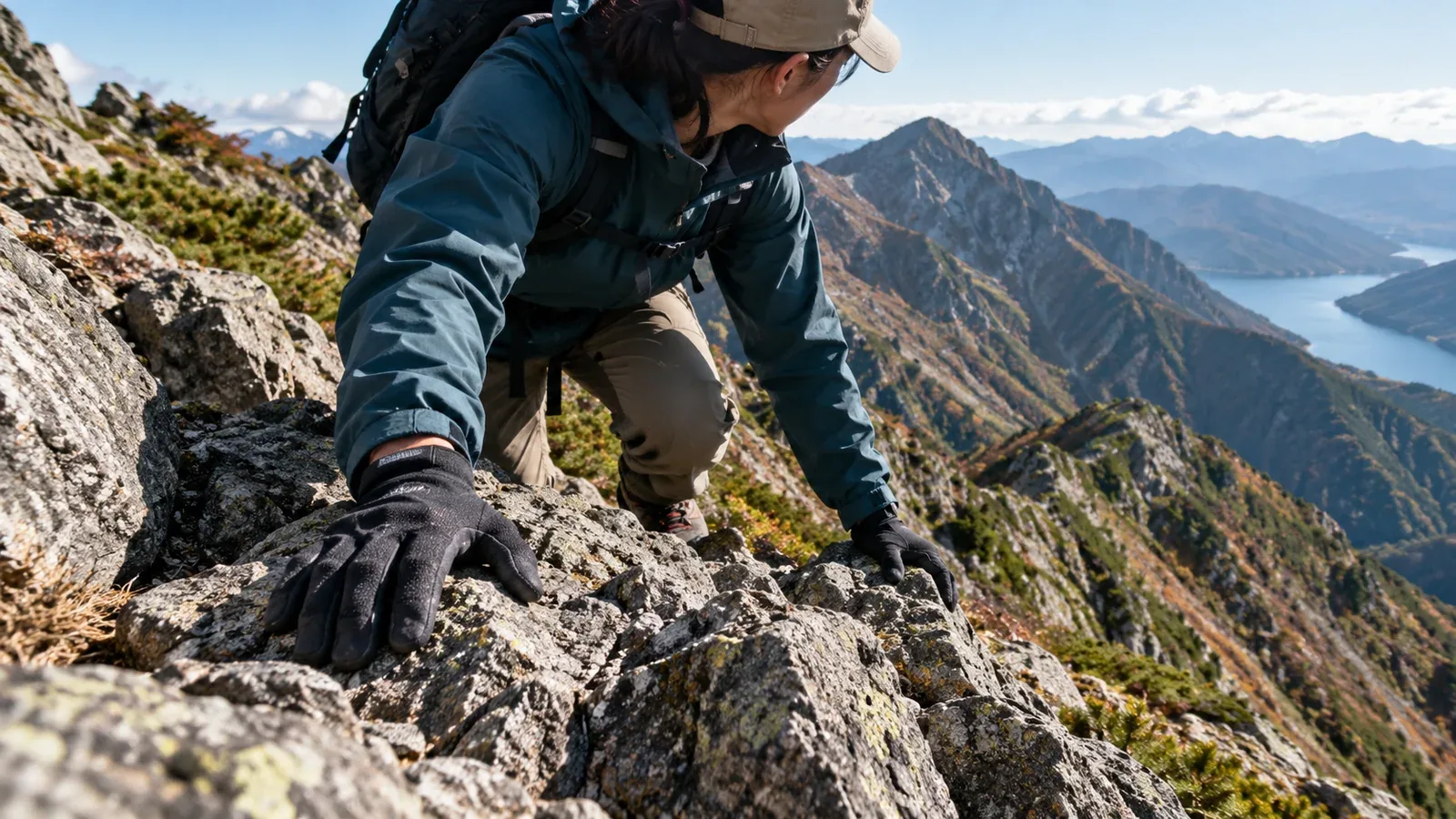
Gloves can protect your hands from rough surfaces and cold. They also change how well you feel a small hold. Choose a pair for the route and weather, test it somewhere safe and reassess if you can’t keep a secure grip.
A useful rule is to choose enough protection to keep your hands warm and usable while keeping the grip you need for the terrain. Wet rock, damaged chains and unstable holds still call for changing plans.
What you can feel with bare hands
On dry rock, bare fingers can give direct feedback about the shape, direction and texture of a hold. A glove can make small features harder to feel, depending on fit and material. Practise using solid holds on low, secure terrain.
Cold, wet skin or abrasions can reduce dexterity. On routes with fixed hardware, gloves can protect against rubbing. Belaying and rappelling require separate instruction and suitable equipment. Gloves are only one part of that system.
Three situations where gloves can help
Wet rock and chains
Wet rock and metal can remain slippery with any glove. Try the fit and grip in a low-risk setting. If you can’t maintain secure points of contact, choose an alternative or turn back. Avoid handling damaged chains or sharp fittings.
Long descents with fixed chains
Gloves can reduce rubbing on long chain sections. Use stable footholds and treat the chain as a handhold rather than suspending your weight from it. Pause on secure ground to check your hands and adjust layers before you lose control or feeling.
Cold and wind
Cold, wind and moisture can reduce feeling and make it difficult to hold on. Carry gloves that keep your hands warm for the expected conditions, and a dry spare when needed. Stop in shelter and act promptly if fingers become numb, pale or hard to move. Seek medical help if you suspect frostbite.
How to choose gloves
Compare dexterity, warmth and how the palm and fingers behave on the surfaces you expect.
Thickness and fit. A close-fitting pair can make it easier to feel holds and move your fingers, while more insulation may be needed in cold conditions. Check that the glove doesn’t bunch in the palm, slide on the hand or restrict movement. Fingerless gloves leave the fingertips exposed.
Materials. Performance depends on the whole glove, including the palm, seams and coating. Check the model’s intended use and care instructions.
- Synthetic palm. Grip and water handling depend on the design and coating. Try a secure grip before relying on it.
- Leather palm. Leather can resist abrasion. Fit, grip when wet and care vary, so check the manufacturer’s instructions.
- Stretch or knit glove. It can offer dexterity or work as a liner. Check whether it has enough grip, warmth and abrasion resistance for the task.
Try gloves with the equipment you’ll use and see whether you can maintain control with dry and damp surfaces in a safe practice area. Replace a damaged or poorly fitting pair.
If you plan to use bare hands
Check the holds and your hands before committing to an exposed section, and keep gloves accessible if conditions change.
Check that the holds are dry, solid and reachable from a stable place. Shade and stream crossings can leave wet or icy patches. Choose another route if the surface makes secure movement difficult.
Keep fingernails at a comfortable length and pay attention to any damage that could interfere with your grip.
Check the skin on your fingers and palms. Cover cuts and protect sore spots. Reassess if pain, loss of feeling or reduced movement makes it hard to grip.
What to carry if conditions change
When packing, consider where you might need protection on the way back as well as on the way up. Weather and hand fatigue can change over a day. Keep gloves easy to reach and carry a dry spare if wet or cold conditions are likely.
For longer traverses, winter routes and technical rock, use gloves suited to the actual task and conditions. Test combinations on easy ground before relying on them on an exposed route.
Before you go
Try your gloves with the equipment and movements you’ll use, and check recent route and weather reports. Choose a sheltered place to change gloves before a chain or rock section. Nordwand’s community can help you find hikers familiar with the route.