
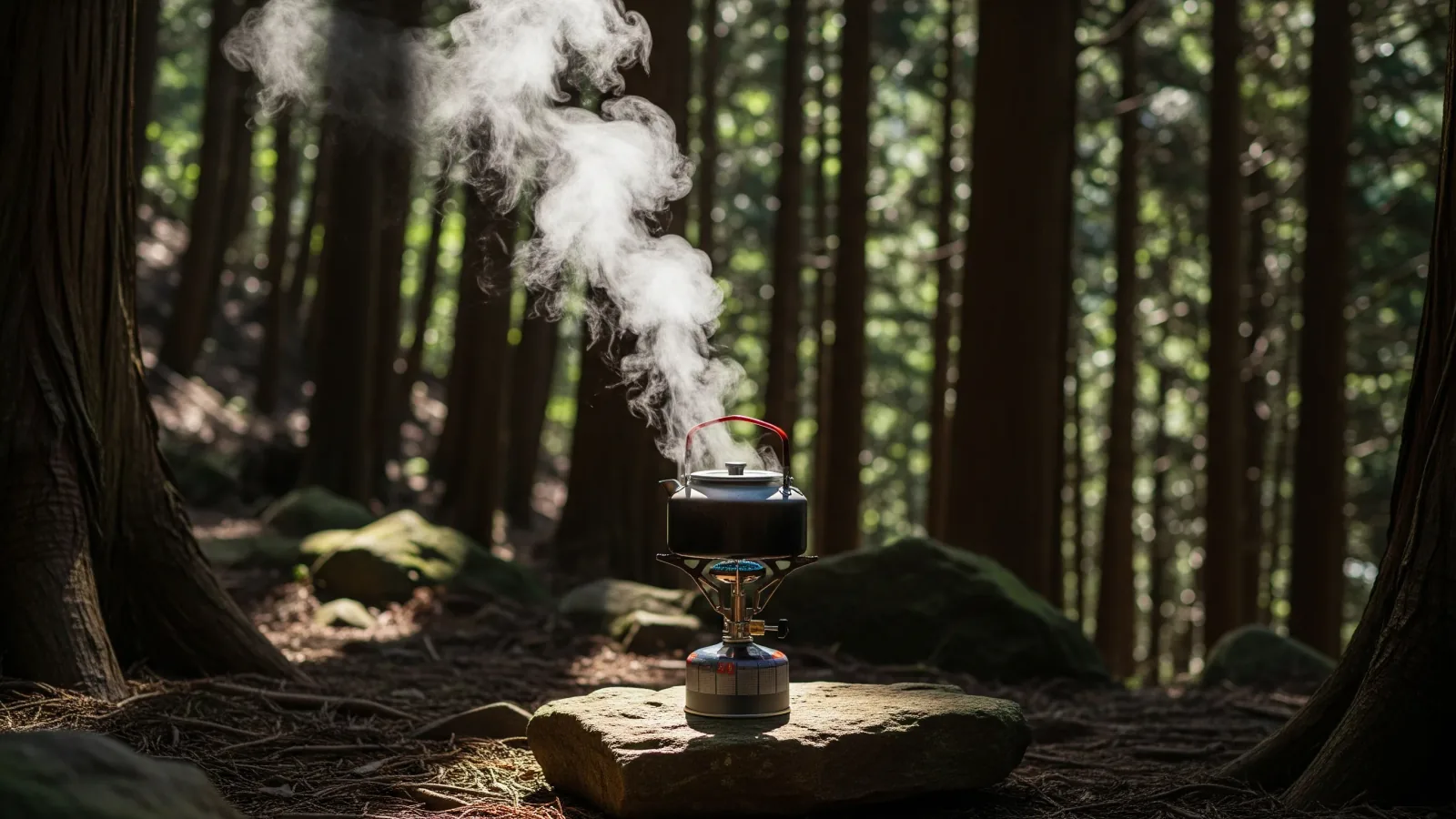
If you want to heat water for coffee on the summit, find out before leaving whether fire is allowed there. The answer depends on the park zone, the rules of the site and the wildfire risk that day. Here is what to check for campfires and portable stoves.
Campfires and portable stoves can have different rules
Different rules may apply to campfires and portable stoves. A campfire can be lit directly on the ground or in a fire pit or stand.
Under Article 21(3) of Japan’s Natural Parks Act, setting a fire or lighting a campfire in a national park’s Special Protection Zone generally requires permission from the Minister of the Environment. Check with the park office responsible for the location.
For a portable stove, find out whether the site manager permits cooking equipment. Sites and facilities may specify which devices are allowed and where, including in Special Protection Zones.
Municipalities and site managers may prohibit all flames, including portable stoves. Follow the local signs even if your equipment is treated separately from a campfire.
Rules differ by national park zone
National parks have different zones, with different degrees of protection.
- Special Protection Zone: the strictest category. Setting a fire or lighting a campfire in this zone generally requires a permit.
- Special Zones, Classes I to III: protection levels vary. The Ministry of the Environment asks visitors to use designated places for campfires in national parks.
- Ordinary Zone: a different classification from a Special Protection Zone. Check municipal ordinances and any site or landowner rules.
Check local and facility rules as well as the park zone. Outdoor fire use can be restricted temporarily when wildfire risk is high.
A small spark can ignite dry leaves or grass. The Fire and Disaster Management Agency and Forestry Agency recommend avoiding outdoor fires in dry or windy conditions. Stay with any fire you use and put it out completely afterward.
Zones and rules vary by location. Check current guidance from the prefecture and the Ministry of the Environment.
Reading signs: “no flames” and “no fires directly on the ground”
At trailheads and huts you may see 火気厳禁 or 直火禁止. Each sign covers something different.
Where 火気厳禁 means no flames, leave stoves and lighters off. Bring a hot drink in an insulated bottle if you want one.
直火禁止 means no fire directly on the ground. Check additional signs or site rules to see whether a stove or fire pit is permitted.
For example, on Mount Tsukuba there is a designated portable-stove area at Miyukigahara, in front of the upper cable car station. Flames are prohibited on the hiking trails. Check the posted rules for the stove area.
Before leaving, work through these checks:
- Check the official municipal website for rules on fire at your destination.
- If the site is in a national park, use the Ministry of the Environment website to identify the zone.
- Ask the mountain hut or visitor centre directly.
- Read the signs and noticeboards at the trailhead.
If the rule is unclear, leave the stove off.
How to use a stove safely where it is allowed
Even where fire is permitted, check for wind, dry conditions, combustible material and people nearby before getting out the stove.
First, check wind and dryness. A gust can topple the stove or carry a flame into nearby material. Do not use fire outdoors in strong winds or when a wildfire advisory or warning is in effect. Enclosing a gas stove with a windscreen can overheat the canister. Only use a setup the manufacturer permits.
Then check the area around the stove. Set it on a level surface away from dry leaves, branches and tents. Stay with it and be ready to put out a fire. To prevent carbon monoxide poisoning, avoid poorly ventilated places such as tents and areas beneath a rainfly.
Check that other hikers have enough room to keep clear. On crowded summits or rest areas, someone could touch the stove or a hot pot while passing. If you cannot keep a safe distance, do not light it and see whether you can move to another permitted spot.
If you get burned, move away from the flame and get to safety. For a deep, widespread or otherwise serious burn, seek rescue without waiting until you are off the mountain. The Japanese Red Cross provides first-aid guidance.
What to check before setting out
A campfire in a Special Protection Zone generally requires a permit. “No flames” and “no fires directly on the ground” cover different uses. The site manager’s rules tell you whether you can use a stove. Check the location and any current warnings before you leave, then follow the signs on site.
References and sources
- Japan’s Ministry of the Environment — Restrictions on activities in national parks
- Japan’s Ministry of the Environment — National park rules and etiquette
- Tsukuba Tourism and Convention Association — Mount Tsukuba and its designated stove area
- Fire and Disaster Management Agency — Wildfire prevention
- Japan Forestry Agency — Preventing forest fires
- National Institute of Technology and Evaluation (NITE) — The danger of enclosing a gas stove with a windscreen
- National Institute of Technology and Evaluation (NITE) — Outdoor equipment safety
- Japanese Red Cross Society — First aid for burns