
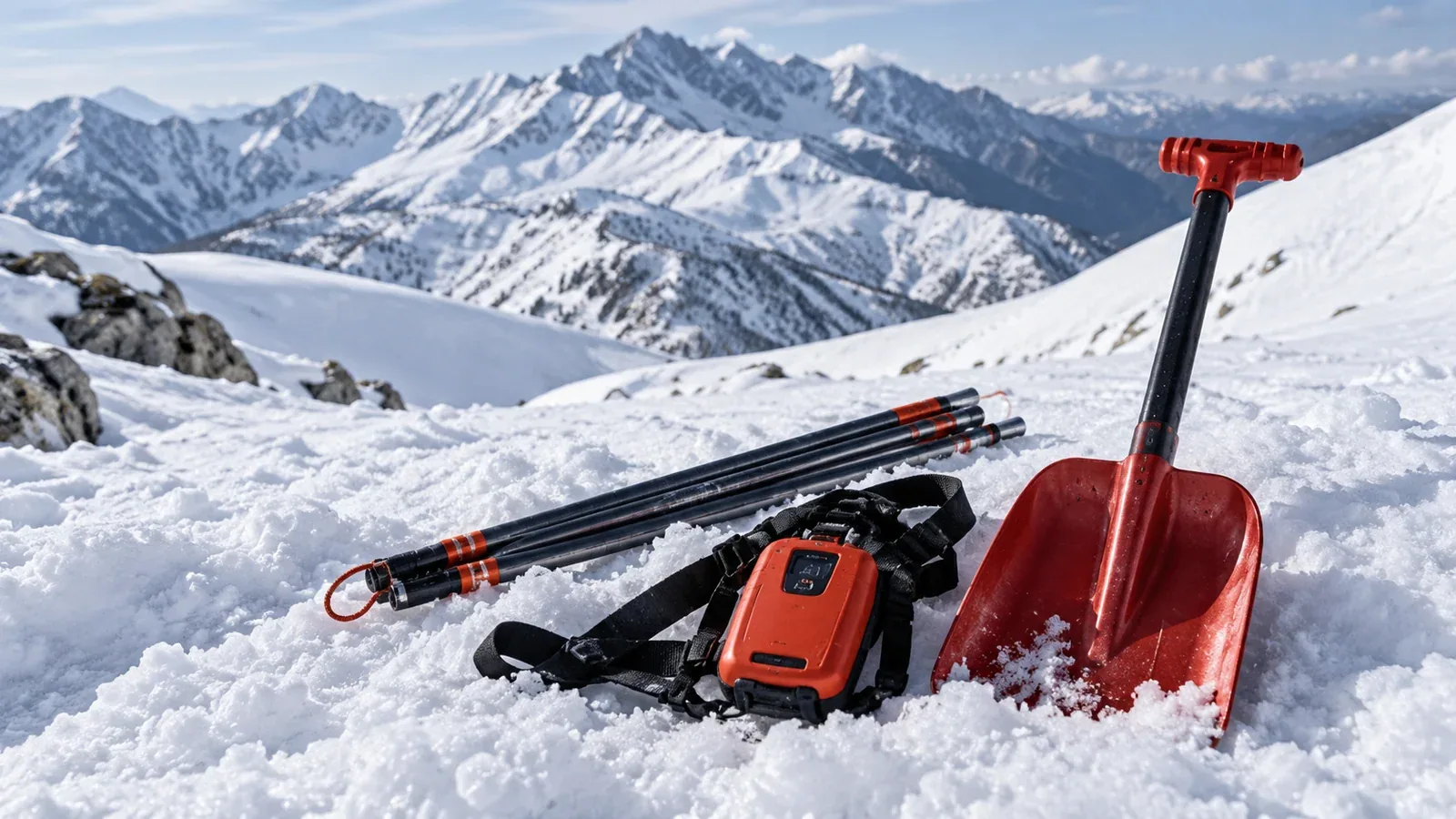
A transceiver, probe and shovel help trained companions find and dig out someone buried in an avalanche. Each person entering avalanche terrain needs all three and the skills to use them. The equipment cannot prevent a release. Choose terrain that avoids avalanche exposure while you learn.
This guide explains each tool's role, what to check when buying or renting, and what to practise with a qualified instructor. Start with terrain selection and companion-rescue training before committing to an exposed route.
Why the three tools work together
Time matters in a burial. Survival depends on factors such as injury, depth, breathing space and how quickly the person is reached. Start trained companion rescue promptly when it is safe to do so and call emergency services as soon as possible. In Japan, contact police on 110 or fire and ambulance on 119.
A transceiver helps locate a transmitting device, a probe confirms the position and depth of the burial, and a shovel moves the snow. Carrying one tool without the other two can delay rescue. Practise the whole sequence as a team.
Avalanche transceivers and how to carry them
A transceiver has a send mode and a search mode. People travelling in avalanche terrain normally keep theirs in send mode. In a rescue, follow the search procedure you have practised so other devices do not interfere. Check the model's controls before the trip.
Antennas and search features
A modern digital three-antenna transceiver is a common choice for people learning companion rescue. Models differ in controls, displays and ways to handle multiple signals. Test the device with gloves, check manufacturer updates and recalls, and learn its limitations before relying on it.
What to check when choosing a transceiver
- Controls you can use with gloves. Try switching modes and confirming what the screen or indicators show. Choose a device you can practise with regularly.
- Battery and service checks. Follow the manufacturer's instructions for battery type, minimum charge, storage and servicing. Check the device before every outing.
- Compatibility. Modern avalanche transceivers use 457 kHz. Confirm the group uses functioning compatible equipment, and verify send and search operation together before departure.
Secure it to your body
Use the manufacturer's harness or a pocket specifically permitted by its instructions, with the retention system secured. Carry it on your body so it stays with you if you lose your pack. Follow the maker's guidance on separation from phones, heated clothing and other sources of electronic interference.
Avalanche probes and burial depth
A probe is a collapsible pole that helps confirm a burial location and depth after a transceiver search. Practise how to assemble it, how to probe in a systematic pattern and how to identify a strike in a supervised course.
Once a strike confirms the position, trained rescuers generally leave the probe in place to guide digging. The depth helps the team decide how to approach the burial. Practise the transition from transceiver to probe and shovel with a group.
Choosing a probe
Select a sturdy probe with suitable length for the snowpack and terrain and a reliable locking system. Try deploying it with the gloves you use. Depth markings are useful, and the maker's guidance and your instructor can help you compare materials and lengths for the route.
Avalanche shovels and digging
A shovel clears dense avalanche debris after the burial is located. Choose a dedicated avalanche rescue shovel you can deploy quickly, and practise using it before you need it.
Blade design and material
Choose a robust metal blade designed for avalanche rescue. Check the manufacturer's intended use and available certification. Compare size and shape with what you can move efficiently and what fits securely in your pack.
Handle length and shaft design
A telescoping shaft can pack down and extend for digging. Check how it locks and how the blade attaches. Try the grip with winter gloves or mitts. Choose a handle you can assemble and control quickly.
Efficient digging
A companion-rescue course teaches how to approach a burial from downhill as appropriate, move snow out of the way and share work if several rescuers are available. The plan depends on depth, terrain and team size. Practise until your group can switch roles and coordinate under instruction.
Prepare before entering avalanche terrain
Use the equipment in practical training and learn how to avoid avalanche exposure. The best opportunity to reduce risk comes from choosing the route before you enter the terrain.
Take an avalanche safety and rescue course
The Japan Avalanche Network offers introductory avalanche safety and companion-rescue courses. Practise a transceiver search, probing, digging and emergency communication on snow with instruction. Check course details and prerequisites before booking.
Do a group transceiver check
Before entering the terrain, use your course and manufacturer procedures to check that each transceiver works and that everyone finishes in send mode. Confirm battery levels, secure carrying and separation from potential interference. Also make sure every person has a probe and shovel that they can reach and deploy.
Understand the limits of solo travel
A buried person depends on someone else finding and digging them out. Carrying all three tools alone cannot provide companion rescue. Choose routes that avoid avalanche exposure, and check the Japan Avalanche Network's regional observations, official weather warnings and local access information before setting out.
Your next step
Look up introductory avalanche awareness and companion-rescue training and discuss equipment with your instructor. Try the transceiver, probe and shovel with your own gloves and pack. If you use Nordwand to find partners or a guide, ask about winter training and choose terrain suited to the whole group.
Official and technical resources
- Japan Avalanche Network guidance and rescue courses
- Japan Meteorological Agency warnings and National Police Agency statistics
- Avalanche Canada companion rescue and equipment guidance, plus technical standards
References and sources
- Japan Meteorological Agency — Weather warnings and advisories
- National Police Agency — Mountain accidents and statistics
- Japan Avalanche Network — Avalanche rescue equipment
- Japan Avalanche Network — Equipment practice and team preparation
- Japan Avalanche Network — Avalanche awareness and companion-rescue courses
- Japan Avalanche Network — Regional avalanche observations
- Avalanche Canada — Transceiver, probe and shovel
- Avalanche Canada — Signal search and device modes
- ETSI — 457 kHz avalanche transceiver standard
- UIAA — Electronic interference and avalanche transceivers
- UIAA — Avalanche rescue shovel standard