
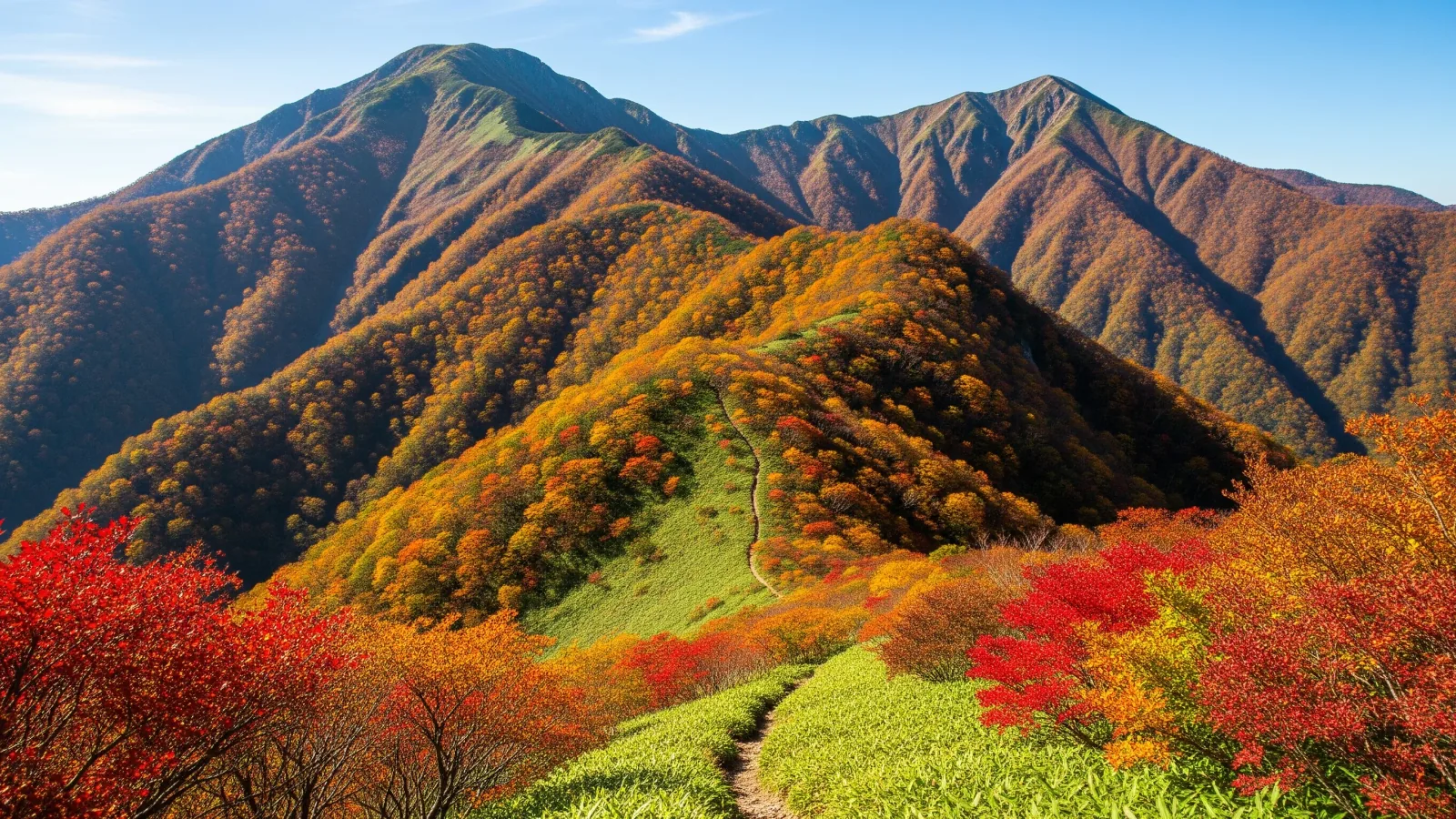
In autumn, red slopes, yellow valley trees and green evergreens come together. When planning a visit, think about the trees you want to see and how high they grow as well as the mountain’s name. How leaves change can help you choose a route and what to carry.
Why leaves turn red and yellow
Colours change as some pigments in the leaf fade and others are produced.
Summer leaves are green from chlorophyll, the pigment used in photosynthesis. As days shorten and temperatures drop in autumn, the leaves of many deciduous trees age and chlorophyll breaks down.
As green fades, yellow and orange carotenoids already present become more visible. Some trees, including maples, also produce red anthocyanins in autumn. The resulting colour varies by species and by leaf.
Weather that affects colour
The species and the year’s weather can affect both the colour and how long it lasts.
- Day and night temperatures. Cool nights play a role in the production of red pigments in some species.
- Sun exposure. Leaves on the same tree can colour differently depending on the light they receive.
- Moisture, wind and rain. Drought can damage leaves, and strong wind can bring them down early, shortening the display.
Use weather patterns as a guide and look at local photographs with observation dates. A valley and ridge can colour differently in the same area and year.
How reds and yellows differ by tree
Look at leaf shape and fruit as well as colour to see which trees share a slope.
Trees and shrubs with noticeable reds
- Maples. Their leaves can turn red, orange or yellow depending on species and conditions.
- Rowans. Look for red leaves or red fruit on mountain slopes.
- Dōdan-tsutsuji, a type of enkianthus. Its leaves can turn deep red in autumn.
Trees with noticeable yellows
- Japanese beech. Its leaves turn from yellow to brown, changing the colour of whole stands.
- Erman’s and Japanese white birches. Look for bright yellow leaves and pale trunks.
- Japanese larch. This conifer’s needles turn gold in autumn, then fall.
Red and yellow trees mixed with evergreens such as dwarf stone pine give a slope its patchwork appearance. After taking in the distant view, compare leaves and trunks from the path.
Colour often starts higher up
In the same range, cooler upper slopes often change first, followed by valleys and foothills. It starts early in northern mountains such as Daisetsuzan, but slope aspect and tree species can change the order.
Use elevation to narrow down the timing
- Alpine zone. Low shrubs and herbs can change colour early at places such as Daisetsuzan.
- Subalpine zone. Compare reds and yellows on slopes where rowans and Erman’s birches grow together.
- Forests near the mountain base. Use local visitor centre or municipal reports to check when beeches and maples are turning.
- Satoyama hills and lowlands. Some ginkgoes and maples are at their best after leaves have started falling high on the mountain.
Karasawa in the Northern Alps and Kamikōchi below it, for example, have different peak periods. Look for photos with dates and locations and for updates from huts or municipalities before setting out.
Choose a route for the view you want
The right route depends on whether you want a view across a slope, a walk inside a colourful forest or a short outing along a stream.
View the slope from a distance
At Karasawa in the Northern Alps, bands of red, yellow and green show against the rocky slopes. With a long approach and significant elevation gain, decide whether you can reach your destination before dark, and consider an overnight stay.
Walk through a beech forest
In places with extensive beech woods, such as Shirakami-Sanchi, look up from below the canopy at leaves turning yellow and brown. Check access rules and choose a path open to the public.
Walk along a stream or through a valley
Along the Azusa River in Kamikōchi or the Oirase Stream, you can see the colours from within the valley. Check closures, distance and transport home. Choose a shorter section if that suits your plans.
What to prepare for in autumn
Temperatures and winds differ between the base and ridge, and the trail can hold fallen leaves and frost that weren’t there in summer. Check the conditions for your date along with the foliage.
Check cold conditions and sunset
Check temperature and wind at the elevation you’ll walk when choosing warm layers, rain gear and gloves. If there are reports of morning ice or the first snow, reconsider whether your gear and experience suit the route and go lower if needed.
Sunset changes by place and date, and valleys and slopes can feel dark sooner. Allow a margin for descent. Carry a headlamp after testing it and checking the spare power.
Place your feet carefully on leaves and wet boardwalks
Fallen leaves hide rocks, roots and changes in level. Take shorter steps downhill and choose stable places to put your feet. Avoid sudden turns on wet boardwalks, and stay off the vegetation when passing others.
During busy periods, check how to use car parks, huts and campsites. Stop for pictures or rests where others can pass.
For your next autumn hike
Leaf colour changes as chlorophyll fades, revealing yellow and orange pigments, and some leaves produce red anthocyanins. Elevation, exposure and tree species explain why one slope can look different from another on the same mountain.
Once you choose a destination, use a map to check where the trees are and how you’ll get back while it’s light. Depending on current colour and footing, a valley walk is another option.
References and sources
- Ministry of the Environment: Forest walk with an arborist and how leaves change colour
- Chūbu Regional Forest Office: Kamikōchi Green Support Staff reports
- Ministry of the Environment: Highlights of Daisetsuzan National Park
- Official Kamikōchi website: Autumn foliage at Karasawa and upper Kamikōchi
- Ministry of the Environment: Shirakami-Sanchi World Heritage Area
- Ministry of the Environment: Towada-Hachimantai National Park
- National Astronomical Observatory of Japan: Sunrise and sunset calculator
- Ibaraki Prefectural Police: Preventing mountain accidents