
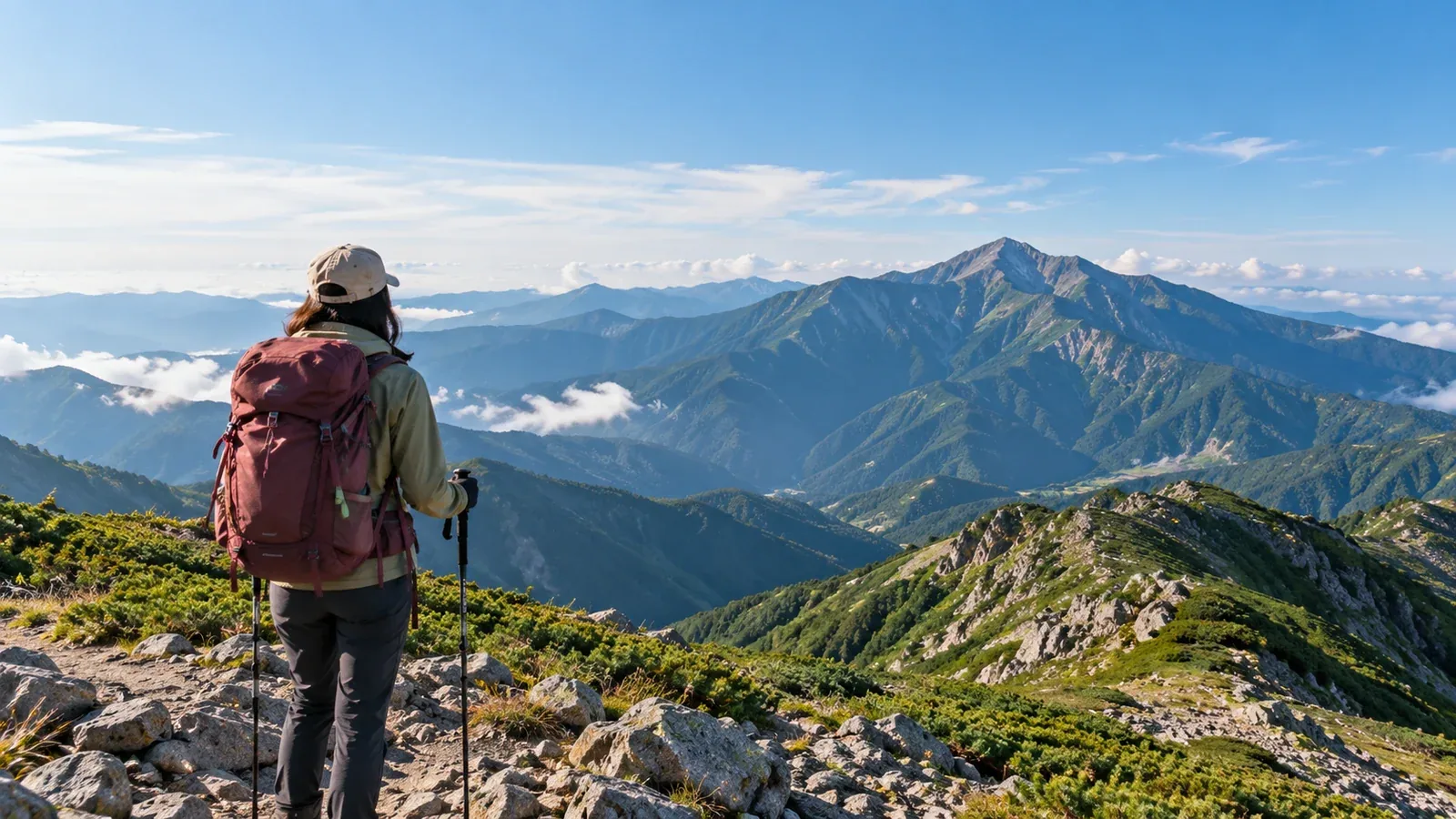
You might dream of climbing Mount Fuji or walking a particular ridge. A year can give you time to practice and see what kind of route you would like to take on. Choose the objective and timing based on how your experience develops.
Here's how to choose a realistic one-year goal and plan the steps to get there. What fits depends on your fitness, experience, where you live and how much time you have.
Three things to consider when choosing a goal
Look at these factors before choosing a peak for its name.
1. Check technical difficulty before elevation
A 2,000 m mountain can be technically difficult if it has exposed rock or a faint trail. Even a maintained route above 3,000 m brings exposure to high altitude and changing conditions. Check the grade of the specific route and the skills and conditions it requires.
2. Decide whether to go in a day or stay at a hut
A day hike and a two-day trip on the same mountain ask for different fitness, gear and skills. Walking eight to ten hours in a day can take more stamina than splitting the route with a night at a hut. Decide whether you're willing and able to stay overnight by the end of the year.
3. Check which season works
Some mountains have a short window for a safe ascent. Lingering snow, typhoons and freezing conditions raise the equipment and skill requirements. Pick a specific time of year and check with local authorities or the hut to see whether the regular trail is open then. Recheck shortly before leaving, since opening dates and restrictions can change.
What to build over the year
Reaching your goal depends on the work you put in over the year. Think about fitness, skills and judgment.
Fitness: increase elevation gain and distance gradually
Start on short, maintained trails near home. Once a route with 300–400 m of ascent feels comfortable, consider a slightly longer outing. A six- to eight-hour hike with 1,000 m of ascent is one possible longer-term goal, depending on the route and your experience.
Regular aerobic activity such as brisk walking or taking the stairs also helps. Adjust exercise to your health and any chronic conditions. Ask a doctor if you're unsure what level of effort is right for you.
Skills: start with map reading and mountain weather
Losing the trail and misjudging weather are common causes of incidents among beginners. Work on these two skills.
- Basic topographic map and compass use. A phone map is useful. Practice finding your position on paper so you can manage if the battery dies or you lose service.
- Reading mountain weather. Check Japan Meteorological Agency regional forecasts and advisories, as well as mountain-area conditions when available.
Fixed chains, ladders and exposed rock can require specific skills and equipment. Check what the route requires. Choose another route or practice under appropriate instruction if you lack the skills.
Judgment: decide when you'll turn back
Set criteria before you start walking. Decide that you'll turn back if the weather deteriorates or stay home if you feel unwell. It can be harder to think clearly when a long-awaited summit is in front of you. Writing down the conditions that would make you call it off on the morning of the trip makes the choice easier.
Steps for choosing your goal mountain
Narrow down your options in this order.
- Write down why you want to climb it. Views, flowers, a ridge walk or a peak on the 100 Famous Mountains list can all help you narrow the field.
- Shortlist three to five mountains and look up their technical grades. Prefectural mountaineering associations and guidebook series often publish guidelines. A beginner-to-intermediate rating is a realistic range for a year-end goal.
- Compare the published route time and elevation gain. Compare with recent outings. A route 40–50% longer might be an ambitious example to work toward gradually. Use your actual pace, terrain, rest stops and recovery to decide.
- Check the season, access and any huts. See whether you can realistically get there by transit or car when you want to go. If a hut requires reservations, find out when they open during busy periods. Check official hut dates and fees again shortly before the trip.
- Set intermediate goals first. Pick routes to try at six and nine months, with the same technical grade as the final route or slightly easier. Use them to check your readiness.
What good year-end goal mountains often have in common
Individual goals depend on the hiker's situation. These features make a mountain easier to work toward in your first year.
- Maintained trails and clear signs.
- Huts or toilets at several points.
- A choice of day and overnight routes.
- No fixed chains on the main trail, or only short sections where chains are an aid.
- Weather and incident updates from local authorities or mountaineering clubs.
Several peaks across Japan fit these criteria, including some of the 100 Famous Mountains. A local mountaineering club, gear shop or experienced hiker in the Nordwand community can help narrow the list based on where you live and when you plan to go.
Common setbacks in a one-year plan
Watch for these three ways a plan can run ahead of your experience.
Starting on low mountains in spring and rushing higher in summer. A sudden jump in elevation while you're still getting used to hiking raises the risk of altitude sickness, fatigue and losing the trail. Increase gain, distance and technical difficulty in steps.
Buying everything at once. Build your kit gradually, while carrying the essentials from the first hike. Include footwear, warm and waterproof layers, navigation, a headlamp, food, water, first aid and emergency supplies. Borrow or rent suitable items if needed.
Doing too much practice alone. Walk with someone experienced from the low-mountain stage to learn how to judge conditions, develop good trail habits and understand the fitness required. Local clubs and hiking communities can help you find people.
What to do next
Write one sentence on why you want to climb your chosen mountain. Look up its technical grade and route time in a guidebook or local government site and compare them with your present experience. Once you've picked an intermediate goal, use Nordwand's Base Camp or interest-based communities to find people with the same goal or a certified guide.
References
- National Police Agency, annual mountain incident overview.
- Japan Meteorological Agency, mountain weather information.
- Prefectural mountaineering associations, technical grading criteria.