
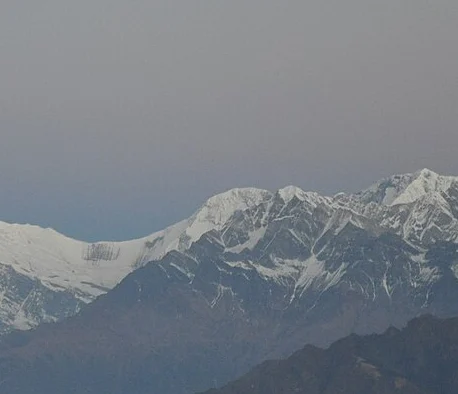
A Massif and Its Nomenclature
The Dhaulagiri group names its subsidiary summits by number, and the sequence has at times produced confusion in expedition planning. Dhaulagiri IV and Dhaulagiri VI are separate peaks at different elevations, and the 1970 Japanese reconnaissance illustrates how the terrain can direct parties away from their intended objective without that error becoming apparent until later analysis. The 7,661-metre figure assigned to Dhaulagiri IV appears consistently across government and database sources, though as with many Himalayan summits the value should be understood as a survey result rather than an absolute and final measurement.
Nepal's Department of Tourism registers the peak at 7,661 metres, and the Himalayan Database maintains an expedition archive against which individual ascent claims can be assessed. That archival function becomes particularly significant for Dhaulagiri IV, whose early summit history rests on evidence that the database itself qualifies rather than states unconditionally.
The May 1975 Radio Report
On 9 May 1975, two members of a Japanese expedition — Shiro Kawazu and Etsuro Yasuda — radioed their camp to report that they had reached the summit. The call was received at 17:30, as recorded in the published expedition account in the Himalayan Journal. Both climbers died on the descent. The Himalayan Database files the radio report as a claimed first ascent, and that qualification is deliberate: the evidence is a summit radio call from climbers who did not survive to corroborate it in person. The record should be read as a reported summit, not as an unconditional established first ascent.
The Himalayan Journal published two accounts of the 1975 season on Dhaulagiri IV, one dealing directly with the May expedition. That account records a radio report transmitted at 17:30 on 9 May 1975 in which the climbers reported reaching the summit, and documents that both died on the descent.
The October 1975 Ascent
Later in the same year, a separate expedition achieved what the Himalayan Database records as a successful ascent of Dhaulagiri IV on 19 October 1975. The route followed the western col and continued along the ridge from the south — a line distinct from the approach associated with the May attempt. The October date and the described route are the specifics by which this ascent is identified in the archive.
The existence of two dated records from 1975 — one a claimed ascent from May, one a recorded ascent from October — means that the question of Dhaulagiri IV's first ascent depends on how the May radio report is weighted against the absence of surviving witnesses. The two accounts in the Himalayan Journal, taken together with the Himalayan Database records, provide the primary documentary basis for understanding both events.
Standing in the Dhaulagiri Himal
The May 1975 expedition approached the peak via the northwest face, while the October 1975 expedition completed its ascent by the southwest ridge.
The broader Dhaulagiri Himal in northwestern Nepal contains several distinct named summits, including the principal Dhaulagiri at 8,167 metres and Dhaulagiri VI, which a 1970 party reached. Dhaulagiri IV, at 7,661 metres, is a separate summit within that group.