
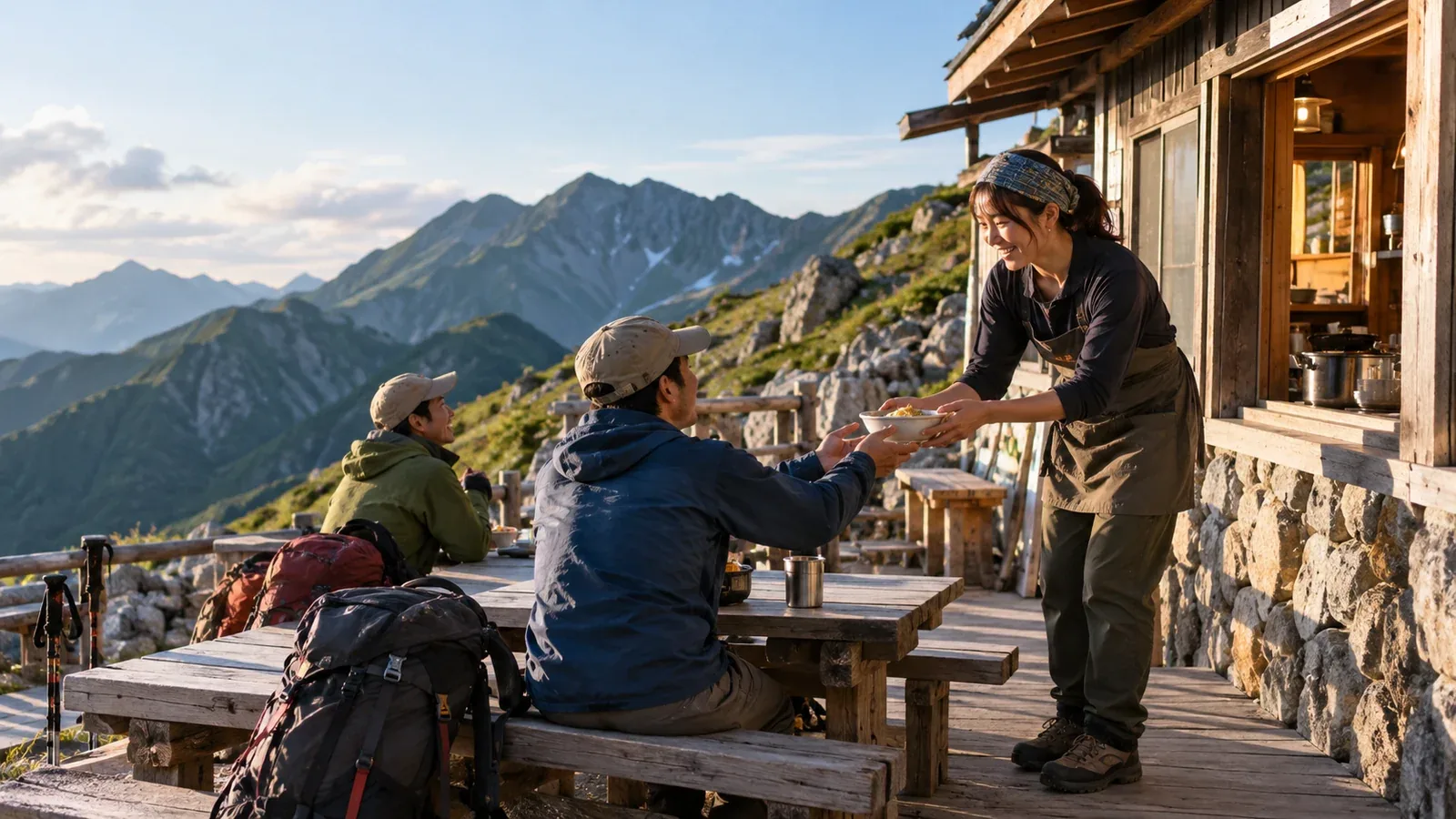
If you’re thinking about working at a mountain hut, the first hurdle is finding information. Vacancies aren’t always on job boards, and each hut has its own way of taking applications. This article explains what hut staff do, when operators hire, how to apply and what hiring managers look for, so you can work out when and whom to contact.
Mountain huts offer seasonal roles during the operating season or peak weeks, as well as year-round employment. Seasonal contracts can range from a few busy weeks to the whole spring-to-autumn season. Some year-round employees work at another site off the mountain in winter. When and where to look depends on how long you want to work and what kind of contract you want.
The work combines hospitality, physical tasks and hygiene
Hut staff handle reception, guest information, payments, meal preparation and service, bedding, cleaning, and upkeep of toilets and water supplies. Duties can also include receiving supplies by helicopter and sorting them, managing firewood or generator fuel, and recording and sharing weather information.
Larger huts may have dedicated kitchen or reception staff. A small hut run by a handful of people can need everyone to pitch in across the operation. Expect to do a mix of tasks.
At huts around 2,000 to 3,000 metres or higher, you may spend long stretches on your feet and have to carry supplies. Altitude affects people differently. Build up your walking fitness before heading in, and check start and finish times, breaks, days off and overtime terms.
When recruitment starts
Summer season openings (July to September)
Hiring for summer can start in winter or spring. The Yarigatake Mountain Hut Group began recruiting for its short 2026 season in mid-January. Extra vacancies sometimes appear from May onward, but checking the official page from winter gives you time to apply.
Late snow and autumn foliage (May–June and October)
Year-round huts and huts with long seasons may offer short contracts for the spring reopening or the busy autumn period. Timing differs by hut, and some cover these periods with existing staff.
Winter hut jobs (excluding unattended shelters)
Relatively few huts operate in winter, but some, such as Akadake Kosen in the Yatsugatake Mountains, recruit winter staff. Check the listing for the experience needed to reach and leave the hut in snow and to do the work. If you’re new to winter mountain work, a summer season is one way to build experience.
Where to look for vacancies
Check hut websites and social media
Hut jobs often don’t appear on general job sites. Start with the hut’s official website or social media account. Look for a recruitment page, application form or hiring email address.
Hiking and outdoor job boards
Job boards that cover the hiking and outdoor industry may list seasonal hut roles. You can also search general job sites. As listings are seasonal, check them alongside the hut’s official information.
Mountaineering clubs and guide networks
A mountaineering club or guide network such as the Japan Mountain Guides Association may hear that a hut needs staff. People in hiking communities sometimes hear about replacement openings before they are advertised.
Three things to check before applying
1. Dates you can work
Minimum availability and peak-period requirements vary. A hut may ask for availability between July and September, or for at least a month including the Obon holiday. Give the exact dates you can work so the employer can assess your availability.
2. Accommodation and luggage
If you’ll live on site, ask whether staff rooms are shared or private and whether there are limits on luggage or what you can bring. Mobile coverage and access to charging also vary by hut. Check how you’ll stay in touch with family or other contacts before heading up.
3. Fitness and health
If you have a chronic condition or other health concerns, tell your doctor about the altitude and the duties before you go. The climate and physical demands at elevation differ from those at low altitude. Find out how you’ll get to and from the hut, whom to contact if you feel unwell and what to do.
What hiring managers look for
Hut operators tend to ask about three things.
- Reliable availability. Leaving early directly affects the hut’s operations. Managers value knowing which dates you can commit to.
- Hiking experience. Some huts hire people new to hut work, but may check that you can reach and leave the hut on foot and have basic hiking knowledge. Knowing you can manage the approach helps when plans change or an emergency occurs.
- Clear communication. Before you start, the employer can see how politely and promptly you respond and how clearly you explain what you’re looking for.
In your application email, briefly state when you can start and finish, your hiking experience and fitness, and why you want to work at that particular hut. This helps the recruiter assess your application.
Where to start
Pick two or three huts in the range you want to work in. Find their official recruitment pages and save their contact details. Apply using the method specified when recruitment opens for your dates. Hiking communities can also connect you with people who hear about replacement openings or who have worked at a hut. The Nordwand community is one place to make those connections.
References
- Yarigatake Mountain Hut Group recruitment information
- Enzanso Group and Akadake Kosen recruitment information
- Ministry of Health, Labour and Welfare and prefectural labour bureaus: employment terms and workplace rules
- Japanese Society of Mountain Medicine: acute mountain sickness
References and sources
- Yarigatake Mountain Hut Group: Staff and seasonal job listings
- Enzanso Group: Staff recruitment
- Akadake Kosen and Gyoja Goya: Staff recruitment
- Ministry of Health, Labour and Welfare: Employment conditions and workplace rules
- Miyagi Labour Bureau: Disclosure of employment terms when hiring
- Japanese Society of Mountain Medicine: Acute mountain sickness