
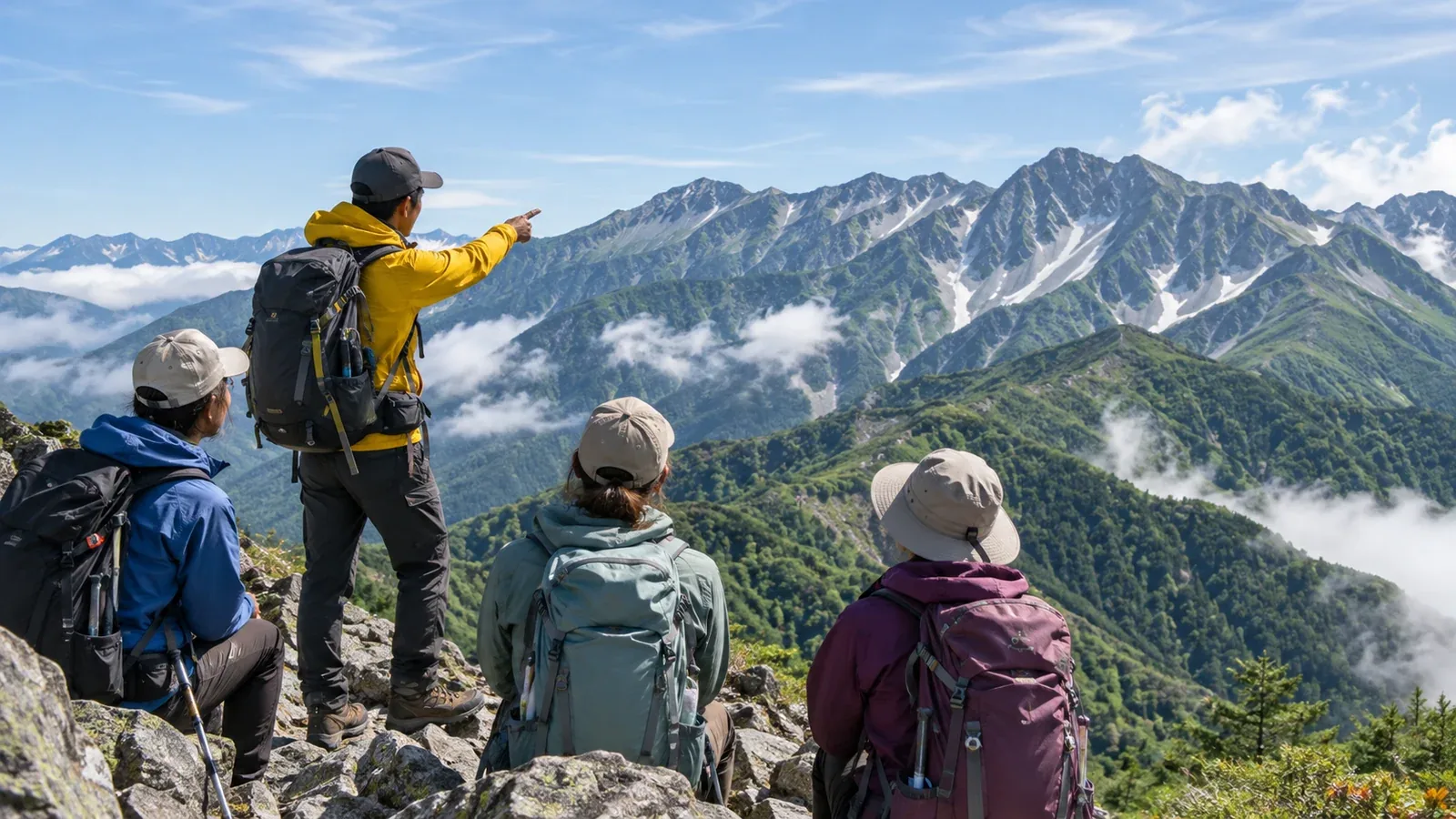
If you’d like to make hiking your work, you may have three questions: Which credential do you need? How much time and money will it take? Can you make a living from it? This article explains how the system works and what you can check before deciding.
Japan has several professional certifications relevant to hiking guides. The right one depends on where you want to work and what you want to do. Start by defining the kind of work you want.
Income varies with employment, location, season and whether you combine guiding with other work. The sections below explain how those factors can affect what you earn.
Guide credentials in Japan
Three certification systems are worth knowing about if you want to work in the mountains.
The Japan Mountain Guides Association (JMGA) certification system is a professional reference in Japan. It includes nature guides, hiking guides and mountain guides. The hiking guide category has Stages I–III, and the mountain guide category Stages I–II. Terrain and season depend on the category and stage. Mountain Guide Stage II covers work such as rock climbing.
The mountaineering coach certification of the Japan Mountaineering & Sport Climbing Association (JMSCA) and Japan Sport Association (JSPO) is for people who teach in clubs and courses. It covers a different role from the JMGA credentials that define the terrain and seasons a guide is qualified to lead.
Certification under the International Federation of Mountain Guides Associations (IFMGA) is issued by its member associations against international standards. In Japan, the JMGA international mountain guide credential requires Mountain Guide Stage II, Ski Guide Stage II and professional experience, among other requirements. JMGA did not open new applications in fiscal year 2026. Guiding abroad is subject to local law.
Some credentials require regular training and renewal. Check the latest information from the issuing organization.
How to qualify and estimate the cost
Here’s an overview of the JMGA hiking guide process.
- Check eligibility: Review the age, trip history and paperwork requirements for your category. Check the current year’s rules to see whether you need first-aid certification or evidence of insurance.
- Attend training: The process can include classroom and practical sessions on ropework, weather, first aid, safety management and legal responsibilities.
- Take written and practical assessments: Some assessments take place in the mountains. They may run over several days and can be postponed or canceled because of weather.
- Register and renew: After passing, complete the registration and meet the renewal requirements when due.
To estimate costs, add application, exam and course fees to transport, accommodation and equipment. Categories and modules differ in price and duration. Use the fees listed in the latest JMGA exam materials to make your estimate.
How guides earn an income
Working full-time as a guide and taking occasional guiding jobs have different financial structures.
Guiding fees vary by day or overnight trip, group size and difficulty. JMGA does not publish a single standard fee. Look at published rates and expense policies from guides or associations in the region where you want to work.
Work and demand vary by season. Spring-to-autumn hiking and winter mountain or backcountry work differ by region and by qualification. Outside your main season, you can combine guiding with hiking courses, corporate training or nature outings.
How you’re employed also matters. Working for a travel or outdoor company and running your own business carry different income and costs. An employer may provide regular pay. An independent guide handles marketing, accounting and insurance.
Professional liability insurance is a cost to budget for in case of incidents at work. Ask your association or insurer who can enroll, which work, terrain and seasons are covered, and what exclusions or deductibles apply.
Is guiding right for you?
Before choosing a credential, assess your current skills and experience.
- Have you hiked in several regions, seasons and weather conditions?
- Can you explain map reading and weather decisions to others?
- Can you set a pace that keeps a group together and moving safely?
- Have you thought about helping a participant who feels unwell or anxious?
- Can you decide when to turn back or call for rescue?
Guiding calls for skills beyond getting yourself up and down safely. You need to explain risks to other people and make clear decisions when conditions change.
Certification is one step in a longer career. Plan for continued mountain experience, training and renewal so your skills and knowledge stay current.
What to look up before applying
The details can change. Start with the following checks.
- JMGA exam materials: Eligibility, course dates, fees and renewal requirements.
- Credentials for your area and type of work: Check the credential’s scope and any access or operating rules set by local authorities or park managers.
- Mountain and professional liability insurance: The coverage you need as a working guide differs from what you need on a personal hike.
- Business and tax procedures: If you plan to work independently in Japan, check the National Tax Agency’s guidance for filing requirements and deadlines that apply to you.
What to do next
Read JMGA’s current application and registration guidance. Compare the eligibility requirements with your hiking records. Nordwand’s certified-guide search can also show where practicing guides work and the trips they offer. Having a clear idea of the work you want helps you decide which credential to pursue and what to prepare first.
Sources
- Japan Mountain Guides Association (JMGA): official information
- Japan Mountaineering & Sport Climbing Association (JMSCA): official information
- International Federation of Mountain Guides Associations (IFMGA): overview
References and sources
- Japan Mountain Guides Association: qualification types and professional scope
- Japan Mountain Guides Association: applying for qualifications
- Japan Mountain Guides Association: renewing qualifications
- Japan Mountain Guides Association: frequently asked questions
- Japan Mountaineering & Sport Climbing Association: sports coaches
- International Federation of Mountain Guides Associations: becoming a professional mountain guide
- Japan National Tax Agency: filings when starting a business