
If you’re applying to a hiking gear shop or considering a career change, you may wonder how much hiking experience you need and what the job pays. Hiking experience can help you get an interview. On the shop floor, what matters is how clearly and systematically you can explain the equipment.
Pay and conditions vary widely with the shop and employment type. A permanent job at a large chain, a position at an independent shop and a part-time role come with different expectations and compensation. Decide which kind of work you want before comparing vacancies. This article covers the workplace, the knowledge you’ll need, employment terms and how to prepare.
What makes a hiking gear shop different
Advice at a hiking gear shop affects customers’ safety in the mountains. If you explain the waterproofing of rainwear incorrectly, a customer could run into trouble on an exposed ridge in bad weather. A poor boot fit can contribute to a lost toenail or a fall. Every member of staff needs to understand how product knowledge affects both service and customer safety.
Demand changes with the seasons. Fresh greenery in spring and autumn colours can bring more customers, increasing the workload. In winter, more people shop for ice climbing and backcountry ski gear. In summer, more are preparing for high mountains. Busier and quieter periods can offer some flexibility in scheduling, but expect the shop to be busy around long weekends.
What you need to know
The main product categories
Hiking equipment includes clothing, shoes and boots, packs, tents and sleeping bags, cookware and fuel, safety equipment such as helmets, harnesses and crampons, and accessories such as headlamps, maps and compasses. For each category, learn the materials, functions and situations in which the products are used.
Customers often ask about layering. Being able to explain how base layers, midlayers and outer shells work, and what wool, synthetics, down and membranes such as Gore-Tex do, makes for better advice. Materials and products change frequently, so consult current manufacturer catalogues and training materials.
Fitting equipment
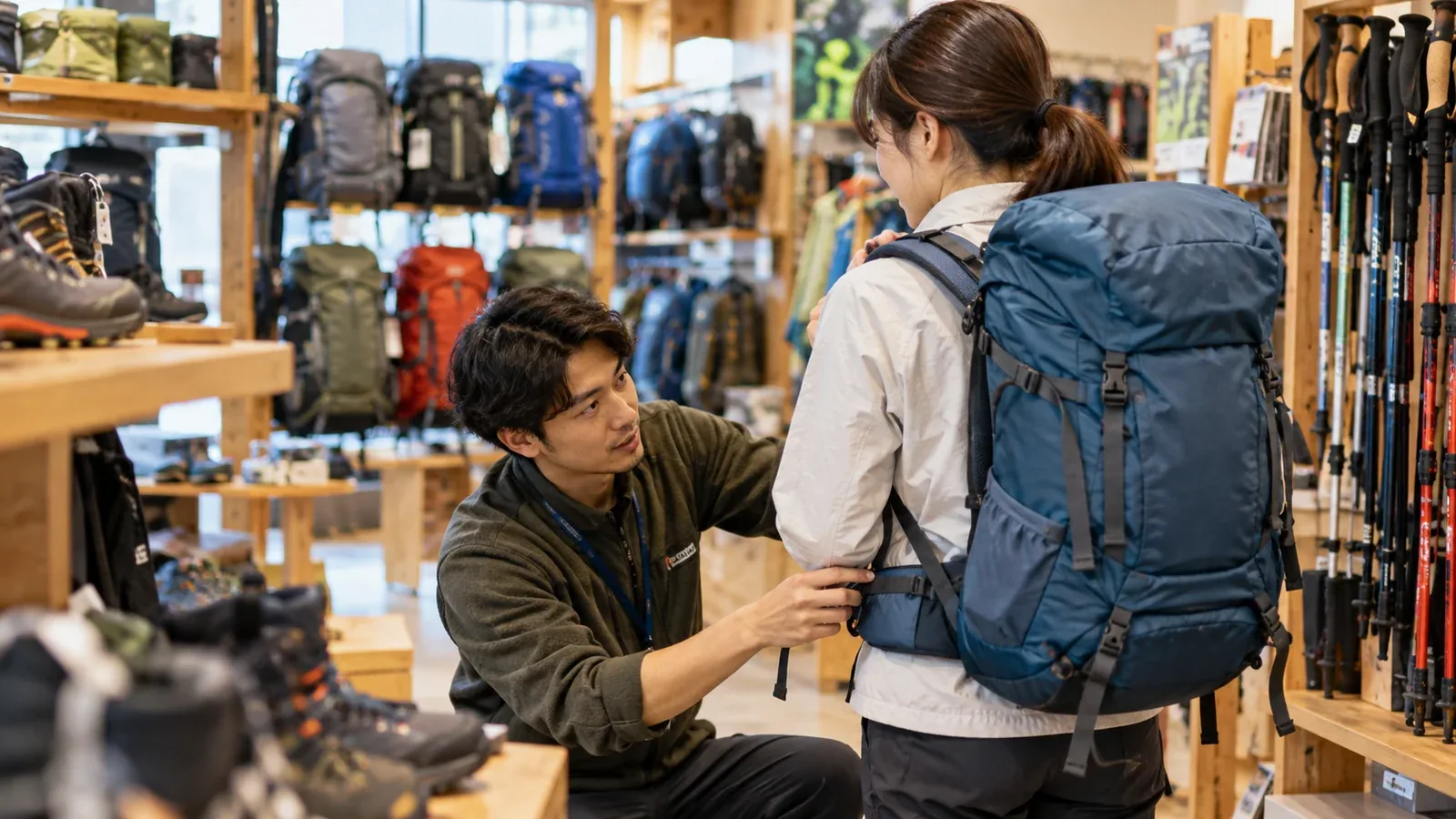
Boot fitting is one of the skills that distinguishes a specialist. Look at foot width, instep height, heel shape and how the customer shifts their weight when walking, as well as shoe size. Fitting packs also means measuring torso length and adjusting the shoulder harness. Learn by practising repeatedly with experienced colleagues.
Safety knowledge
Reading topographic maps, understanding basic weather charts, making a hiking plan and identifying an escape route can help you answer customers’ questions in more depth. Some of this comes with regular hiking. You can also take courses from the Japan Mountain Guides Association and other mountaineering organizations.
Employment types and conditions
Permanent and fixed-term jobs
Some major outdoor chains recruit permanent employees. Pay, bonuses and raises differ by company, so check the employer’s recruitment information. Some permanent retail roles can lead to stock management, buying or store management.
For independent shops as well as chains, compare the stated pay, hours and days off when reading vacancy notices. At the interview, ask how raises work, how much overtime staff actually do and how shifts are organized during the busiest periods.
Part-time jobs
Many people choose part-time work because they want to use their experience as hikers and learn more about equipment. Hourly pay depends on location, shop size and employment terms. Check the job listing or the shop’s recruitment page. A staff discount can make it easier to buy your own equipment. Ask the shop whether it offers one and on what terms.
Preparing to apply
Review your hiking experience
In an interview, how you made decisions in specific situations tells the employer more than the number of hikes you’ve done. Prepare examples of why you used particular gear, how you chose a route and what you did when the weather changed.
If you have less hiking experience, self-study can help. Read material specifications for clothing, look at how tent poles are put together and learn how different boot lasts shape the fit. Concrete examples show your interest in gear.
Qualifications and skills
Hiring criteria vary by shop. The following qualifications and skills can help you describe what you have learned and what work you can do.
- Mountaineering coach or hiking guide qualifications. Coaching qualifications from the Japan Sport Association and the Japan Mountaineering and Sport Climbing Association, or hiking guide qualifications from the Japan Mountain Guides Association, offer ways to learn about instruction and safety management.
- First aid training and certification. Basic first aid and first aid provider courses from the Japanese Red Cross Society are examples of ways to learn initial care.
- Languages for outdoor retail. Language skills can help you read technical material from overseas brands and serve customers from other countries.
A qualification can show that you’ve put work into learning, but it doesn’t guarantee a job.
Finding vacancies
Large chains often advertise on their careers pages or job sites. Independent shops may put a notice in the window or list jobs locally. If you have a particular shop in mind, check its official site first and contact it at an appropriate time.
Working in the field for the long term
Hiking gear shops need to make sales and help customers stay safe. Sometimes the product that is easiest to sell differs from the one the customer actually needs. Developing your own criteria for making a recommendation will help you stay in the work.
Equipment changes too. The trend toward lighter gear affects materials and construction, and electronic devices change how people navigate. Keep learning through manufacturer exhibitions, in-house training and your own time in the mountains.
Where to start
Look up shops you’re interested in and compare the skills in their listings with your hiking experience. If a hiking partner works in a gear shop, ask what the workplace is like. The Nordwand community is another place to exchange information with people interested in mountain jobs.
References
- Japan Mountain Guides Association: Qualifications and training
- Japanese Red Cross Society: First aid training
- Prefectural labour bureaus: Employment conditions and labour standards advice
References and sources
- Japan Mountain Guides Association: Applying for a qualification
- Japan Mountaineering and Sport Climbing Association: Mountaineering instructors
- Japan Mountaineering and Sport Climbing Association: Safe hiking workshops
- Japanese Red Cross Society: First aid training
- Ministry of Health, Labour and Welfare: Basic information about employment terms
- Kojitsu Sanso: Careers
- Montbell: Part-time shop vacancies