
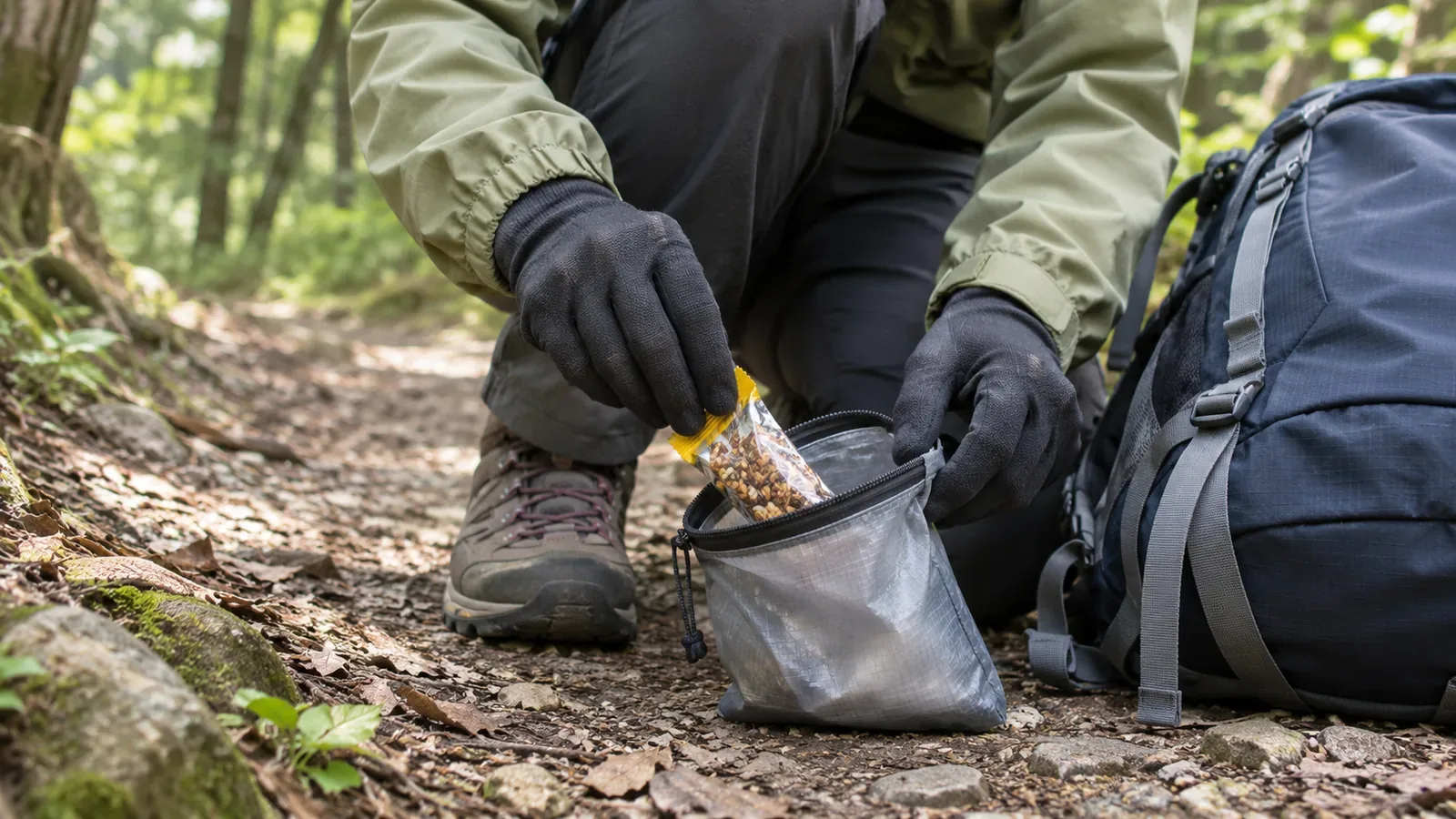
If you drop a trail snack, pick it up and pack it out when you can do so safely. If wildlife is nearby, leave it and keep your distance. Guidance from Shiretoko and U.S. agencies helps us plan breaks without leaving food or wrappers behind.
What a dropped bite can mean for wildlife
The U.S. National Park Service treats drinks, food wrappers, soap, cosmetics and insect repellent as items whose scent can attract bears. Yosemite National Park includes scented items in its storage rules regardless of packaging. Pack out snack crumbs and wrappers with food residue, too.
The U.S. National Park Service explains that bears that repeatedly get human food may lose their fear of people and start looking for food around them. A bear may be put down if it becomes a danger to people. Japan’s Ministry of the Environment says many brown bears in Shiretoko are wary of people to a lesser degree, so preparation and responses should follow local guidance.
The U.S. Fish & Wildlife Service explains that feeding wildlife harms animals’ health and changes their natural behavior. An animal may also eat food that was dropped by accident and left behind.
Leave the rest stop free of food and wrappers
Shiretoko guidance from Japan’s Ministry of the Environment calls for keeping food and gear with you and containing odors. Avoid packing strongly scented food or gear and take all rubbish out with you. The U.S. Fish & Wildlife Service recommends looking around rest stops and campsites for spills and rubbish before leaving and packing out what remains.
The U.S. National Park Service also advises packing out leftovers, crumbs and wrappers and keeping food waste out of campfires. Partially burned food can still attract animals. If wind carries off a wrapper, retrieve it when it is safe to do so.
Food and rubbish storage practices vary by area. Check your destination’s current guidance before you leave, including any food locker requirements and recent bear activity.
A quick check before and after a break
Take out only what you will eat and look around where you sat before you set off. These steps are our suggestions based on the guidance above.
Stop somewhere with stable footing where you can leave the trail clear for others before opening a snack. Take out one portion and close the bag straight away. Put wrappers into a closable bag before they can blow away. Check where you sat and set down your gear, and pick up crumbs and wrappers you can safely reach.
Leave anything that falls on a steep slope or in a place exposed to rockfall. Follow the destination manager’s guidance if you cannot recover the food safely.
As you pack at home, decide how to open each snack, how much to take out at once and where the rubbish will go. Repack snacks that crumble easily or come in hard-to-close bags if needed. Think through three situations before you leave: pick it up when it is safe, leave it and follow local guidance if the footing is unsafe, and move away if an animal is nearby.
When wildlife is close, leave the food
Japan’s Ministry of the Environment advises visitors in Shiretoko to withdraw promptly, without running or turning their backs, if a brown bear heads toward people or food. If a bear takes food or rubbish, move away and leave it. The same priority applies when wildlife is beside a dropped snack: keep your distance and leave the food where it is.
In Yosemite National Park in the United States, guidance for American black bears calls for staying at least 50 yards (about 46 m) away outside developed areas. The park gives different instructions for developed areas or when a bear approaches you. Follow the guidance from the manager or local authority at your destination, since responses vary by animal and place.
In Shiretoko, report dangerous encounters to the Shiretoko Nature Foundation, such as a bear following you or getting into your gear or food. Japan’s Ministry of the Environment lists the phone number. For a sighting alone, fill in a sighting form at the trailhead or another designated location after your hike. If anyone is injured or there is immediate danger, get to safety and follow local emergency instructions.
What to decide before you leave
Pack out crumbs and wrappers you can safely reach. If wildlife is nearby, keep your distance. Keep a rubbish bag within easy reach and check where you sat before leaving a rest stop. Look up your destination’s latest food storage and wildlife guidance before the hike.
References and sources
- Japan Ministry of the Environment — Bear safety for hiking in Shiretoko
- Japan Ministry of the Environment — Essential guidance for hiking in Shiretoko (PDF)
- U.S. National Park Service — Storing Food in Bear Country
- U.S. National Park Service — Bears and Food Storage in Yosemite National Park
- U.S. Fish & Wildlife Service — Leave No Trace Principles