
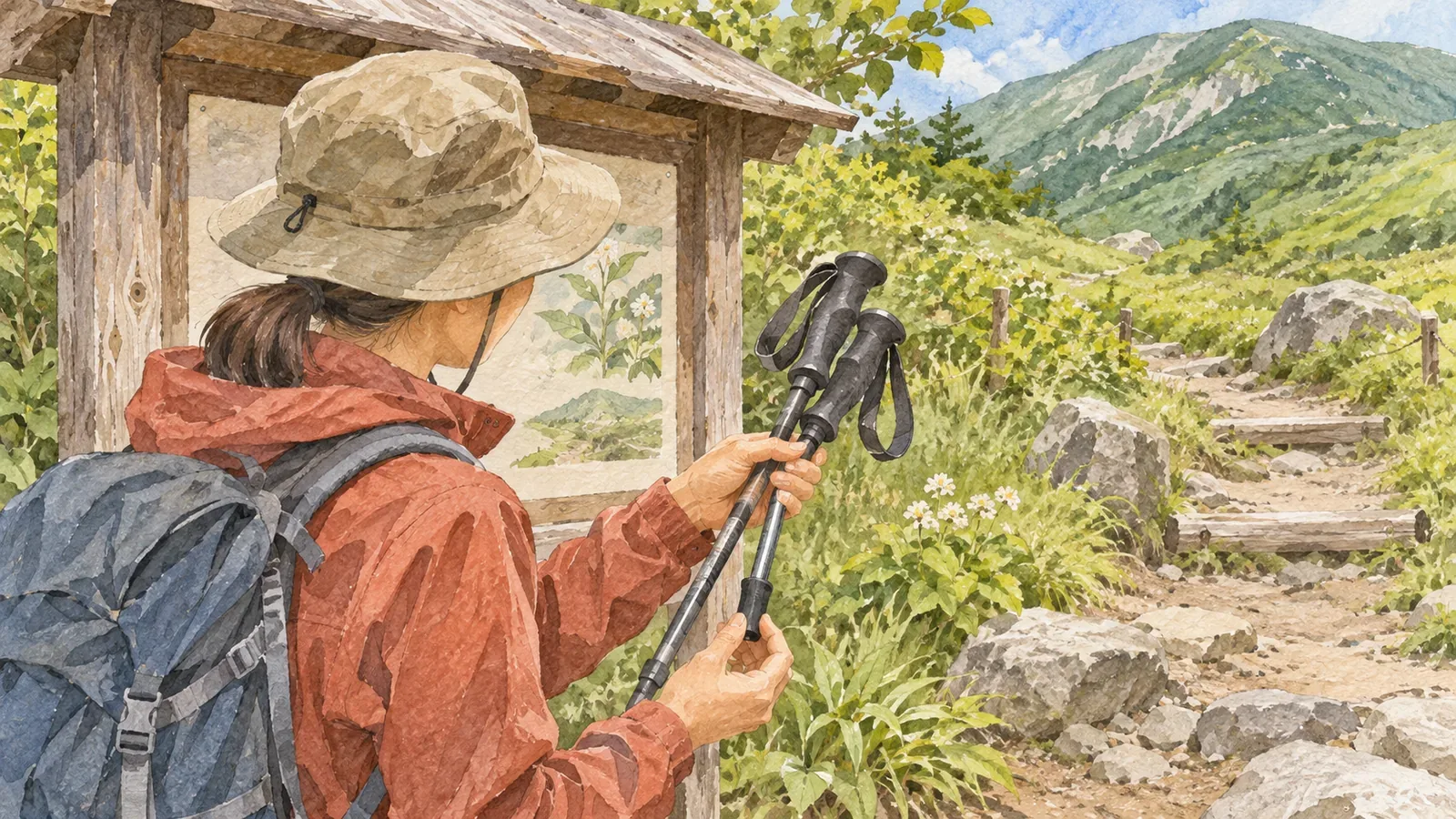
Trekking poles can help you walk. Check local guidance to see where to plant them and what tip protection to use. Before leaving, look up the rules and trail conditions, find protectors that fit your poles and work out how to stow them. On the trail, pay attention to where you’re walking and give people and plants room.
Read the Local Guidance Before Leaving
The Daisetsuzan National Park Liaison Council asks hikers to fit protective caps on their trekking poles and avoid damaging the trail, surrounding vegetation or soil. Japan’s national park etiquette also recommends caps to prevent trail erosion. Check the latest advice from the manager or local authority for the place you’re visiting.
Rules can vary by stretch of trail and season. Check access, remaining snow and advice on poles before leaving. Ask the manager about anything unclear. Consult the manufacturer’s instructions and seek guidance appropriate to the terrain.
Make sure you can stow your poles with their tips pointing away from companions and other people on sections where you won’t use them. With the caps fitted, pay attention to where you plant the tips and where you stop.
Prepare Caps and Equipment
Fit protective caps that match your poles, following the manufacturer’s instructions. Check that they’re secure, in good condition and all accounted for, and bring spares if needed. If a cap comes off, stop somewhere safe to refit it or stow the poles in line with local guidance.
Where there are cleaning stations or instructions for preventing the spread of non-native species, check your gear as well as your boots. Japan’s Ministry of the Environment asks visitors to remove mud from their shoes before entering Special Protection Zones. Check the local instructions and clean your gear before setting out.
At home, check the pole length and how to stow the poles. Make sure the tips and caps won’t snag on other gear. Stop using damaged equipment and check the manufacturer’s or retailer’s advice if needed.
Watch the Trail and Your Surroundings
Stay on the trail or designated route and keep pole tips out of nearby vegetation. Japan’s national park etiquette also asks visitors to stay on trails and boardwalks. When you stop for a photo or break, check your footing and where your poles will go.
When passing on a narrow trail, find a safe place, speak to one another and keep your pole tips pointed away from the other person. If your poles are attached to your pack, check that they won’t hit someone behind you or catch on branches. In crowds, avoid swinging them and leave room around you.
Stay out of vegetation when you encounter mud or puddles. Japan’s Ministry of the Environment describes how Chichibu-Tama-Kai National Park addresses trails widening or splitting into parallel tracks as people pass. If conditions make the path impassable, check the site guidance and reconsider your route without making a new path.
When Conditions Differ From What You Expected
If a cap comes off, your gear breaks or a sign differs from what you read earlier, stop somewhere safe to check. Follow the manufacturer’s instructions and local guidance. If you can’t keep using the poles, consider stowing them or changing the route. Talk with your group before deciding whether to continue.
Equipment and conservation requirements vary by region and season. Check the latest guidance even for a return visit. Before travelling on snow or steep slopes, learn what equipment and walking techniques are appropriate for those conditions.
Back home, check the poles and caps for mud and wear. Note which sections raised questions about how to use them. Before your next hike, check the local or manufacturer’s guidance again. Looking after your equipment helps protect both hikers and the trail.
Prepare for the Rules Where You’ll Hike
Check local guidance on pole caps and use wherever you go. Inspect your equipment and use it with care for the trail, nearby plants and other people.
If conditions are different from what you expected, stop somewhere safe and check. Change how you use the poles or revise your itinerary if needed.
References and sources
- Daisetsuzan National Park Liaison Council: Conservation Rules
- Japan’s Ministry of the Environment: Etiquette in National Parks
- Japan’s Ministry of the Environment: Conservation Work in Chichibu-Tama-Kai National Park
- Japan’s Ministry of the Environment: Preventing the Accidental Introduction of Species to Special Protection Zones