
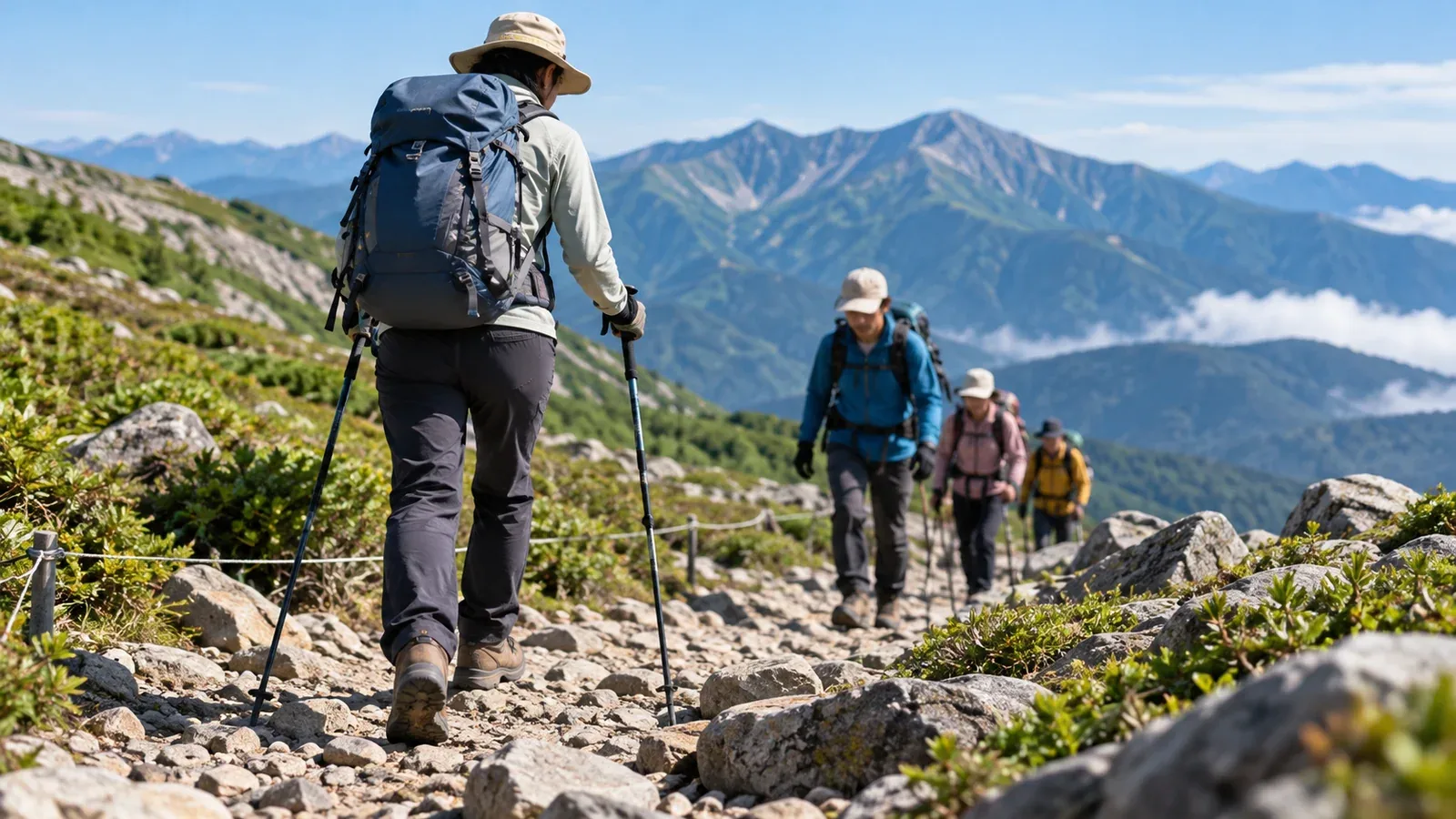
How you point or put down your trekking poles can make the difference between passing safely and catching someone’s feet or scratching a boardwalk or hut floor. Rubber tips and a few simple habits can help.
This guide covers when to use rubber tips, how to use straps, and how to put poles away around other people or before rocky sections.
Why rubber tips matter
Hard pole tips can mark wooden boardwalks and bridges or dig into the soil. Japan’s Ministry of the Environment asks hikers to fit protective caps to help limit trail erosion in national parks.
Rubber tips are protective caps that go over the hard ends. They keep the ends from touching the ground or built surfaces directly. Choose a cap that fits and secure it before walking.
Whether you use a cap can affect the trail, its structures and the people around you.
When to use or remove rubber tips
Check local instructions first and follow any requirements for rubber tips. Use your pole instructions and the ground conditions to decide what works underfoot.
Where to fit rubber tips
- Boardwalks, bridges and paved paths. Check local instructions and fit rubber tips to protect built surfaces.
- Trails where caps are required. Follow the signs or manager’s instructions even on dirt or gravel.
- Huts and decks. Cover the tips. Keep poles off floors indoors and follow the operator’s directions.
When to consider removing rubber tips
- Dirt and gravel. Follow local rules and product instructions. Check grip from a stable spot before making a change.
- Snow and ice. Follow local and product guidance on caps in snow. Compatible snow baskets can limit how far a pole sinks. On ice, check separately what traction you need on your feet.
Some places, such as Yakushima, ask hikers to fit rubber tips except in snowy conditions. If the caps slip, stop somewhere stable, check local rules and adjust how you use the poles or put them away.
Rubber tips can wear through and expose the hard point. Check them regularly and replace worn caps. Outdoor shops sell replacements.
Holding poles and using wrist straps
Think about how you use the loop at the handle and where the tips point as you walk.
How to put your hand through a strap
For a standard loop strap, slide your hand in from below and grasp the base of the strap together with the handle. Designs differ, so follow the product instructions.
Before a rocky stretch where you need your hands, stop somewhere stable, take your hands out of the straps and stow the poles.
Passing other hikers
Keep the tips from pointing at other people when passing in either direction.
- When passing someone coming the other way, bring the poles close to your body and point the tips down.
- Overtake only where there’s room to pass safely, and keep the poles from sticking out sideways.
- In crowds, keep the tips close to your feet or put the poles away.
Lower the tips and check your surroundings before turning. A tip sticking out behind you can hit someone.
At mountain huts and shelters
Before going into a hut, fold or shorten your poles and check where to put them or how to bring them in. Yokoo Sanso asks guests to take poles off their packs and cover the tips before entering. Keep walkways clear inside.
Protecting plants and soil
Consider how poles affect the ground and plants as well as other hikers.
Planting a pole in vegetation off the trail can damage hidden roots and strip topsoil. Alpine vegetation can take a long time to recover. Keep your poles within the trail even when you move to the side.
On a loose slope, driving poles into the ground harder than necessary can dislodge soil or stones. Check your footing and place the tips on a stable spot within the trail.
Putting poles away when you don’t need them
Put the poles in your pack on rocky or chain-assisted sections. Holding a pole while gripping a chain can make it harder to balance and point the tip at the person behind you.
Before entering rocky terrain, stop somewhere stable, shorten or fold the poles, and secure them so both hands are free. If you attach them outside the pack, follow the instructions for the poles and pack. Protect the tips and secure the poles so they don’t swing or stick out.
Check before your hike
Before leaving, check that your caps aren’t worn and still fit securely. If your route has boardwalks, rocks or a hut, find out where you need caps and where you’ll stow the poles. Photos and reports in Nordwand hiking logs can help you plan.