
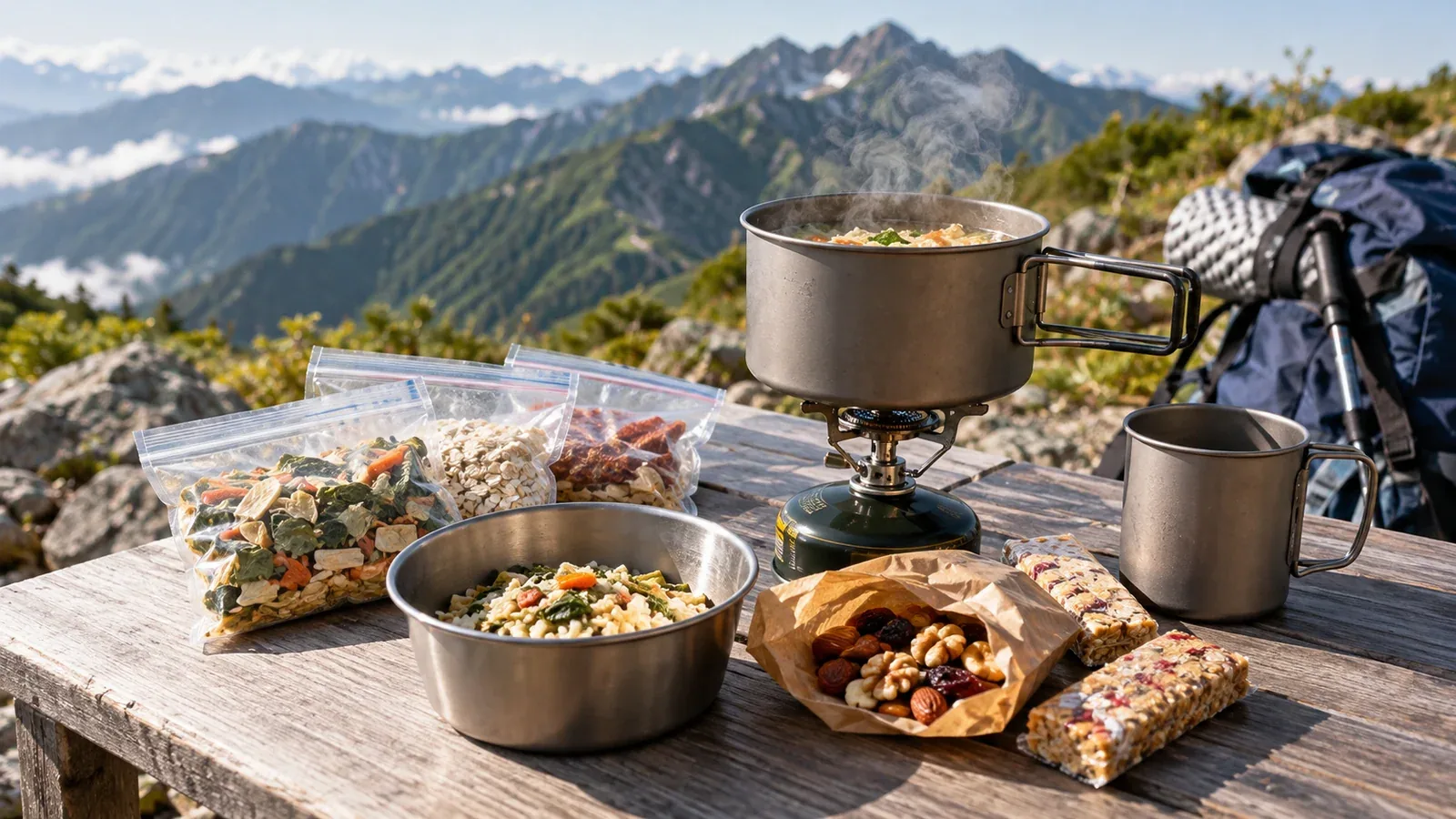
The amount of food you pack for a multi-day hike directly affects your total pack weight. When you're already carrying camping gear, excess food makes the first day harder on your legs, while cutting back too much can leave you short of energy on the trail. On routes with few huts or other resupply points, a food plan is an important part of getting ready safely.
This guide walks through estimating what you'll need for the effort ahead, adding up each day's food, and finding ways to save weight while keeping the meals you need.
Estimating daily energy needs and food weight
How much energy you need depends on walking time, elevation change, pack weight, and body size, among other things. Think back to what you ate on a similar route and where you ran short. Then plan breakfast, lunch, trail snacks, and dinner for each day. Japan's Dietary Reference Intakes describe usual intake. Estimate what you'll need for the demands of your particular hike.
Calculate weight using nutrition labels and the portions you'll actually pack. An 80 g portion of food with 450 kcal per 100 g provides 360 kcal. Fat generally provides about 9 kcal per gram, so foods like nuts are an easy way to add energy in a small portion. Pair them with familiar staples and sources of protein.
For example, 700 g of food averaging 400 kcal per 100 g provides 2,800 kcal. This calculation shows how to compare different food combinations. For your own menu, use the label and actual weight of each portion, then separately count the packaging, water you'll carry for cooking, and fuel.
Count food for the first day, full trail days, and the descent
Once you've settled on a duration such as four days and three nights, plan separately for the first day, the full days on the trail, and the descent. This gives you a more accurate count than packing the same amount for every day.
- First day: Leave out any meals you'll finish before reaching the trailhead. Count snacks and meals you'll eat once you start walking. If you're staying overnight, you'll need dinner even if you set off in the afternoon.
- Full days on the ridge: On days without a reliable place to resupply, pack breakfast, lunch, dinner, and everything you'll eat between meals while walking.
- Descent day: Count breakfast and snacks eaten in the mountains. Add lunch if your descent schedule or onward transport makes it necessary. Check the hours of shops near the end of the trail.
Count the meals you'll actually eat in the mountains. Set aside emergency food separately for bad weather or delays. Choose food you can eat without a stove and size the reserve for the time it could take to resupply or get down safely.
Where to cut weight first
Cutting the wrong things can leave you short of energy during a multi-day hike. Work through the following priorities when you want a lighter pack.
Start with moisture content and cooking water
Fresh food, cans, and retort pouches carry water in the food itself. Dried meals can weigh less, but they need safe drinking water to rehydrate and, depending on the product, fuel. Ask the people managing water sources or huts whether you can reliably refill. For stretches where you can't, include the cooking water you need to carry.
Review the packaging next
Remove excess packaging such as outer boxes and portion out what you need into food-safe bags. Keep or copy the cooking directions, allergen information, and storage instructions. If a product is shelf-stable only while unopened, keep its sealed inner pouch intact.
Keep breakfast, dinner, and emergency food in the plan
Breakfast and dinner support the next day's effort and recovery. Trail snacks keep you fueled through long stretches of walking. Save weight through packaging and ingredient choices while keeping the meals and reserve food you need.
Compare the nutrition labels
Energy per weight (kcal per 100 g) is one useful measure when comparing foods.
- Nuts and seeds: A small portion can provide substantial energy and can be eaten without a stove. Check for allergens.
- Chocolate: Many products are energy-dense. Chocolate melts easily in heat and gets hard in the cold.
- Freeze-dried staples: Check the dry weight and the information per serving. Follow the directions for the amount and temperature of water to add.
- Dried pasta and rice: Read the information for the dry product, then factor in cooking time, water, and fuel.
- Trail bars: Easy to carry, with different weights and energy content from one product to the next. Count the amount listed per bar.
- Retort pouches: These tend to weigh more because they contain water, but some require less water to prepare. Check the storage and heating directions.
Compare retort pouches and dried foods using the full weight, including water and fuel carried. On a stretch with scarce water, for example, a shelf-stable meal you can eat as it is can save cooking water.
How temperature and season affect food choices
What works in summer may differ from what you need in winter or when snow is still on the ground.
In cold conditions (autumn, winter, and higher elevations), keep snacks you can eat on a short break in an accessible pocket. Test before leaving whether you can comfortably eat foods that harden in the cold. Plan how you'll keep water and food from freezing.
In hot conditions (summer and lower elevations), choose products labeled shelf-stable and keep them out of direct sun and excessive heat. Carry perishable products only if you can keep them cold, following the storage requirements and use-by dates on the label. Follow the directions after opening and clean your hands before eating.
What to do next
List the meals and snacks you'll eat in the mountains each day. Weigh the portions and add up the energy listed on the labels. Add emergency food, packaging, cooking water you'll carry, and fuel for an estimate of your starting load. Confirm water availability and hut opening with the people who manage them. For firsthand experience of your route, browse hiking logs and communities on Nordwand.
References
- MEXT and the Consumer Affairs Agency (food composition and nutrition labeling)
- Ministry of Health, Labour and Welfare and the National Institute of Fitness and Sports in Kanoya (dietary reference intakes and energy expenditure while hiking)
- Ministry of Agriculture, Forestry and Fisheries and USDA (food storage and preventing food poisoning outdoors)
References and sources
- MEXT | Food Composition Database
- MEXT | How energy is calculated in the Standard Tables of Food Composition in Japan
- Consumer Affairs Agency | Nutrition labeling
- Ministry of Health, Labour and Welfare | Dietary Reference Intakes for Japanese people
- National Institute of Fitness and Sports in Kanoya | Research on hiking routes and energy expenditure
- Ministry of Agriculture, Forestry and Fisheries | Food storage and shelf-stable products
- Ministry of Agriculture, Forestry and Fisheries | How to prevent food poisoning
- USDA | What food to pack for hiking or camping