
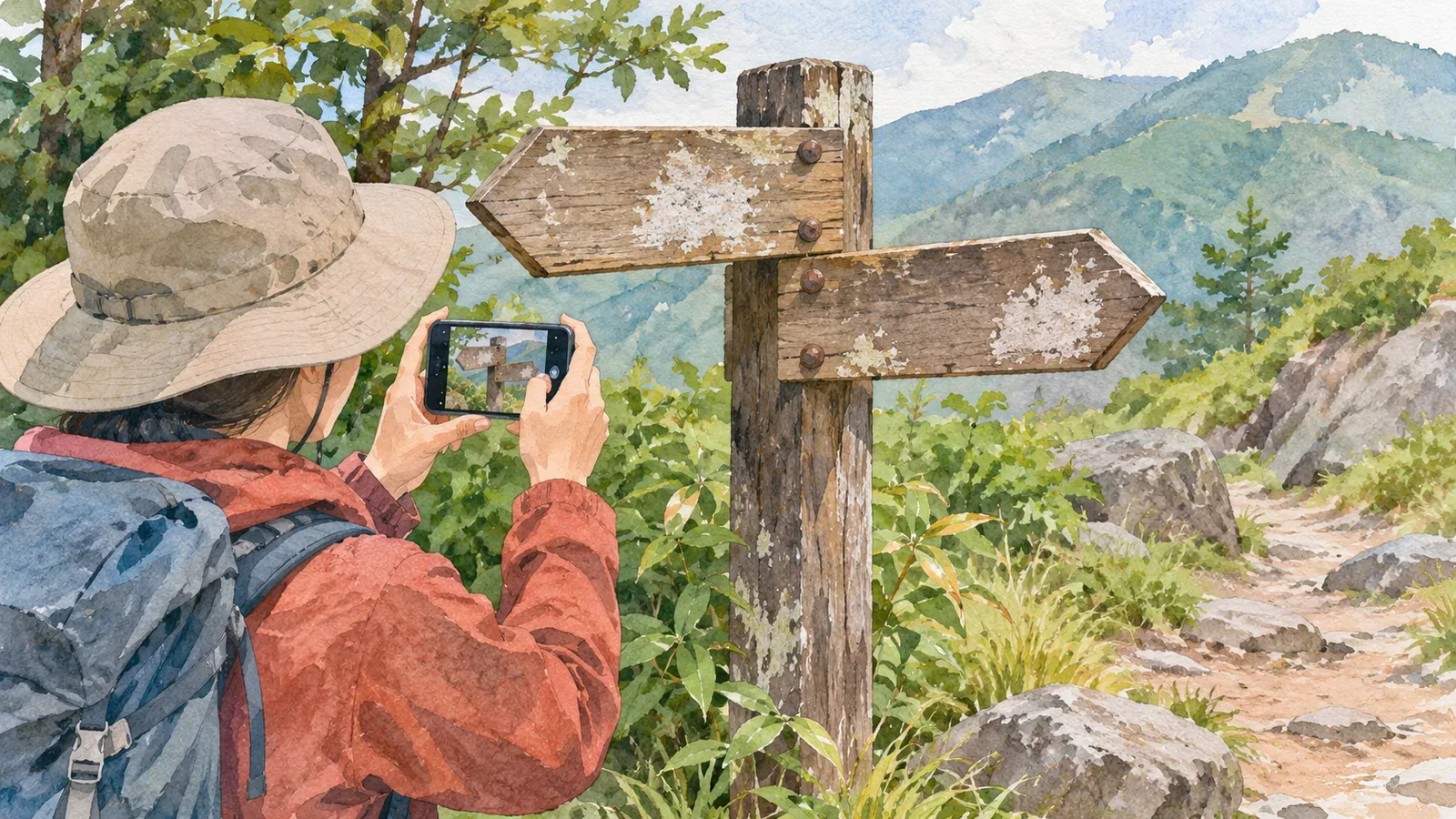
People rely on junction signs, especially when they’re new to a trail. Stickers and handwritten marks can cover lettering or make the direction unclear. If you find a hard-to-read sign, leave it as it is and report its location and condition to the trail manager.
Trail Signs Are for Everyone
A trail sign may show destinations, directions and distances. Personal stickers or marks can cover letters and arrows or look like official directions. Even a small mark leaves other hikers guessing who put it there. Keep personal notes on your map or in your photos.
If a sign looks worn, leans over or is hard to read, leave the lettering and position as they are. The manager needs to check the sign against the current route and decide how to repair it. An improvised fix could point people the wrong way or put the sign in the wrong place.
Kanagawa Prefecture’s Tanzawa–Oyama trail information lists the office responsible for each route, including prefectural offices and the forestry office. Check which section the sign is on before contacting anyone, even within the same mountain area.
If a Sign Is Hard to Read
Stop somewhere safe and compare your map, location and the trails around you. Work out which junction you’re at and whether it matches your planned route. If you’re still unsure, go back to a point you recognize or check the latest information from the manager.
For a report, photograph the whole sign, the hard-to-read part and the junction from somewhere you won’t block the path. Note the location, date and time, and which side of the sign was affected. Leave the sign facing as you found it, avoid rubbing the lettering and record what you can see.
If you know the manager, send the location and a description to that office. If you’re unsure, ask the municipality’s tourism or parks office or a trail information desk where to report it. Add the stretch from the trailhead or the name of a nearby junction to the mountain name so the location can be found.
Keep Your Notes With You
To look back on your hike, note times and places on your own map, itinerary, photos or hiking log. If your group needs a meeting point, decide where to meet and how to get in touch before leaving. Keep notes on your map for personal use and leave the signs alone.
If someone else has already added a sticker, check with the manager before trying to remove it. Peeling it off could damage the sign or remove something that belongs there. Note the location, take a photo and report it.
Japan’s Ministry of the Environment asks visitors to keep graffiti off signs and waymarkers in Daisetsuzan National Park. Its technical guidelines explain how public signs provide location and safety information and why the people who install them need to maintain them.
Share What You Saw
If you tell companions or other hikers about the issue, say which junction it was, what you couldn’t read and when you checked. Wait for confirmation from the manager before saying the whole sign is wrong or that the trail is impassable. Make clear what you saw yourself and what you’re unsure about.
Before posting a photo, check its location data and who appears in it. Reports can go out of date. Include the source and date so readers can check with the manager for repairs or changes in access.
In Chichibu-Tama-Kai National Park, the Ministry of the Environment describes how local groups and officials work together to make the route clearer where trails split into parallel tracks. Trail signs help with that work. Keep a photo or write a few lines to remember the hike, and leave the sign easy for the next person to read.
Keep Personal Marks in Your Notes and Report Damage
Keep stickers and handwriting off trail signs, and record your hike on your own map or in photos. If a sign is hard to read, note the location and condition and tell the manager.
If you’re unsure where the trail goes, stop somewhere safe and check your location and the latest information.
References and sources
- Kanagawa Prefecture: Trail Access Information for Tanzawa–Oyama
- Japan’s Ministry of the Environment: Etiquette in National Parks
- Japan’s Ministry of the Environment: Technical Guidelines for Natural Park Facilities, Part 3, Chapter 7: Public Signs
- Japan’s Ministry of the Environment: Conservation Work in Chichibu-Tama-Kai National Park
- Japan’s Ministry of the Environment: No Graffiti on Signs and Waymarkers in Daisetsuzan National Park