
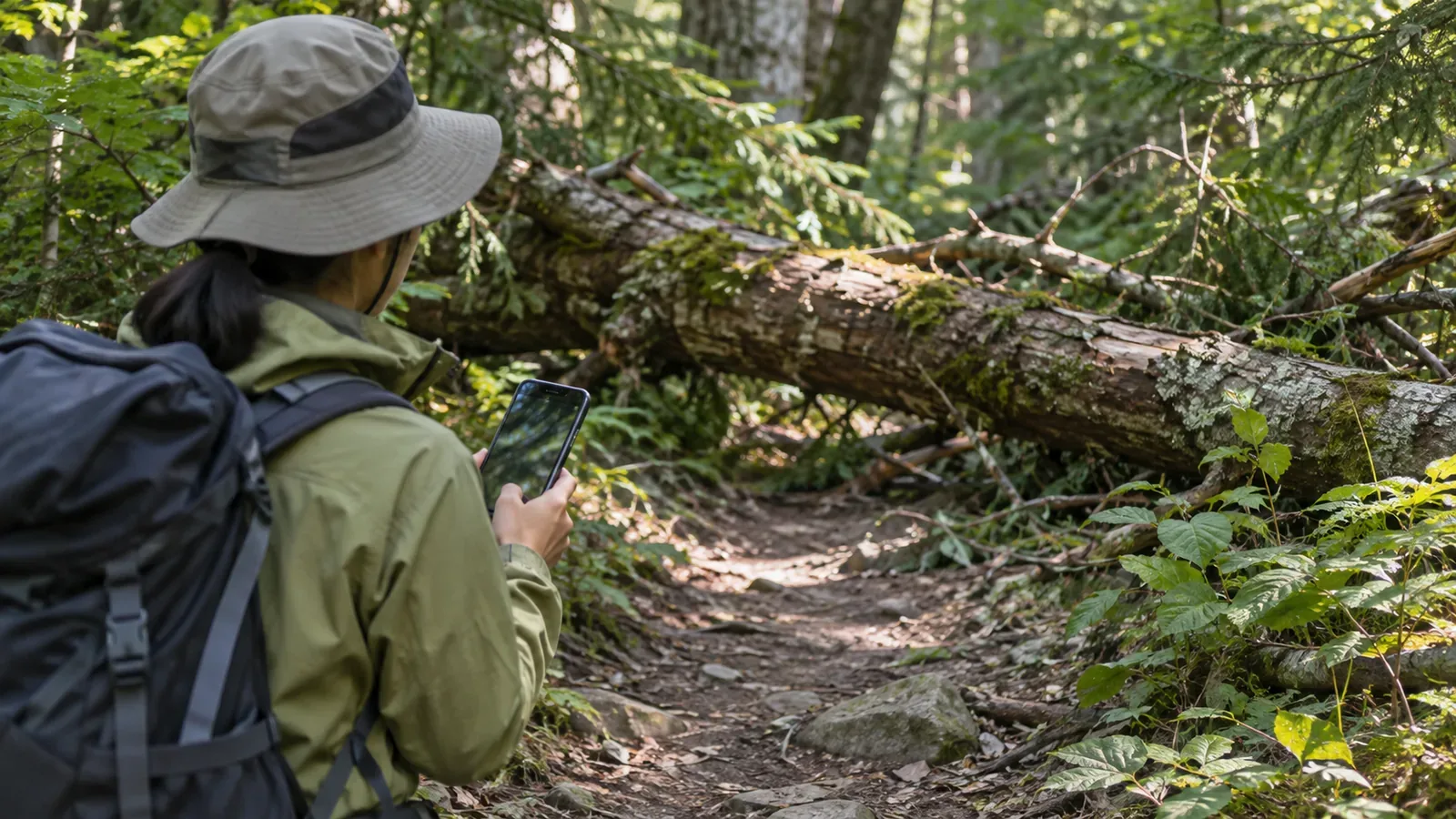
When you find a fallen tree, leave it where it is. Note the location and condition from a safe place and contact the trail manager. Clearing a tree takes an understanding of the surroundings, the risk of the tree moving and how to carry out the work safely. If you are unsure you can pass, do not force your way over it. Consider turning back or changing your route.
Trail crews decide how to handle fallen trees
Chapter 3 of the Ministry of the Environment's March 2005 trail guidance for Daisetsuzan National Park sets out four steps: identify the damaged spot, find the cause, consider a response and carry out the work. It warns that misjudging the flow of water can worsen erosion, and calls for avoiding excessive intervention. It also calls for a repair record with the work, materials and before-and-after photos. The guidance describes planned work that starts with assessing the cause and keeping a record.
When a fallen tree blocks the trail and a detour risks damaging plants or making people lose their way, the guidance describes dealing with it in a way that avoids harm to the surroundings. Crews can move the tree clear of the path or cut it into lengths that can be used in repairs. The environmental impact informs whether a crew moves the tree or cuts it for materials. That is a decision for the crew. The guidance is for managers and workers in Daisetsuzan. It gives hikers no permission to cut trees and does not set a nationwide procedure.
Repairs may require procedures and safety planning
The July 2018 draft maintenance manual for Daisetsuzan National Park says that about 300 km of trails are too much for public authorities to maintain alone. It envisages several kinds of participants, including local mountaineering clubs, and allows public recruitment. For repairs by people other than the organisation formally responsible for the work, it sets out making a plan, consulting the Environment Ministry ranger office in advance, coordinating with the responsible organisation, following legal procedures, doing the work and reporting the results. This describes organised repairs in Daisetsuzan at the time. It does not establish what a hiker may legally do today.
The draft covers repair procedures in general and does not say when a hiker may cut a fallen tree. We have not verified the current system. It calls for criteria for proceeding or stopping, a way to make emergency contact, first-aid supplies, a designated leader, tasks and equipment suited to participants' skills, and consideration of insurance for injuries. Even if you have equipment and experience, leave the tree alone until the consultation, coordination, work plan and safety arrangements are clear.
Volunteer training from the US Pacific Crest Trail Association warns that fallen trees or branches under tension, known as spring poles, can release suddenly and cause serious injury. This is US training material, and it illustrates why the danger may be hard to judge by looking at the tree. That is another reason to leave the cutting to a crew.
An early report may keep a detour from becoming established
The Daisetsuzan guidelines page calls it trail braiding when people avoid muddy or eroded paths by walking across grass or dwarf bamboo and create several parallel paths. It treats this as one cause of deterioration. The page also explains that soil in the alpine vegetation zone formed as dead leaves and other material accumulated over thousands of years on fragile ground. Recovery can take a long time once large areas become bare. This description applies to the alpine zone in Daisetsuzan.
The spread of paths around a fallen tree is consistent with the guidance's warning about detours damaging plants. The editorial team believes a prompt report could let the manager respond before a detour becomes established. This is an inference. The sources give no response time. If you are unsure you can get over the tree, put turning back first. Avoid creating a new detour off the trail.
What to report and when to record it
Stop before taking notes or photos or using your phone. Choose stable ground where you will not block others. If there is no safe place, wait until after the hike and write down what you remember. Stay back if getting close would put you beneath the tree or beside a steep slope.
We suggest reporting four things. First, give the location: mountain, trail, section, which side of a nearby sign or junction, approximate distance from it and when you found it. Second, describe the condition: whether it blocks all or part of the path, whether there appears to be space to step over or go under it, and whether any part looks suspended or unstable. Third, describe any tracks that already go around it. Fourth, say whether you touched or moved anything. If you left it alone, say so. If you made a change, describe it accurately. You can report what you see without touching the tree.
If you know the trail manager, send the report there. The US National Park Service's New River Gorge volunteer role includes reporting hazards and further maintenance needs to the facility manager. Pacific Crest Trail Association material also asks volunteers to report their work promptly. These are US examples for trained volunteers. For Japan, the Daisetsuzan draft points to the ranger office as the first place to consult. Another article explains how to find an unknown trail manager. Check the current official contact details.
If someone is injured or trapped beneath a fallen tree, call for emergency rescue. A routine trail report cannot take its place.
Leave the tree in place and report where it is and what you saw
The sources describe handling fallen trees as work for managers that involves assessing the cause, protecting the surroundings and recording the work. We found no statement authorising hikers to cut a tree. The editorial team considers stopping somewhere safe, recording the location and condition and any detour tracks, and notifying the manager the way hikers can help. Before your next hike, you can practise writing down those details so you know what to report.
References and sources
- Daisetsuzan National Park Liaison Council: Technical Guidelines for Mountain Trail Maintenance in Daisetsuzan National Park
- Japan Ministry of the Environment: Daisetsuzan National Park trail maintenance guidelines, chapter 3 (March 2005)
- Japan Ministry of the Environment, Kamikawa, Higashikawa and Kamishihoro ranger offices: draft Daisetsuzan trail maintenance procedures manual (July 2018)
- U.S. National Park Service, New River Gorge National Park & Preserve: Basic Trail Maintainer
- Pacific Crest Trail Association: Trail Skills College Field Reference, Course 100, Intro to Trail Maintenance (January 2019)