
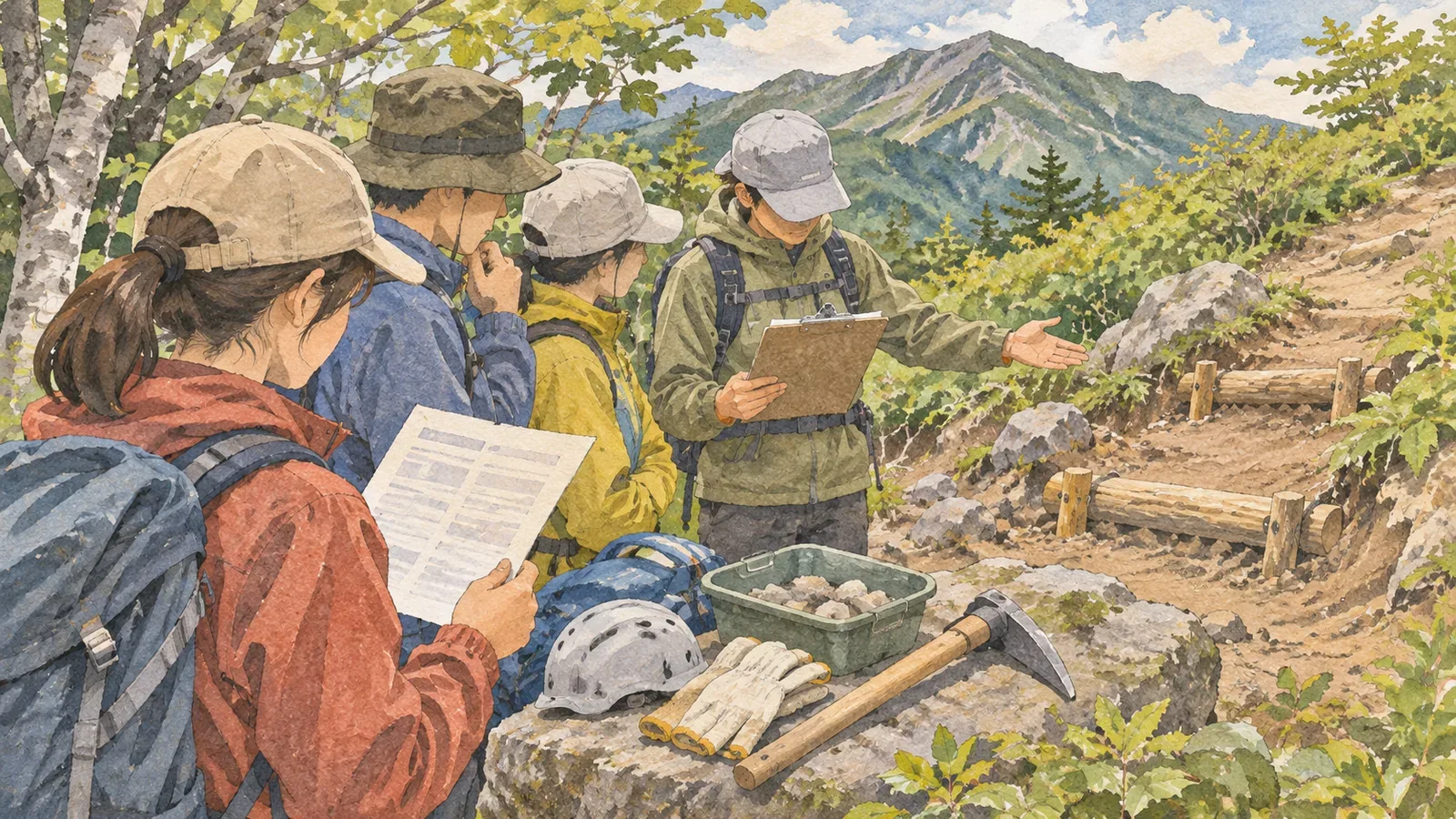
If you want to help look after the trails you hike, read the notice to find out who’s running the project, where it takes place and what you’ll do. Picking up litter, protecting vegetation and repairing a trail involve different tasks and levels of experience. Follow the organiser’s instructions on equipment and working methods.
Find Out Who Runs the Project and What It Does
Check the organiser, any land or trail managers involved, the work site and the tasks. Management and access conditions vary across national parks, national forests and private land. If you’re unsure how to sign up or who will lead the work on the day, ask before joining.
Japan’s Ministry of the Environment describes how government agencies, local groups and hikers work together to repair paths and make the intended route clearer in Chichibu-Tama-Kai National Park. When trails widen or develop parallel tracks, nearby vegetation can be damaged.
Check that the work suits your experience and fitness. Look up the walking distance, elevation change, transport to the meeting point and work hours. Make sure you have enough energy for both the hike and the work. Check whether beginners are welcome and whether the organiser sets age or health requirements.
Read the Equipment and Insurance Requirements
The organiser may specify hiking boots, rain gear, water, gloves or a helmet. Check what they provide and what you should bring, and stick to their equipment list. Ask whether tool experience or training is required, and get instructions from the organiser before using unfamiliar equipment.
Find out whether the organiser arranges insurance or you need to take it out yourself. Read the recruitment notice and policy details. Ask the organiser or insurer what is covered, how long the cover lasts and whether travel to and from the site is included.
In the January 2026 call for Kamikōchi park volunteers, Japan’s Ministry of the Environment required participants to attend registration training and generally volunteer at least seven days per year, including at least three days of priority activities. The ministry arranged group insurance, and participants covered their travel and accommodation. That round has closed. For any project you’re considering, check costs, insurance, the rain cancellation policy, deadlines and places available. After your place is confirmed, make sure you can receive changes or cancellation notices.
Stay Within the Assigned Work Area
At the meeting point, confirm the purpose of the work, your assignment, how to use the tools and whom to contact in an emergency. Ask about anything unclear in the safety briefing before starting. Get help with unfamiliar tasks. Tell the organiser if you feel unwell or conditions change.
The Ministry of the Environment’s Daisetsuzan trail guidelines describe identifying damaged sections, investigating causes, choosing repairs and checking conditions after the work. Crews avoid changes to drainage that could worsen erosion and keep work to what’s needed. Follow the methods specified by the person in charge on site.
Laying stones, digging a channel or cutting branches can change drainage or affect plants even with good intentions. Keep to the assigned area and method. If you notice something that needs attention, tell the person in charge and leave it in place.
Equipment and Records Before and After the Work
Japan’s Ministry of the Environment asks visitors to remove mud from footwear before entering Special Protection Zones. If the work site has instructions on cleaning tools or preventing the spread of seeds, follow them. Check boots and tools before leaving and after the work. Ask the organiser where and how to clean them.
Before posting work photos or photos of volunteers, check the organiser’s photography policy and ask the people shown. Check whether you can share the work location or information about rare plants.
When you finish, check how to return tools, submit a report and hear about the next session. If you compare before-and-after photos, record the area and the work done according to the organiser’s instructions. Ask the relevant manager before carrying out similar work at a different site.
Check the Requirements Before You Join
Before applying, check the organiser, location, tasks, eligibility, equipment, costs and insurance. Get instructions for unfamiliar tasks and stick to the assigned area and method.
Keep the trail as it is outside your assignment and report anything you notice to the manager or person in charge.
References and sources
- Japan’s Ministry of the Environment: Conservation Work in Chichibu-Tama-Kai National Park
- Japan’s Ministry of the Environment: Daisetsuzan National Park Trail Maintenance Guidelines, Chapter 3 (March 2005)
- Japan’s Ministry of the Environment: Preventing the Accidental Introduction of Species to Special Protection Zones
- Japan’s Ministry of the Environment: Kamikōchi Park Volunteer Recruitment (January 28, 2026)