
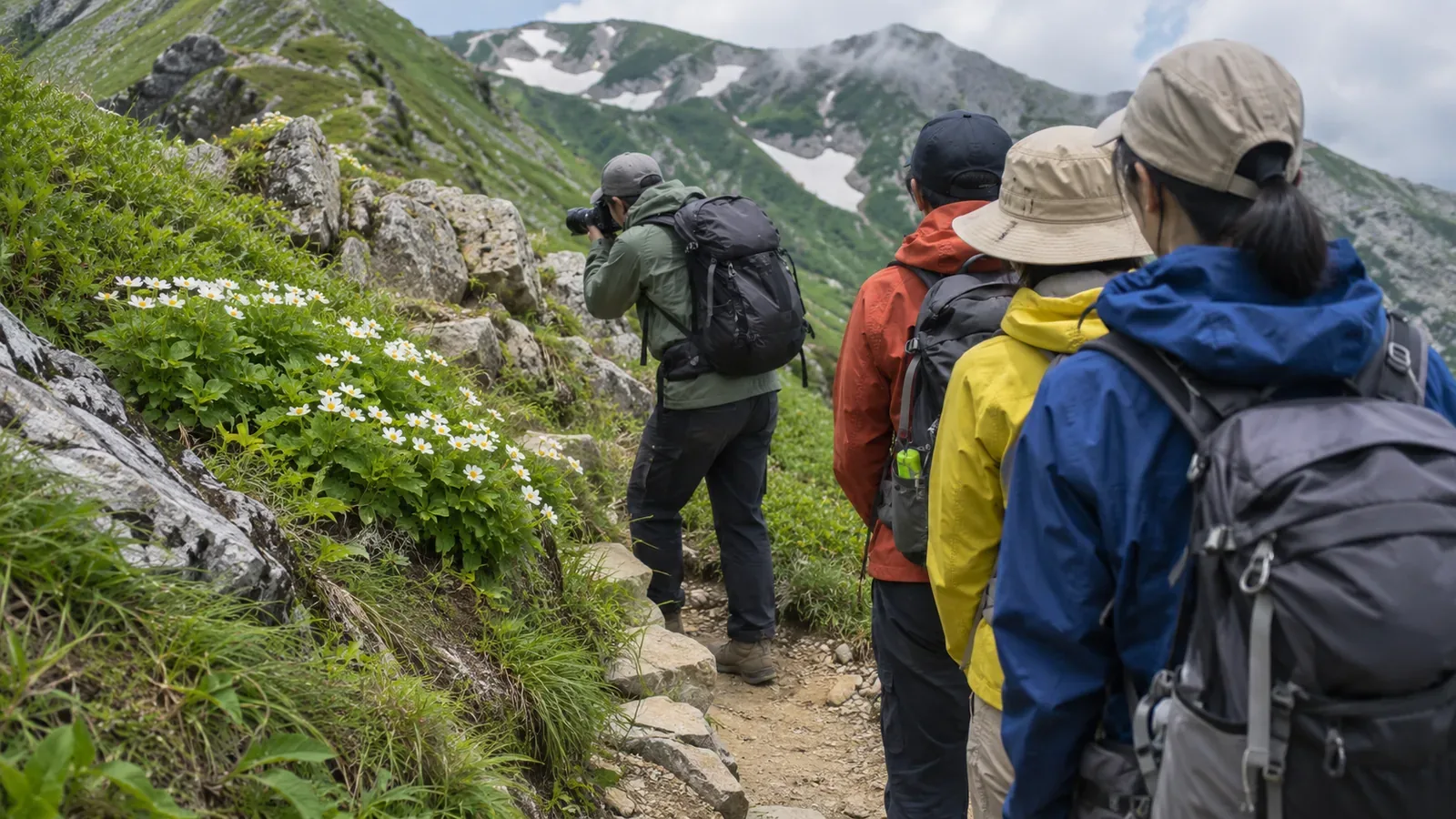
Before joining a photo queue, check that you can stand on the trail or boardwalk and leave room for people to pass. Skip any shot you can’t get from there and any queue that pushes people off the trail. Guidance on photography and the effects of passing other hikers can help you keep the trail clear for everyone.
Stay on the Trail When You Take Photos
The Daisetsuzan National Park Liaison Council asks hikers to stay on trails, or on the designated route when snow remains, and to protect vegetation and soil. It explains that going off the trail to take photos, rest or relieve yourself can trample plants and leave bare ground. Stay on the trail or designated route when you take photos. Japan’s national park etiquette also asks visitors to stay on trails and boardwalks. The Tokyo Mountaineering Federation’s Nature Conservation Committee asks hikers to stay on the trail during breaks and keep out of wetlands and grassland.
In Daisetsuzan, where snow covers the trail, follow ropes, guide poles and the instructions of rangers. Check the latest guidance on access and photography for the area you’ll visit.
Why Queues Can Lead to Trampling
At popular photo spots, people stopping for pictures and people passing through share the same space. A queue or the way equipment is set up can lead to more trampling in three ways.
First, people and their packs can spill over the edge as they wait or look for a better angle. The Daisetsuzan rules point to off-trail photography as a cause of trampled plants and bare ground. Keep your feet within the trail while waiting and shooting.
Second, a tripod or similar gear can block the path and send people around it. The Tokyo Mountaineering Federation warns that a tripod can force others to step onto the habitat at the edge. Consider the people who are only passing through.
Third, people passing or overtaking alongside the queue can step onto the shoulder or off the trail. The Ministry of the Environment’s March 2005 Daisetsuzan trail guidelines explain that repeated use of trail edges damages plants, exposes soil and widens the path. Passing has also been linked to wider paths and parallel tracks in Chichibu-Tama-Kai National Park. Even when a line forms, leave enough space for people to pass within the trail.
Choose Possible Photo Stops Before Leaving
Japan’s Ministry of the Environment recommends checking weather, access, trail conditions and volcano information before hiking. While planning, note places where you might want a photo, such as a summit sign, viewpoint, patch of flowers or area known for autumn colours.
Use maps and guide photos to estimate whether you could get the shot from a trail or boardwalk. Check when you get there, and skip any shot that would take you off the path. If the maps suggest you’d have to step off, cross that shot off in advance. You can try a wider view from the path or simply enjoy the view.
Before leaving, agree with your group to skip any shot that requires stepping off the path and to stay on it even if the person ahead steps off. Follow any signs and instructions from the manager on the day.
What to Do at the Back and Front of the Queue
When you reach the queue, make three checks. Can you take the photo from within the trail or boardwalk? Can you and your pack stay there while leaving room for people to pass? Is the place clear of fall and rockfall hazards and out of other people’s way? Komagane City uses the last conditions for choosing rest spots, and they also make sense for waiting to take photos. If any check fails, move on without taking the picture.
If you need your hands free while waiting, keep your pack off the grass. Ina City asks hikers to protect alpine plants and watch their footing when resting or setting down a pack. Stop on firm ground out of the way before using your camera or phone. If there’s nowhere suitable, take the photo another time.
Use a tripod or selfie stick only if the site allows it and people can still pass on the trail. Otherwise, take a quick handheld shot or skip it. If you’re taking turns, check that people can wait and pass without stepping off. If there isn’t enough room, keep walking. After the shot, make room for people to pass and check the image somewhere out of the way.
If someone ahead steps off the trail, stay on it. Skip that spot and try the next viewpoint, or write down what you saw after the hike. Follow any local photography signs or guidance.
Take the Shot Only When You Can Stay on the Trail
Keep your feet and gear on the path while waiting, with room for others to pass. List possible photo stops before leaving and agree with your companions to skip any shot you can’t get from the trail. Use your camera or phone only after stopping on stable ground out of the way. Save the shot for another time if there’s no space.
References and sources
- Daisetsuzan National Park Liaison Council: Conservation Rules
- Tokyo Mountaineering Federation Nature Conservation Committee: Conservation and Hiking Etiquette
- Japan’s Ministry of the Environment: Etiquette in National Parks
- Japan’s Ministry of the Environment: Daisetsuzan National Park Trail Maintenance Guidelines, Chapter 3
- Japan’s Ministry of the Environment: Conservation Work in Chichibu-Tama-Kai National Park
- Komagane City: Read Before Hiking
- Ina City: Guidance for Hikers in Japan’s Central Alps