
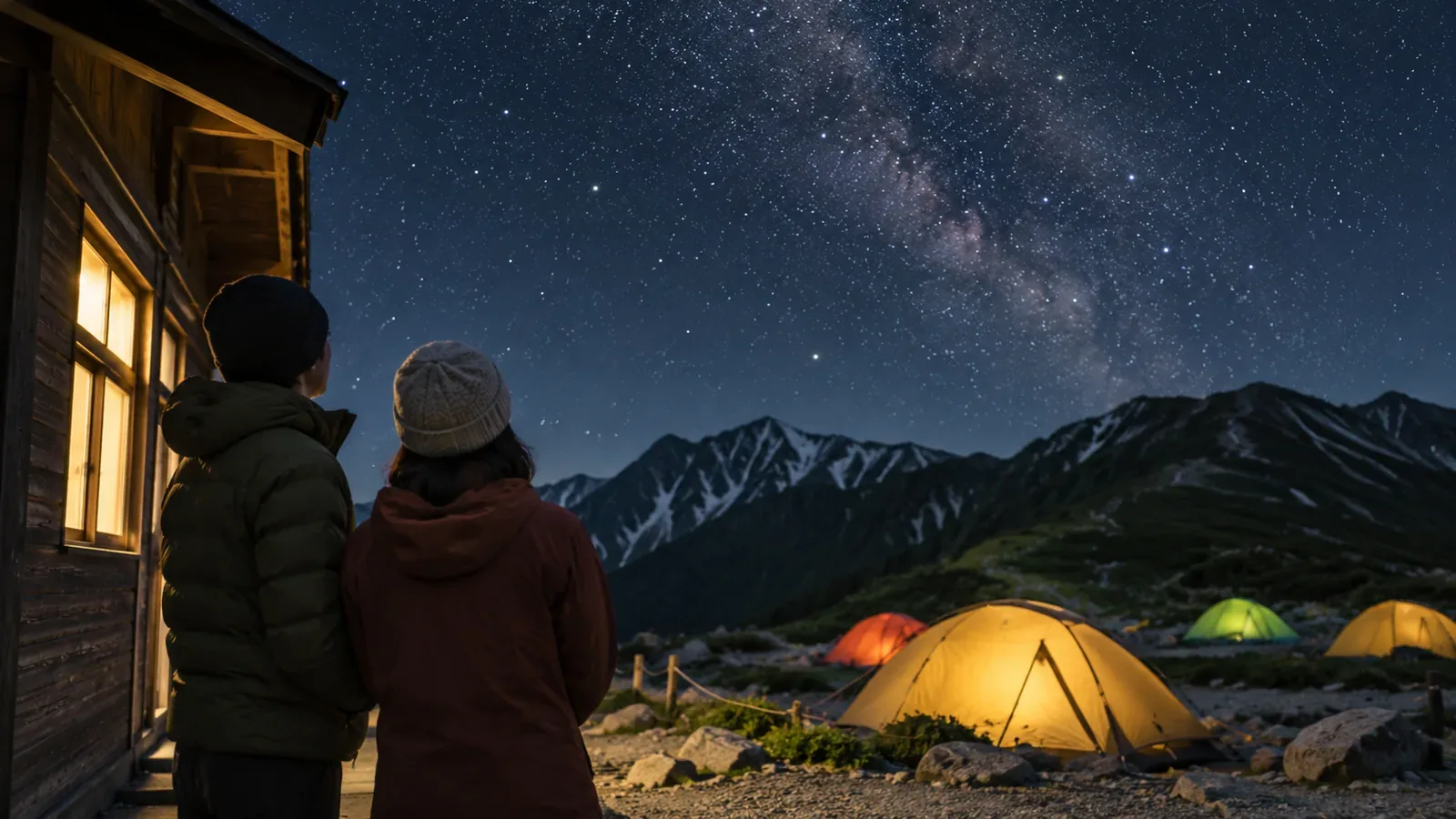
When watching stars from camp, keep voices and light away from people who have turned in. Check quiet hours and lights-out, and decide with the group where and when to talk.
Check the campground’s quiet hours and lights-out
Before booking, check the official guide for quiet hours, lights-out and rules for conversation, lighting and shared spaces afterward. If unclear, tell the manager when you want to observe and how many people will be there.
For example, Nasu Takahara Auto Campground prohibits gatherings, chatting and lanterns after lights-out at 22:00. Follow the rules of the place where you are staying.
Keep voices down even before lights-out if anyone nearby is resting. Consider how close the pitches are and what is happening around you.
Keep conversations brief during observation
Discuss which stars or constellations you hope to find and when you will finish while it is still light. On site, use a few words or save reactions for morning. Follow the campground’s quiet rules.
Even quiet voices can carry when a conversation goes on. Inside your tent, stay aware of others nearby and wrap up conversations promptly.
If taking photos, prepare the equipment and agree on roles in daylight. Ask where night photography or tripods are allowed. Keep paths and neighboring pitches clear.
Check night access before moving elsewhere
If leaving the campsite, check your destination’s opening times. Joshua Tree National Park in the United States closes day-use-only areas from dusk to dawn. Check the route and what areas are accessible after dark at your own destination.
If a shared space is open at night and talking is allowed, use it with nearby campers in mind. If there is no suitable spot, continue the conversation in the morning or after the hike.
When walking in the dark, use a light that lets you see your footing. Shenandoah National Park advises a red light from the car to the viewing spot. Follow local rules and keep the beam away from faces and tents.
Prepare for the morning while it is light
Pack morning gear and water early. This reduces night noise from car doors and repeated searches through dishes or bags.
Japan’s environment ministry explains that stray light or lighting left on for long periods affects the surroundings. Direct the light you need at your feet or hands and avoid leaving it pointed at tents or the sky. Follow lights-out and lighting rules.
Set an end time. If some people go to bed while others continue observing, agree on how to enter and leave and where gear will be. Make it easy for anyone to turn in early.
Give other campers room to rest
Follow quiet hours and lights-out and keep conversations brief. If voices and light carry to nearby tents, save the conversation for morning and finish observing at the agreed time.