
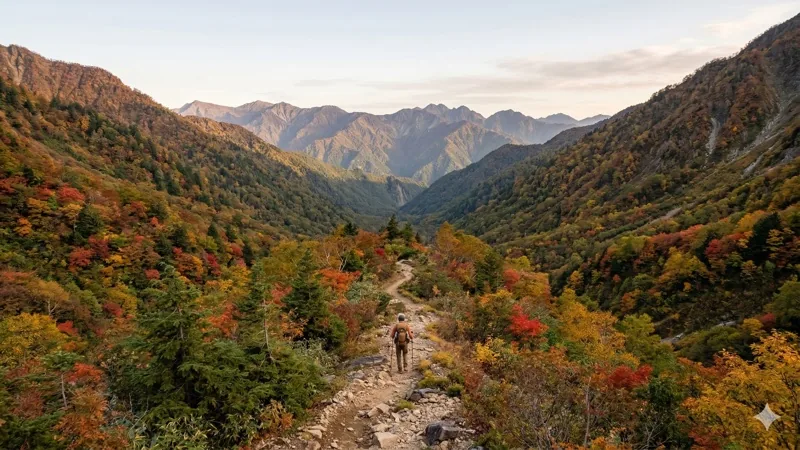
One pleasure of hiking alone is walking at your own pace and enjoying a quiet mountain. If you are injured or lost, you have no companion on the spot to call for help or give first aid. Japan’s police figures offer a starting point for preparing for a day out alone.
What Japan’s police figures tell us
In 2025, 209 of the 1,367 people recorded in mountain incidents while out alone died or went missing, or 15.3%. Among people in groups of two or more, the figure was 5.5%. The national figures also cover activities such as picking wild plants or mushrooms and sightseeing.
These percentages describe people who were already involved in an incident. Without the total number of solo and group outings, they cannot establish the incident rate for either group or isolate the effect of group size.
Three things to consider before hiking alone
1. No companion on the spot for first aid or a call
Companions may be able to divide up first aid, assessing what happened and calling for help. When alone, you may be unable to call if you lose consciousness or cannot reach your phone.
2. Others may take longer to realize you are overdue
A filed hiking plan can give searchers a lead. Agree in advance who will contact whom and when if you miss the check-in after descent. If you need rescue on the mountain, call while you are still able to. Nagano Prefectural Police advise calling 110 and explaining where you are and what happened.
3. No companion to discuss whether to continue
When the weather looks uncertain or the way at a junction is unclear, stop and check the time, your position, the weather and how you feel. Use the times and conditions you agreed on before leaving to decide whether to continue or turn back.
Situations worth preparing for when alone
- Getting lost: Stop and check the map against the terrain. If you can return safely, go back to where you last confirmed your position.
- A fall or injury: If you cannot walk safely, avoid forcing a descent. Call for help and give your position and the details of the injury.
- Illness or feeling unwell: Shorten the route before it gets worse. Keep your means of communication and warm gear within reach in case you cannot move.
- Wildlife: Check recent local sightings and guidance from the area manager or authorities before setting out.
Five steps to reduce risk
1. File a hiking plan and arrange an emergency contact
Submit the plan through a channel accepted in the area. Tell a friend or family member your route, your expected descent time and what to do if you are overdue. After coming down, contact the person you agreed to call.
2. Choose a route with room to spare
Choose a route comfortably within your fitness and skills for the weather on the day. For a first solo hike, use a familiar or well-marked trail and avoid difficult sections or stretches that are hard to reverse.
3. Carry more than one way to signal or communicate
- A charged phone and backup power. Check where cellular coverage may be unavailable.
- A whistle. It can help someone nearby locate you.
- For areas without cellular coverage, a satellite communicator is an option if you have checked where it works and know how to use it.
4. Decide when to turn back before leaving
Write down a place and time, such as turning back if you have not reached a junction by noon. Consider turning earlier if the weather, trail or your condition worsens.
5. Bring first-aid and emergency shelter equipment
Carry first-aid supplies, insulation, rain gear, an emergency shelter, spare food and a headlamp suited to the route and season. Before leaving, check where they are packed and how to use them.
Keeping in touch when you choose to hike alone
Even on a day when you walk alone, you can share your plans and what you learned afterward.
- Share your plan or trip record with friends.
- Practise reading maps, deciding when to turn back and giving first aid on outings with others.
- Check official trail information and compare it with what your companions know about conditions that day.
- Contact the agreed person after coming down.
Asking another person to read your plan can help you spot unclear junctions or a tight schedule. Once you return, write down one thing you would change next time.
Adapt the route to the area, season, experience and equipment. Before planning a route that calls for a new skill or includes a difficult section, practise in safe conditions with a guide or someone experienced.
Summary
When you walk alone, think before leaving about what you will do immediately after an injury, how others will learn you need help, and how you will decide whether to continue. Check your filed plan and check-in, your route margin, communication, turnaround criteria and emergency equipment.
Before your next solo hike, agree on whom to contact after the descent and by what time, and decide where you will turn back.