
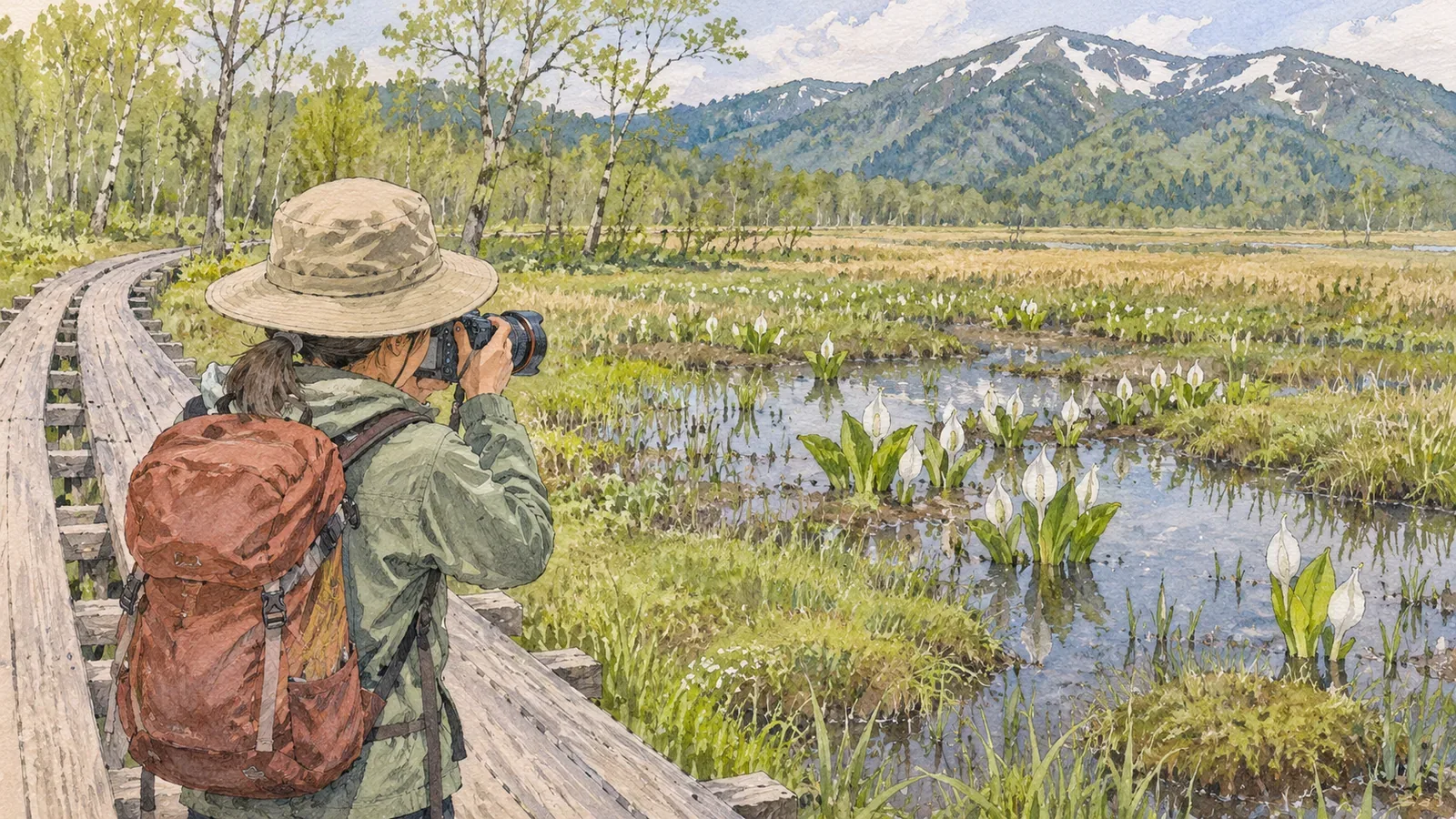
When taking photos from a boardwalk, choose a composition you can get without stepping into the wetland. Skip the shot if the footing is poor or stopping would block the way. Oze’s public guidance explains how to take photos without trampling the wetland. In other areas, check the local rules and instructions.
What a Step off the Boards Leaves Behind
Japan’s Ministry of the Environment asks visitors to stay on the boards to protect Oze’s fragile wetland ecosystem. The Oze Preservation Foundation asks people to keep tripods out of the wetland and to keep their feet on the boards or rest area when sitting down. Keep your feet and equipment on the boards when taking photos.
Gunma Prefecture’s booklet explains what happens when the same spot is trampled repeatedly. Plants die, the ground compacts and dries, and peat can crack or wash away, making it difficult for plants to grow. Fukushima Prefecture explains that peat builds up at only about 1 mm a year, and wetlands formed over thousands of years were degraded in a matter of years.
Popular viewpoints draw many people with cameras. A single step may seem small, but when many people step in the same spot, the damage to soil and plants adds up. Keep your feet within the boards, especially at popular photo spots.
How Boardwalks Came to Protect the Wetland
The first boardwalks are thought to have been logs laid across muddy ground to make walking easier. According to Gunma Prefecture, large-scale construction began around 1952. When bare ground spread, the boardwalks were improved to keep feet out of the wetland. The Oze Preservation Foundation describes how people walked through the wetlands before the boards were laid, exposing and washing away peat. When people detoured around muddy patches, the bare areas spread further. Damage worsened as visitor numbers rose around the end of the 1950s.
Restoration work at Ayamedaira began in 1966. Fukushima Prefecture reported that after 55 years, some spots still had yet to recover at the time of writing. Enjoy the wetland from the boards so fragile areas have a chance to recover.
Prepare to Take Photos From the Boardwalk
Before leaving, think about what you want to photograph from the boards. Try your camera to see how much detail you can capture at a distance. If the subject is too far away, leave it small within the landscape or save the shot for another time.
On site, stop on stable footing where others can pass before using the camera. A 2024 repair account from the Ozenuma Visitor Centre warns of cracked or tilted boards. Check the boards and how people are moving, and choose a spot where you can frame the shot without backing up. Use a tripod only where it’s allowed and only if it leaves the passage clear.
The Oze Trekking Guide warns that wet boards can be slippery. Its records for the 1997–2002 seasons, mostly on the Gunma side, show that 63% of 96 incidents involved falls that led to injuries such as sprains or fractures. When stopping to take a photo, check for wet or tilted boards.
When You Feel You’d Have to Step Off to Get the Shot
If your feet or tripod would go beyond the boards, skip the shot. See whether another safe spot gives you a view. If it doesn’t, enjoy the scene as it is. Decide before leaving that any shot that requires stepping off the boards can wait. That makes the decision easier on the trail.
Pay attention to trekking poles. The Oze Preservation Foundation asks visitors to fit caps and keep the tips on the trail. Sharp tips can damage plants and soil and wear down the boards faster. The Trekking Guide recommends covering tips when you aren’t using the poles. When switching hands or leaning your poles against something for a photo, keep their tips out of gaps and away from the edge. If a companion starts to step off, a quick “Let’s take it from here” is enough. Look back on your photos at home and consider where you stood, so you can make the next outing easier.
Choose a Shot You Can Get From the Boards
In Oze, keep feet and tripods out of the wetland and within the boardwalk or rest area. Choose a composition you can get while standing on stable ground and leaving the way clear.
References and sources
- Japan’s Ministry of the Environment: Etiquette in Oze National Park
- Oze Preservation Foundation: Rules and Etiquette
- Gunma Prefecture: Oze Boardwalks and Vegetation Recovery, pp. 26–33
- Fukushima Prefecture: The History of Conservation in Oze, Part 2 — Managing Overuse
- Oze Preservation Foundation: Vegetation Restoration
- Oze Preservation Foundation, Ozenuma Visitor Centre: Repairing the Boardwalk (August 6, 2024)
- Oze Preservation Foundation: Oze Trekking Guide