
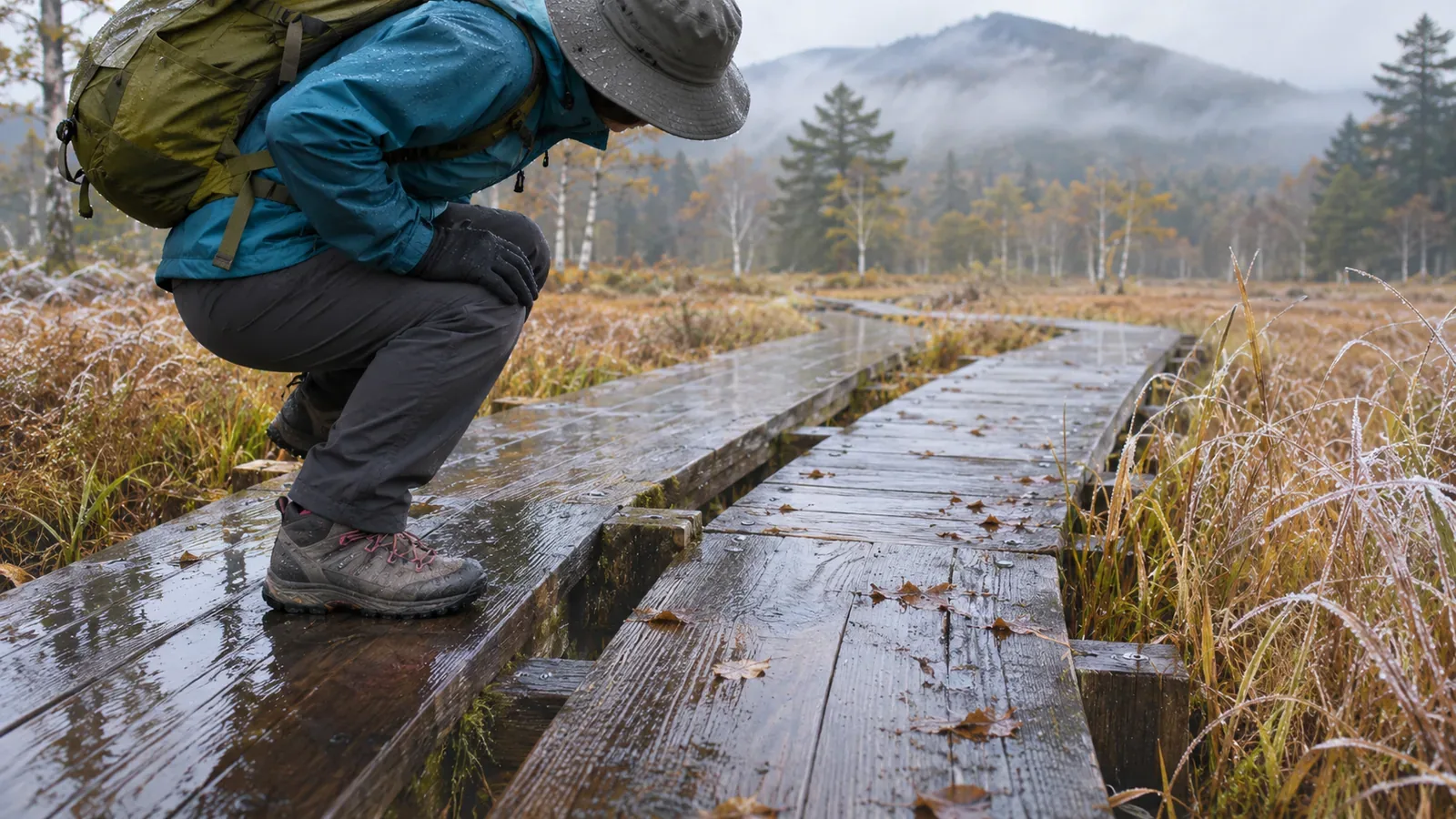
Check your footing before shortening your stride on a boardwalk in rain or frost. The Oze Preservation Foundation warns that planks can be slippery when wet or covered in frost. Drawing on its guidance and other Oze sources, here is how to look at the boards and assess how you are feeling before deciding whether you can carry on safely. In other mountain areas, follow local guidance.
What to watch for in rain and frost
The foundation’s FAQ recommends hiking shoes with grippy soles. Wet planks can be slippery, and some paths have no boardwalk. Choose footwear for the season and route, and pack rain gear even if the forecast is clear.
The foundation’s trekking guide lists 96 incidents in the 1997–2002 seasons, recorded mainly on the Gunma side of Oze. There were 61 injuries while walking. Falls resulting in sprains, fractures and other injuries accounted for 63% of the total. These figures are from that period.
The guide’s author suggests that wet boards and the loss of balance that can come with fatigue may both contribute to falls. Pay attention to how tired you are as well as to the planks ahead.
An October 21, 2024, report from the Ozenuma Visitor Center warns that planks can frost over or freeze in the cold early morning and become slippery. Check the forecast and the latest local conditions before setting out, even on a dry morning, and prepare for cold and rain.
Three checks before you shorten your stride
Take a moment to check the following before deciding you can get through with smaller steps. If you stop, do so on firm footing before the hazardous section. Keep your distance from slippery-looking planks when looking or taking photos. Put your phone away while walking.
First, look at the surface. Watch for water, frost and mud. Color and sheen alone tell you little about grip. A plank can look dry or show no visible white frost and still be slippery. Stop short of any section where you are unsure you can place your foot securely.
Second, look at joints and changes in level. The Ozenuma Visitor Center’s repair report of August 6, 2024, warns about cracked and tilted planks. From a stable spot, look at the edge of the next plank and at any height difference between it and its neighbor.
Third, check how you are doing. Look for dirt on your soles or problems with your gear, and notice whether fatigue or cold is making it hard to keep walking. If you are unsteady, consider resting somewhere safe or shortening the hike.
Look for cracks or tilts you can see now. The age of a plank alone cannot tell you whether it is passable. If damage makes the section unsafe, stop before it and note the location so you can tell staff or the boardwalk manager.
Let your footing guide your steps
The Oze trekking guide recommends short steps, shifting your weight gently and looking where you are going to place each foot so you can set the sole down flat. Decide whether to continue or turn back before stepping onto an icy section. Follow local guidance wherever wooden anti-slip cleats are installed, and stop short if you still cannot find secure footing.
Looking down for too long makes it easier to miss oncoming hikers. The foundation asks walkers to keep right and give way to people heading uphill. Look up between checks of the next few steps. If you are unsure, first find a spot on the boards where you can stop safely.
The foundation’s booklet also records injuries from metal fittings and splintered wood. Stop before entering a section with uncertain footing while you still have your balance.
Stay on the boards even when they look slippery
Keep off the wetland beside the planks. The Ministry of the Environment asks visitors to stay on the boardwalk because the ecosystem is fragile. Fukushima Prefecture explains that peat accumulates at about 1 mm a year and that wetlands formed over thousands of years were damaged within a few years. Gunma Prefecture explains how repeated trampling kills plants and can compact and dry the ground. Peat can crack or wash away in the rain, leaving plants unable to grow.
Gunma also describes damage on Mount Shibutsu, where walkers trying to avoid slippery serpentine rock have left the trail and killed plants underfoot. A single step away from slippery ground can damage vegetation. The same care applies to trekking poles. The foundation asks walkers to fit tip caps and keep pole tips within the trail. Sharp tips damage plants, soil and boards. If you sit on the boardwalk or at a rest area, keep your feet out of the wetland.
Reassess before entering a section that looks dangerous. If you cannot cross or stop safely, consider turning back the way you came. Keep to the route and follow signs or staff instructions for closures and detours.
Check your footing and be ready to turn back
Oze’s official guidance warns about both wet and frosted boards. Shorter steps are one way to walk, and the decision to proceed still depends on the surface, changes in level and how steady you feel. Stop short of any stretch where you cannot tell whether you can walk safely.
Before leaving, try writing three lines in your own words. What will you look for on the planks? How will you walk if they look slippery? Where could you stop if you get tired? On the trail, read your notes only when stopped on stable footing and clear of other walkers. Leave them for later if there is no such spot. Keep your feet out of the wetland in every case.
References and sources
- Oze Preservation Foundation: Oze Trekking Guide (booklet)
- Oze Preservation Foundation: Ozenuma Visitor Center, Boardwalk Repairs (August 6, 2024)
- Oze Preservation Foundation: Trail Etiquette in Oze
- Gunma Prefecture: Boardwalks and Vegetation Restoration in Oze (booklet)
- Fukushima Prefecture: The History of Conservation in Oze, Part 2
- Japan Ministry of the Environment: Visiting Oze National Park Responsibly
- Oze Preservation Foundation: Ozenuma Visitor Center, Early Winter (October 21, 2024)
- Oze Preservation Foundation: Frequently Asked Questions