
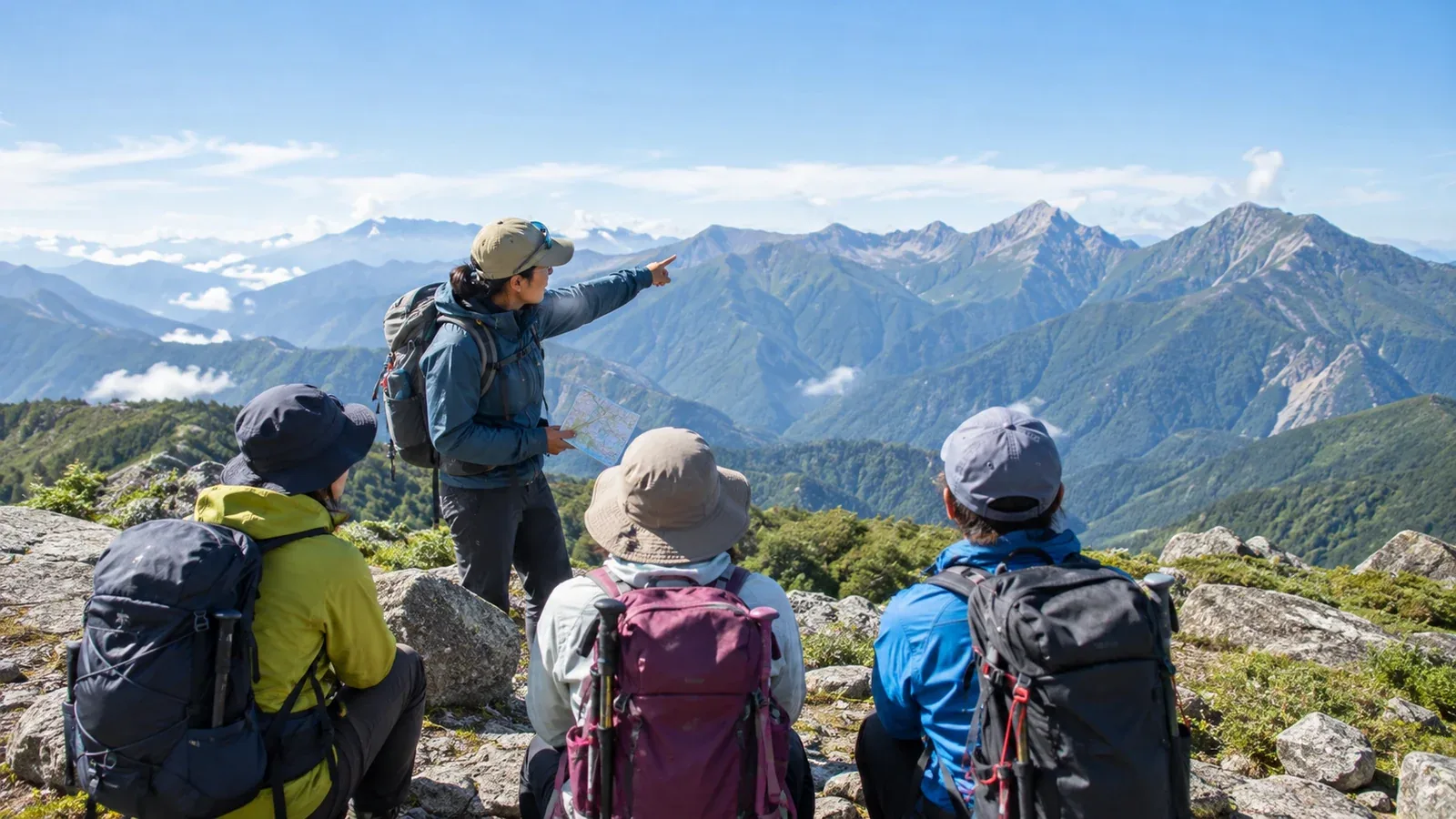
If you want to teach hiking, your first question may be what that work looks like. There are several kinds of teaching jobs, depending on whom you work with, where you teach and what you do. Seeing the range of jobs makes it easier to find a fit.
This article explains the kinds of work people mean by “hiking instructor,” what each involves, which skills and qualifications matter, and where the work happens. Use it to turn a general interest in teaching into a clearer direction.
What “hiking instructor” can mean
Here, “hiking instructor” covers jobs teaching hiking and other mountain activities. Three questions help describe the work.
- Who you teach. Recreational hikers, children or school groups, or people with disabilities.
- What you do. Teach skills such as ropework or map reading, guide a group on a hike, or teach a course.
- Where you work. Outdoors in the mountains, indoors at a climbing gym or in a classroom, or in a school or care setting.
Jobs combine these elements in different ways. Teaching skills while leading a weekend day hike for recreational hikers combines guiding and instruction. A mountain field trip for primary school pupils is closer to outdoor education.
Types of teaching work
Paid hiking guide
A guide accompanies clients, shows them the way, manages safety and teaches skills when needed. The Japan Mountain Guides Association (JMGA) certifies hiking and mountain guides for specific routes and seasons. Check whether the client or organizer requires a qualification. Check local rules and, if you arrange accommodation or transport for a fee, whether registration under the Travel Agency Act applies.
Guides need skills in risk management, weather assessment and first aid. Some qualifications and organizers require emergency response or first-aid training.
Hiking course and workshop instructor
Mountaineering clubs, sports shops, outdoor schools and mountain huts run courses in hiking skills. Workshops often focus on map reading and navigation, camping skills or an introduction to winter hiking. They may combine classroom and field sessions.
Instructors need to check what participants understand and adapt the lesson as they go. Requirements vary by organizer. The Mountaineering Coach qualification from the Japan Sport Association (JSPO) and Japan Mountaineering and Sport Climbing Association (JMSCA), or JMSCA’s Summer Mountain Leader certification, may help demonstrate your background alongside your teaching experience.
Climbing instructor
Climbing instructors teach bouldering, lead climbing and other skills in gyms and on outdoor rock. Gyms may have their own training. JSPO and JMSCA offer sport climbing coaching qualifications, and the JMGA offers free-climbing instructor qualifications. The JMGA scopes differ for indoor artificial walls and qualifications that also cover outdoor rock. Outdoors, safety management must account for terrain, rock conditions and local access rules.
Nature experience and mountain education instructor
This work uses the mountains for school field trips, corporate training or outdoor education for children. The main aim is to help people learn through experiences in nature. Qualifications such as Japan’s Nature Experience Activity Leader programme (NEAL) are relevant. Depending on the participants and organizer, special education and social care knowledge may also help.
How to choose a path
Ask yourself the following questions to narrow down the kind of work you want.
1. Who do you want to teach? Beginners, children, older people and people with disabilities may need different ways of communicating. Adapt how you explain and demonstrate a skill to the people learning it.
2. Do you want to work in the mountains, or would you work indoors too? Mountain guiding and outdoor workshops are subject to weather and seasons, which can make income variable. Gyms and classrooms make year-round work easier to plan, with a narrower setting for activities.
3. Can you set aside time and money to qualify? If your chosen work requires certification, budget for training, exams and renewal. Check official sources for entry requirements and curricula from organizations such as JSPO, JMSCA and JMGA.
4. Do you want side work or a main source of income? You can combine guiding or teaching with another job or make it your main work. Find out when shifts or commissions are likely. Starting part-time can help you build experience and estimate your income.
Qualifications and who issues them
Several organizations run their own schemes. These are some of the main options.
- Japan Sport Association (JSPO) and Japan Mountaineering and Sport Climbing Association (JMSCA). Mountaineering Coach and sport climbing coaching qualifications. JMSCA also offers its own Summer Mountain Leader certification.
- Japan Mountain Guides Association (JMGA). Hiking Guide Stages I to III, Mountain Guide Stages I and II, and free-climbing instructor qualifications, among others.
- National committee for certifying experiential learning instructors. Nature Experience Activity Leader (NEAL) certifications for leaders, instructors and coordinators.
Check the awarding organization for current entry requirements, fees and renewal conditions. Which qualifications you need depends on the activity, region and organizer.
A practical way to build experience
Build your own mountain experience and watch how instructors work at a club or hiking school before pursuing a qualification. Teaching a skill takes different abilities from doing it yourself.
The following steps can help you make progress.
- Build experience across rock, snow and multi-day traverses.
- Learn the basics of first aid and weather assessment.
- Help out at a mountaineering club or hiking course.
- Check requirements for the qualifications relevant to your intended work and make a plan.
- Continue training and gaining field experience after qualifying.
Where to start
Write down who you want to teach, what you want to teach and where. Match those answers to the jobs above. Check the official JMGA, JMSCA or NEAL pages, as appropriate, for training and qualification requirements. You can also talk with hikers in the Nordwand community to learn about the work on the ground.
References
- Japan Mountain Guides Association official information
- Japan Mountaineering and Sport Climbing Association official information
- Nature Experience Activity Leader (NEAL) official information
References and sources
- Japan Mountain Guides Association: Qualification categories and scopes of practice
- Japan Mountain Guides Association: Applying for a qualification
- Japan Mountaineering and Sport Climbing Association: Sports coaching qualifications
- Japan Mountaineering and Sport Climbing Association: Mountaineering instructors
- Nature Experience Activity Leaders (NEAL): Official guidance
- Ministry of Health, Labour and Welfare job tag: Outdoor instructor
- Japan Tourism Agency: Overview of the Travel Agency Act