
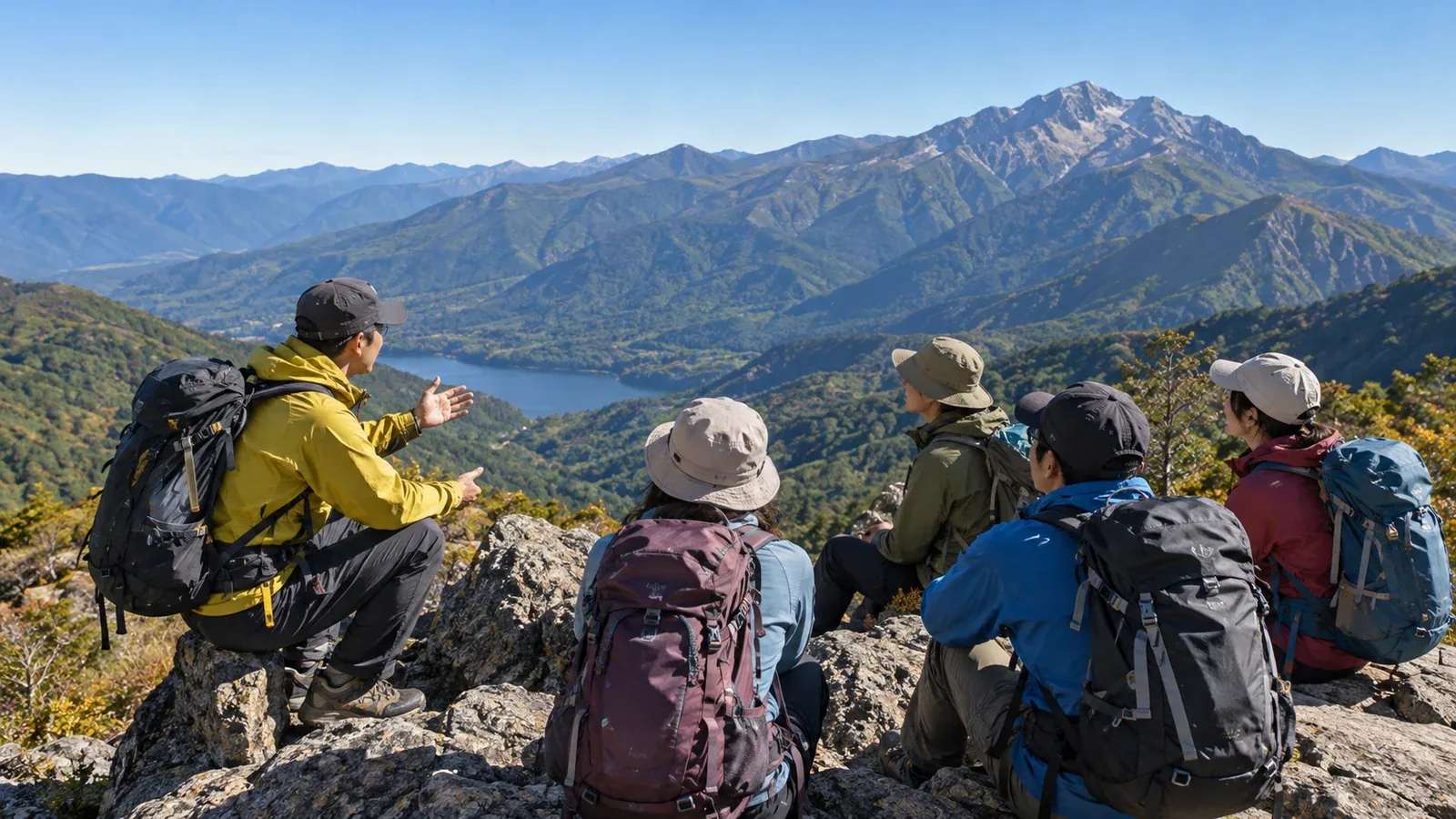
If you search for hiking events, you may be unsure what’s available or which format suits you. Alongside joining a club or hiring a guide, there are plenty of one-off events with different aims and formats. Knowing the options makes it easier to choose how to spend your time and money.
Hiking events generally fall into three types: courses for building skills, trips for walking a route and meetups for getting to know people. An event may combine them. Knowing its main purpose helps you narrow the choices.
This guide looks at what each type offers, whom it suits and what to check, whether it’s your first event or you have a particular goal in mind.
Courses: building skills and knowledge
A course teaches a specific topic indoors or in the field. Common examples include map and compass skills, weather decisions, ropework, first aid and basic winter hiking techniques.
Classroom and field instruction
Indoor classes may cover weather, topographic maps and route planning. They often take a few hours to half a day and can run in the rain. Field sessions let you practice movements such as handling a rope on rock or walking on snow. Some courses start in the classroom and move outside.
Who it suits
Courses can help if you hike but struggle to locate yourself on a map, or if you want to start winter hiking and feel unsure of the skills. For decisions and movements that are hard to learn from books and videos alone, feedback during a lesson helps.
What to check
- Whether the course states the intended level, such as beginner or intermediate
- Whether you can identify the organizer, for example a Japan Mountain Guides Association-certified guide, a club or a mountain-focused nonprofit
- The class size and number of participants per instructor, since smaller groups can allow more individual feedback
- The policy for rain or severe weather
For safety skills, check who is responsible for the instruction. Programs run or supervised by the Japan Mountain Guides Association or a prefectural mountaineering federation often provide a clear description of what they teach.
Trips: going on an organized hike
On these outings, you join a route led by a guide or experienced hiker. They may be called organized hikes, guided trips or hiking tours. Walking the route is the main purpose, with skills instruction playing a supporting role.
Day trips and overnight trips
Day trips can include easy routes on smaller mountains or routes that require fitness and skills. Overnight trips may include a hut or tent stay, higher mountains or a traverse. Check the itinerary and required equipment for the particular trip.
Guided trips and tours offered by travel companies
A tour sold by a travel company and a small trip led directly by a certified guide may allocate responsibilities differently or include different services. A guide may handle safety and instruction, or a tour escort and local guide may be separate people. Ask who makes decisions on the route and whether their qualifications match the terrain and season.
Who it suits
A trip can suit you if you want to visit an area you wouldn’t tackle alone or don’t yet feel ready to plan the route yourself. People who normally hike solo can also choose one to share the experience.
What to check
- The route’s difficulty and the fitness, gear and skills required
- Minimum and maximum group sizes, since smaller groups may offer more individual attention
- Whether the qualifications and experience of the guide or escort are disclosed
- Cancellation, changes and refunds in bad weather
- Where the trip starts and ends, and whether transport from town is provided
In Japan, whether the Travel Agency Act applies depends on the paid services provided or arranged. If transport or accommodation is arranged as part of the offer, check who you contract with, the travel business registration and the terms. Separately, ask the organizer what insurance covers and for whom.
Meetups: connecting with other hikers
These events are for finding companions or exchanging information. They may be advertised as hiker meetups, partner searches or social evenings. A hike can be part of it, with getting to know the other participants as the main purpose.
In-person and online meetups
An in-person meetup might be held in a café, an outdoor shop or a mountain hut. Talking face to face can help build trust and lead to a trip plan. An online meetup on Zoom or another video service can include people from different places. You’ll still need to arrange a trip separately.
Who it suits
This can work if you often hike alone, have moved or started a new job, or want to meet people with the same interests without committing to a club schedule. Joining can be easy, and staying in touch takes some initiative. Returning to the same community gives people time to get to know you.
Safety considerations
When you first hike with someone from a meetup, your assumptions about skills, fitness and style may differ. Discuss pace, turnaround criteria and equipment beforehand. Start with a short group hike on a popular route well within everyone’s ability.
Combining the three types
One event can do several things. A day hike with a map-reading lesson combines a course and a trip. A club’s welcome hike combines a meetup and a trip. Ask what comes first and what is included on the side.
Your goals can change. You might start with a skills course, try organized outings to broaden your experience and spend less time at meetups once you have regular partners. Others keep going to meetups to stay connected even after years of hiking.
Check who runs the event
Across all three types, ask who is responsible. Emergency procedures, turnaround decisions and insurance vary by organizer. An informal outing arranged through social media or a blog can be flexible, and roles may be unclear. Ask about the organizer’s experience, emergency contacts and insurance before signing up.
What to do next
Decide whether your priority is learning skills, hiking a route or meeting people. Nordwand’s Base Camp can help you find nearby hikers. You can also join communities by interest or contact a certified guide. Before you take part, confirm the organizer’s procedures, insurance and emergency contacts.