
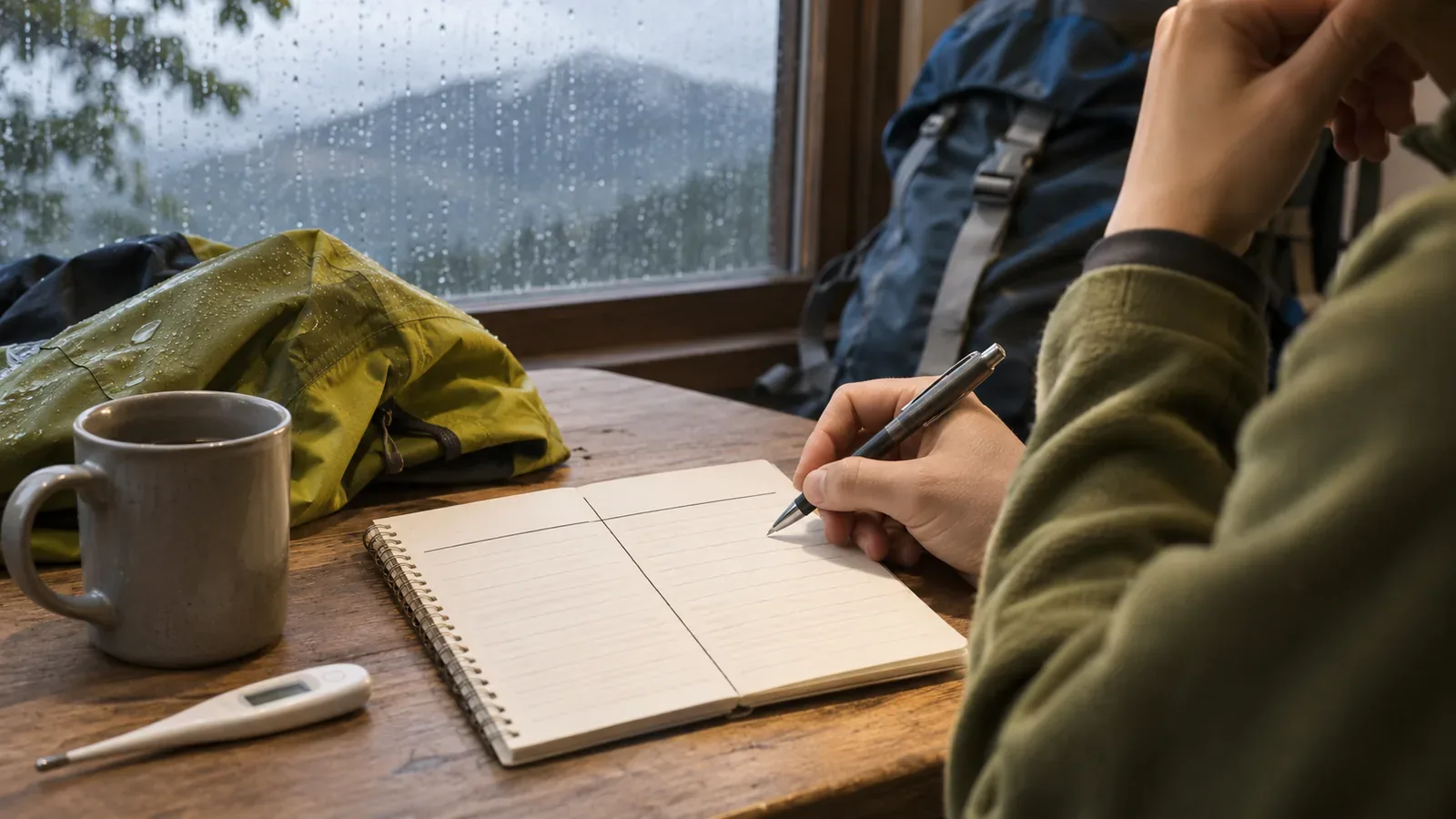
If both the weather and how you feel give you pause, make postponement your first option and take each concern on its own. In the public police guidance we checked on October 28, 2026, a concern about either weather or health was enough to consider postponing. The guidance did not assign scores or thresholds to days when both are a concern. Here is a simple paper exercise you can use the night before.
One concern can be enough to postpone
In its summer advice, Hiroshima Prefectural Police tell hikers to postpone if they have any concerns about the weather or their health. They also encourage turning back rather than pushing on when uneasy. Atsugi Police Station in Kanagawa advises judging how you feel, the weather and conditions on the ground, then cancelling or turning back during the hike when needed. Nara Prefectural Police list a realistic plan and a willingness to turn back among the basics of a safe hike.
Hiroshima’s advice is the one that explicitly recommends postponement for weather or health concerns. Atsugi emphasises judging on the day, and Nara emphasises a realistic plan and readiness to turn back. Our editorial suggestion is to keep each concern on the table even if the other factor looks good. Hiroshima’s page addresses summer hiking in the prefecture and mentions that its mountains are below 1,500 m. For conditions on a specific mountain or in another season, check the latest local guidance.
How weather and physical condition can compound each other
Hiroshima police note that poor visibility in bad weather can lead to losing the trail, and wet ground can cause trips, slips or falls. Poor visibility or feeling unwell can also make it easier to get lost or fall. Both types of concern can lead to the same problems.
Our reasoning is that when the trail is hard to follow and you already feel unwell, you may have less room to recover if you stray or slip. Both factors can make the same problems more likely. We found no data to quantify the risk when they occur together. Treat a favourable forecast or feeling well as one part of the decision and address the other concern on its own.
Make a two-column note the night before
Divide a sheet into two columns. Write weather concerns on the left and health concerns on the right. Mark anything that would make you postpone if it is still a concern in the morning. Use the note in three ways.
• Keep both concerns visible. Even with a good forecast, keep a concern about your health in the right-hand column.
• If a concern remains in the morning, consider postponing first. Take account of fresh information and anything you did not write down. Blank columns and the number of marks do not establish safety.
• If hiking with others, plan the pace and breaks around the person least confident in their fitness, as Hiroshima police advise. On a day when you are unsure how you feel, include yourself in that assessment.
Add the checks in the public guidance: hut and trail closures, hazards and routes you could use to leave the hike early, and current weather. Hiroshima police advise considering a different mountain, cancellation or postponement if something is closed. The National Police Agency’s 2024 overview recommends allowing time, checking hazards and escape routes in advance, and preparing, sharing and submitting a plan. The two-column note puts your reasons for postponing and whom you would inform on one sheet before you leave. If you are alone, you have nobody on site to talk it through with. Kanagawa police advise against solo hiking. The note gives you something to consult as you decide.
What to do if concerns arise on the trail
If the weather or how you feel worries you after departure, review whether to continue whatever you marked the night before. Use a screen or write only after stopping on stable ground where others can pass. If you cannot find a suitable spot, avoid wandering while unsure of your position or moving when it is unsafe. Assess the situation first and seek help if you cannot move safely.
Choose reassessment points on your map in advance. Put them before hazards and junctions for escape routes. Decide while you can still turn back or take an early way down. Passing a hazard before deciding can narrow your options.
If you think you are lost, the National Police Agency advises assessing the situation early and retracing your steps to the established trail if it is safe. Hiroshima police also recommend seeking help if poor visibility or illness makes it unsafe to move.
Kanagawa police recommend a paper map alongside GPS or hiking apps, a fully charged phone and a spare battery. The National Police Agency notes that GPS-enabled phones can help with rescue calls, although reception and battery life are limited on many mountains. A device can have GPS in a place with no phone signal. We suggest marking the way back on a paper map the night before so you can follow it if you cannot use the screen.
Put postponement first when both concerns remain
If both weather and health are still a concern, choose postponement first and consider each concern on its own. The public advice supports postponing when either is a concern and being ready to turn back, including during the hike. The two-column note, checkpoints before hazards and the paper map are suggestions to adapt to your route. If concerns remain, postpone.